
Five Ways to Stay Fresh This Summer
Keeping cool and staying hydrated are some of the tips you'll need to keep in mind.


Staying fresh and smelling good can be hard to do especially with the summer season coming up. Humidity and the hot sun can do a number on you, allowing your body odor to take over, which can affect your ability to hang out with friends or make out with that cute girl. Luckily, there are five different ways you can stay fresh and clean this summer. By taking care of your hygiene effectively, you’ll be able to have a great summer with both your friends and your family. Maybe you’ll even be able to kiss that cute girl too if you play your cards right.
- It’s important to take daily showers, perhaps two a day in order to clean the grime and dirt off of you. If you are big into sports or like to go to the beach during the summer, a good way to maintain hygiene is to take a mixture of a hot and cold shower to clean yourself off but to also wake you up if you’re feeling sluggish. It’s important to make sure that you use plenty of soap and even some shampoo for the best possible results.
- You should also strive to clean your face on a regular basis with moisture or skin cream. When it’s hot and humid during those long summer days, your face is going to get very oily and build up sweat that can make your pores very congested. Your skin might feel dirty, dry or heavy which is why it may be necessary to use some cream or moisture to keep yourself feeling fresh and clean.
- It’s pretty clear that nasty breath and bad teeth are a major turn off so regardless if it’s summer or winter, you need to brush your teeth at least twice a day. Having a mouth that’s fresh and clean will attract people to you rather than repel them outright. If you want to cool off a bit during the hot summer, using minty toothpaste to brush your teeth would be a good choice to make.
- When the heat is on, you need to drink some H20 to stay healthy and hydrated. You can never drink too much water especially if you’ve been working or playing outside all day during the summer. Even if you drink a couple of glasses per day, you need to have enough water in your body in order to avoid nausea, heat stroke, and other ailments. You should also try to find some shade to avoid the sun whenever possible to avoid getting sunburn. Applying sunscreen regularly will also help you to stay fresh and healthy.
- Lastly, make sure not to eat too unhealthy. If you want good health and even a good beach body, you should stock up on fresh fruits filled with water, vitamins, and important nutrients, which is better than snacking on pure junk food that will leave you bloated and unsatisfied. It’s often hot out during the summer so light meals with a lot of fruits and vegetables are highly encouraged.
About the Creator
Ben W
Ben helps students from around the world to improve their English language skills. Ben enjoys traveling around the world, developing his writing abilities, and reading good books.
Day 4 of Quitting
If this is how sobriety feels, maybe it’s better to go through life a little buzzed… this, along with other hits like, I want to kill myself, I wish I was dead, and I’m going to throw myself off a bridge have been the only thoughts on rotation these past few days. I promise myself that if, in a month, I still feel like this (‘this’ meaning despondent, full of rage, and simultaneously numb) I can go back to smoking. Until mid-February though? Nicotine is off the table.
By sleepy drafts27 days ago in Longevity
Musk’s SpaceX and xAI Merge to Make World’s Most Valuable Private Company
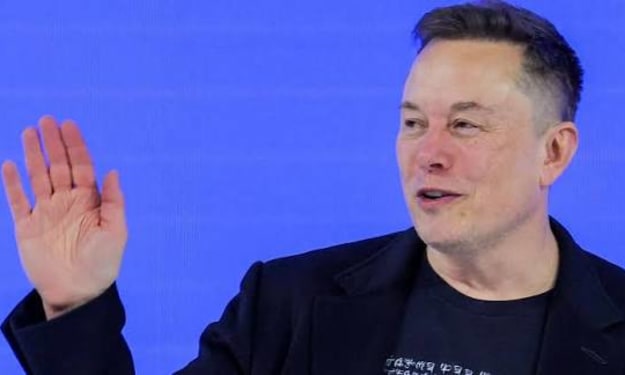
Elon Musk has announced a landmark merger between two of his most ambitious ventures—SpaceX and xAI—creating what is now considered the world’s most valuable privately held company. The deal brings together SpaceX’s dominance in aerospace and satellite technology with xAI’s rapidly growing artificial intelligence platform, signaling a bold step toward Musk’s long-stated vision of uniting advanced AI with space exploration. The combined entity is valued at an estimated $200 billion or more, based on recent private funding rounds and market comparisons. While both companies will continue to operate under their existing brands, the merger establishes a unified corporate structure aimed at accelerating innovation in artificial intelligence, satellite communications, and deep-space missions. A Strategic Union of Technology Giants SpaceX, founded in 2002, has transformed the global space industry through reusable rockets, commercial satellite launches, and NASA partnerships. Its Starlink satellite constellation already serves millions of users worldwide, providing internet access to remote and underserved regions. xAI, launched in 2023, was created to compete with major AI developers such as OpenAI, Google DeepMind, and Anthropic. Its flagship product, the Grok AI system, has been integrated into Musk’s social media platform X (formerly Twitter), where it provides conversational assistance and data analysis. By merging these two companies, Musk is combining space infrastructure with artificial intelligence capabilities—two technologies that are increasingly intertwined. Industry analysts say the move positions the new company at the intersection of aerospace, communications, and machine intelligence. “This is not just a financial merger,” said one technology analyst. “It’s a strategic convergence of data, computing power, and physical systems in orbit.” Why the Merger Matters One of the primary motivations behind the merger is efficiency. SpaceX generates enormous volumes of data from satellite operations, rocket telemetry, and space missions. xAI’s systems can process and analyze this information in real time, improving navigation, predictive maintenance, and mission planning. Starlink, in particular, stands to benefit. AI-driven optimization could make satellite networks more resilient to outages, cyber threats, and congestion as demand for global internet service continues to grow. Autonomous decision-making systems may eventually allow satellites to adjust their positions and communications routes without human intervention. The merger also strengthens Musk’s broader technological ecosystem, which already includes Tesla, Neuralink, and X. Together, these companies form an interconnected web of transportation, communications, and intelligence platforms. Financial and Market Impact The newly merged company immediately becomes the most valuable private enterprise in the world, surpassing companies like ByteDance and Stripe. Investors see enormous potential in a business that controls launch services, satellite networks, and proprietary AI systems. Private equity firms and venture capital groups have reportedly shown strong interest in participating in future funding rounds. Analysts believe the company could eventually pursue a public offering, though Musk has not indicated any immediate plans to do so. However, the scale of the merger also raises questions about market concentration and corporate influence. Combining aerospace and AI under one corporate umbrella creates a powerful entity with access to sensitive data and strategic technologies. “This is a company with both digital intelligence and physical reach in space,” said a former U.S. regulator. “That brings both opportunity and responsibility.” Regulatory and Political Scrutiny The merger is expected to draw attention from regulators in the United States and abroad. Governments may examine whether the deal gives Musk too much control over critical infrastructure such as satellite communications and AI platforms. SpaceX already plays a major role in U.S. national security through military satellite launches and classified missions. xAI’s advanced machine-learning tools could further enhance SpaceX’s defense-related capabilities, which may trigger national security reviews. In Europe and Asia, regulators are also likely to study the implications for competition and data privacy. Some policymakers have expressed concern about private companies controlling systems that influence global communications and information flows. Vision for the Future Musk has long argued that artificial intelligence and space exploration must develop together. He believes that AI will be essential for navigating Mars missions, managing large-scale space colonies, and operating autonomous spacecraft. In a brief statement, Musk said the merger would “accelerate humanity’s progress toward becoming a multiplanetary civilization while ensuring AI is developed with a deep understanding of reality.” The company’s roadmap reportedly includes: AI-assisted rocket design and testing Autonomous satellite operations Enhanced space-based computing systems Advanced robotics for lunar and Mars missions These projects reflect Musk’s belief that future exploration will depend on machines capable of making complex decisions without constant human oversight. Risks and Challenges Despite its promise, the merger carries risks. Integrating two highly complex organizations could create operational challenges and internal competition for resources. AI development is also under intense ethical and legal scrutiny, especially as governments debate how to regulate powerful algorithms. There are also financial risks. Space exploration remains expensive, and AI research requires massive investment in computing power and energy infrastructure. Critics warn that concentrating so much technological power in one company could limit transparency and accountability. Others question whether Musk’s multiple leadership roles across several companies might stretch management capacity too thin. Conclusion The merger of SpaceX and xAI marks a turning point in the evolution of private technology companies. By combining rockets, satellites, and artificial intelligence, Elon Musk has created a corporate giant that operates across Earth and beyond. Whether this union becomes a catalyst for unprecedented innovation or a source of regulatory conflict will depend on how the company balances ambition with responsibility. What is clear is that the world’s most valuable private company is no longer just building rockets—it is building the intelligence to guide humanity’s next frontier.
By Fiaz Ahmed about 5 hours ago in Longevity



Comments
There are no comments for this story
Be the first to respond and start the conversation.