
How South Korea Artificial Intelligence Market Is Changing Industries and Daily Life
Explore how AI is transforming South Korea’s industries and daily life, from smarter businesses to personalized services, while facing unique challenges.

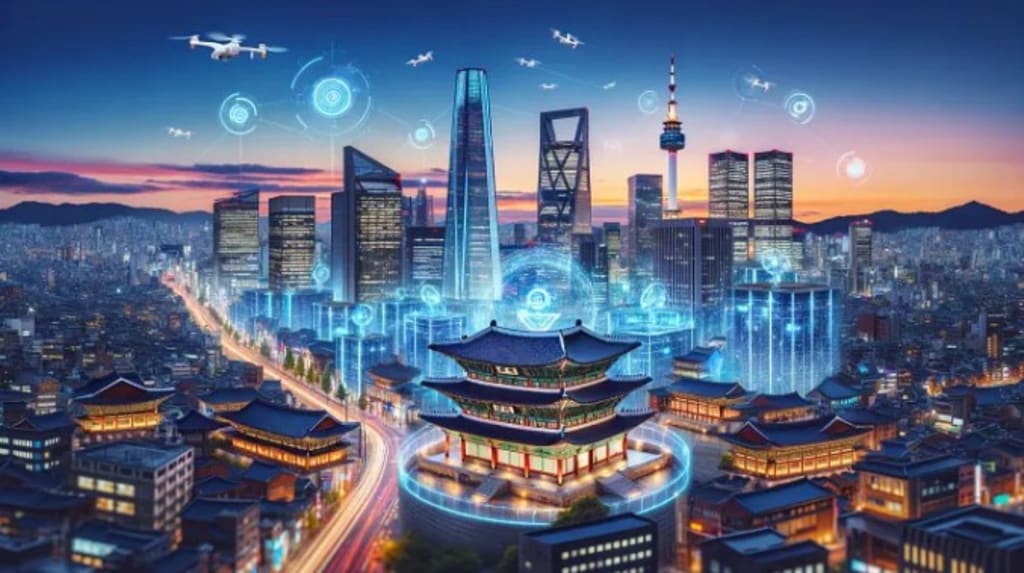
Why Artificial Intelligence Is Quietly Transforming South Korea
When people think of South Korea, they often imagine K-pop, smartphones, or cutting-edge technology. Yet quietly, artificial intelligence (AI) is becoming one of the country’s most influential forces. From voice assistants on smartphones to personalized content recommendations and smart payment systems, AI is increasingly part of daily life. What makes this trend exciting is that it isn’t just about technology adoption — it’s reshaping how industries operate and how people interact with services.
Interestingly, South Korea is moving beyond simply using AI; businesses and startups are exploring ways to leverage AI to create new value and improve efficiency in ways that were unimaginable just a few years ago.
Request a Sample Report with Latest 2026 Data & Forecasts:
How AI Is Changing Businesses and Everyday Life
The impact of AI is most visible in workplaces. In manufacturing, AI systems are now helping monitor production quality, reducing errors, and improving output. What’s remarkable is that AI isn’t just replacing repetitive tasks — it’s redefining the way people work. Employees can now focus on creative and strategic projects, leaving routine analysis to AI systems.
For consumers, AI is also shaping daily experiences. E-commerce platforms suggest products based on personal preferences, while financial services provide tailored advice. These AI-driven interactions go beyond convenience; they change the way people engage with services, making experiences feel more intuitive and personalized.
Key Trends in South Korea’s AI Landscape
Several clear trends are emerging in the Korean AI ecosystem:
1. Industry-Specific AI Applications
Industries are adopting AI in ways tailored to their specific needs. Hospitals are using AI to assist with patient diagnosis and treatment planning. Logistics companies rely on AI to forecast demand and optimize delivery routes. This trend shows that AI is not a one-size-fits-all tool but a technology being customized to solve real industry challenges.
2. Data as the Fuel for AI
AI thrives on data. South Korea’s fast networks, widespread digital adoption, and smart devices provide a rich environment for collecting the data AI needs to become effective. The more high-quality data available, the smarter AI systems become, enabling increasingly accurate and efficient solutions.
3. AI Becoming Part of Everyday Life
AI is no longer limited to tech experts. Camera apps automatically enhance photos, translation apps offer instant results, and streaming platforms recommend content based on your habits. As AI becomes more integrated into apps and devices, users begin to see AI as a natural part of life rather than a futuristic concept.
What the Future Holds
Looking ahead, AI in South Korea is likely to deepen and expand across multiple sectors.
AI as a Collaborative Partner
Instead of simply replacing human effort, AI will increasingly collaborate with humans. For example, AI might generate a first draft of a report or creative content, which humans then review and refine. This collaborative approach allows both humans and AI to play to their strengths, producing higher-quality outcomes.
AI-Assisted Creativity
AI is beginning to influence creative fields like music, design, and video production. Over time, we may see humans and AI working together to speed up and enhance the creative process, offering new possibilities that were previously impossible.
Ethics and Responsibility in AI
As AI takes on more decision-making roles, questions about accountability and fairness are growing. How should biases in AI be addressed? Who is responsible if AI makes a mistake? These ethical considerations will become increasingly important as AI becomes more embedded in society.
Challenges Facing AI Adoption
Despite the potential, there are challenges to AI growth in South Korea:
Data Quality and Privacy
AI requires high-quality data. Incomplete, inaccurate, or biased data can skew AI outcomes. At the same time, balancing data use with privacy protections is critical. Ensuring responsible data collection and use is a growing concern for both businesses and regulators.
Talent Shortage
While AI technologies advance rapidly, there remains a shortage of professionals who can design, maintain, and improve AI systems. Companies are competing to hire talent, and educational institutions are expanding programs, but supply still lags behind demand.
Ethical and Regulatory Frameworks
Global AI ethics standards are still evolving, and South Korea is no exception. Establishing clear rules for AI transparency, fairness, and accountability is crucial to prevent misuse and build public trust.
AI’s Impact on Daily Life and Society
AI quietly supports everyday activities that people often take for granted. From streaming videos to mobile shopping and personalized recommendations, AI ensures smooth and efficient experiences. While invisible to most users, it has become a vital part of the digital ecosystem, shaping how South Koreans live, work, and play.
Conclusion: A Promising Future
Artificial intelligence is no longer a distant possibility in South Korea — it is already influencing industries, workplaces, and daily life. From business innovation and consumer personalization to creative collaboration and smarter services, AI is gradually transforming the way people interact with technology.
Challenges remain, including data quality, privacy concerns, ethical issues, and workforce shortages. Yet the opportunities are immense. South Korea’s AI journey is not just about technology; it’s about how society adapts, innovates, and grows alongside intelligent machines. The future of AI in Korea promises to be both exciting and transformative, quietly shaping the country’s industries and everyday experiences.
About the Creator
Kim Soo hyun
My name is Kim Soo hyun, and I am a research analyst at IMARC Group, specializing in market trends and data analysis to provide insights and support strategic decision-making.
Keep reading
More stories from Kim Soo hyun and writers in Lifehack and other communities.
Why South Korea Data Center Market Are Quietly Driving the Digital Future
Why South Korea’s Data Center Landscape Is Getting More Attention Than Ever When people talk about South Korea’s technology strengths, they usually mention semiconductors, smartphones, high-speed internet, and innovation. What often goes unnoticed is the invisible infrastructure that makes all of this possible — data centers.
By Kim Soo hyun5 days ago in Lifehack
Oolong Tea Steeping Guide: Time, Temperature and Techniques
Oolong tea is often hailed as one of the most complex and flavorful types of tea. It falls somewhere between green and black tea, offering a delightful range of tastes that vary depending on the way it’s processed and brewed.
By Dennis W. Fowler5 days ago in Lifehack
Living in North Potomac, Maryland: What Daily Life Really Looks Like
North Potomac, Maryland, is a community defined by calm routines, strong neighborhood identity, and a lifestyle shaped more by balance than by urgency. Unlike nearby urban centers, North Potomac offers a quieter rhythm that appeals to families, remote workers, and long-term residents looking for stability and space. Daily life here revolves around planning, community awareness, and making the most of a suburban environment that values comfort and organization.
By House Doctor4 days ago in Lifehack




Comments
There are no comments for this story
Be the first to respond and start the conversation.