
Building Stability After Moving to Fort Wayne
Reflections on resilience, renewal, and the evolving meaning of home


Relocation often appears to be a practical decision, shaped by circumstances, opportunities, or the desire for change. When I first decided to move to Fort Wayne, Indiana, I approached the experience as a logistical challenge. I focused on planning, organizing, and preparing for the physical demands of the transition. What I did not anticipate was how deeply the experience would influence my understanding of stability, identity, and the meaning of home.
Moving, I discovered, is not simply about changing location. It is about redefining how we relate to space, routine, and ourselves.
The process began long before the actual move. In the weeks leading up to departure, my previous home slowly transformed. Shelves were cleared, personal objects were packed, and familiar spaces began to lose their sense of identity. Rooms that once reflected my daily life gradually became empty and quiet.
This transformation created an unexpected emotional response. I realized how strongly I had associated stability with physical surroundings. Yet as the environment changed, I began to understand that what I valued most was not the structure itself but the experiences that had taken place within it.
Packing my belongings became a reflective process. Each object represented a moment, a habit, or a stage of life. Books reminded me of periods of learning and curiosity. Furniture reflected routines that had shaped my days. Even ordinary items revealed patterns of behavior I had never consciously noticed.
The act of leaving required more than physical preparation. It required emotional adjustment.
Arriving in Fort Wayne introduced a different kind of challenge. The new environment was unfamiliar in subtle but meaningful ways. The arrangement of rooms, the quality of light, and the sounds of the neighborhood all differed from what I had known before. The space had not yet absorbed my presence, and I had not yet adapted to its rhythm.
The first days felt uncertain. Without established routines, even simple tasks demanded attention. I had to decide where to place everyday objects, how to structure my schedule, and how to navigate my surroundings. This temporary absence of structure created a sense of instability.
Yet within this uncertainty existed possibility.
The lack of familiarity forced me to become more intentional. Instead of automatically recreating my previous environment, I began to consider what kind of space I wanted to build. I asked myself how my surroundings could better support my daily life and what habits I wished to develop.
Moving became an opportunity for reinvention.
Fort Wayne itself encouraged this process of adaptation. The city possesses a steady rhythm that allows for gradual adjustment. Its neighborhoods reflect continuity and community presence. Walking through residential streets, I sensed a balance between tradition and growth that created an atmosphere of stability.
This environment made the transition easier. There was no pressure to adapt immediately. The city allowed space for reflection and gradual integration.
As I unpacked my belongings, the new space slowly began to change. Each object I placed contributed to a sense of continuity. The environment gradually reflected my identity and daily habits. What once felt unfamiliar began to feel comfortable.
Through this process, I learned that belonging develops through repetition. It emerges from everyday actions rather than immediate familiarity.
Simple routines such as preparing meals, arranging furniture, or organizing my workspace began to restore a sense of stability. These small acts transformed the house into a meaningful environment.
The experience also revealed my capacity for resilience. At first, the disruption of routine felt overwhelming. Over time, however, I adapted. I learned to navigate unfamiliar surroundings and create comfort where none had previously existed.
This realization changed my understanding of change itself. I had once viewed change as something disruptive and unsettling. Through relocation, I began to see it as an opportunity for growth.
Living in Fort Wayne reinforced this perspective. The city itself reflects continuity through transformation. Its combination of established neighborhoods and gradual development illustrates how environments evolve while maintaining identity. This balance mirrored my own experience of rebuilding stability.
I was not abandoning my past but integrating it into a new context.
Moving also encouraged me to reconsider my relationship with material possessions. Many items I once considered essential seemed less important in my new environment. Others gained unexpected meaning. This reevaluation simplified my understanding of comfort and stability.
I began to focus more on experience and routine than on accumulation.
As weeks passed, my new home developed its own character. Light patterns became familiar. Sounds of the neighborhood became recognizable. The space reflected my presence and habits. What once felt temporary gradually became permanent.
This transformation taught me that stability is not defined by permanence of place. It is defined by the ability to create continuity through change.
The experience ultimately reshaped my understanding of home. Home is not a fixed location but an evolving relationship between space and identity. It exists wherever we invest our attention, care, and presence.
Moving to Fort Wayne showed me that resilience is expressed through adaptation, that belonging is created through daily experience, and that stability emerges from intentional living.
Looking back, the move was not simply a change of address. It was a process of personal renewal. It revealed my ability to rebuild routine, embrace uncertainty, and create meaning in a new environment.
And through that process, I discovered that home is not something we find once. It is something we build again and again throughout our lives.
About the Creator
House Doctor
House Doctor is a modern home improvement magazine dedicated to helping people create healthier, more beautiful, and more functional living spaces.
Keep reading
More stories from House Doctor and writers in Lifehack and other communities.
What Moving in Fort Wayne Revealed About Change and Adaptation
I once believed that moving was simply about leaving one location and arriving at another. In my mind, relocation was defined by logistics, planning, and physical effort. I thought the process would revolve around organizing possessions, arranging transportation, and adjusting to a new address. Yet when I experienced moving in Fort Wayne, Indiana, I realized that relocation is far more complex. It is not just a change of place, but a transformation of routine, identity, and emotional perspective.
By House Doctorabout 14 hours ago in Lifehack
How to Find Affordable Flights for Valentine’s Day (2026 Guide)
Valentine's Day is one of the busiest romantic travel weekends of the year. Whether you're planning a quick trip around town or a warmer getaway, airfare demand typically increases as February 14th approaches.
By Patricia Hart5 days ago in Lifehack
6 Free Ways to Satisfy Your Shopping Urges
Sometimes, getting a little treat is the only thing that makes you feel better. Unfortunately, the cost of those little treats adds up--and before you know it, your new purchases are just old belongings taking up space in your house. Buying new things doesn't help much, either.
By Kaitlin Shanksa day ago in Lifehack
The Pride Flag and the Diversion
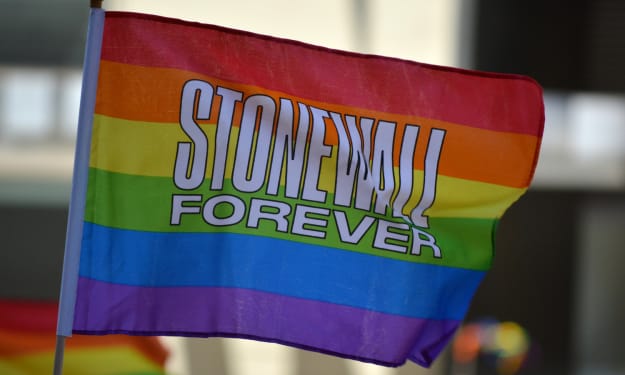
For nearly a decade, the LGBTQIA Pride Flag rippled in the wind at Christopher Park, a kaleidoscope of color staked into the soil of America’s first national monument to LGBTQIA+ liberation. That flag came down this week. Federal officials, citing new guidance from the Trump Administration, silently lowered the rainbow flag from its pole across the street from the Stonewall Inn. The birthplace of the modern gay rights movement now flies only the United States flag.
By Tim Carmichael7 days ago in Pride



Comments
There are no comments for this story
Be the first to respond and start the conversation.