Latest Stories
Most recently published stories on Vocal.
Michael Ocean on Belief, Fatherhood, and the Season That Changed His Acting Career
Written by Kathryn Monroe Edited with the assistance of AI for grammar and clarity There are moments in a life that arrive quietly and yet divide time forever. Before and after. Then and now. They do not announce themselves. They do not demand attention. But once recognized, they cannot be unseen.
By Kathryn Monroe19 days ago in Motivation
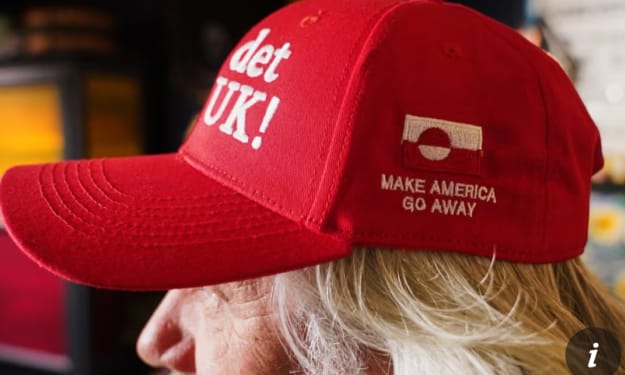
“Make America Go Away”: Spoof MAGA Caps Soar in Popularity Amid the Greenland Crisis. AI-Generated.
Political slogans have always been powerful, but in today’s hyper-connected world, they often take on a life of their own. In recent weeks, a new phrase has been popping up across social media, protests, and online marketplaces: “Make America Go Away.” Printed boldly on red caps that closely resemble the iconic MAGA hats, the slogan is a pointed parody—and it’s rapidly gaining popularity amid renewed tensions surrounding Greenland and U.S. foreign policy rhetoric.
By Aarif Lashari19 days ago in Earth
Karen Solie’s Wellwater Wins the TS Eliot Poetry Prize: A Quiet Triumph of Modern Verse. AI-Generated.
In a literary world often dominated by loud headlines and fast-moving trends, poetry still finds ways to stop time. That pause arrived powerfully with the announcement that Karen Solie’s poetry collection Wellwater has won the TS Eliot Poetry Prize, one of the most prestigious honors in contemporary poetry. The award is not only a personal milestone for Solie but also a reminder of poetry’s enduring ability to explore the human condition with depth, restraint, and emotional clarity. A Prize That Shapes the Poetry World The TS Eliot Poetry Prize, awarded annually in the United Kingdom, is considered one of the highest accolades a poet can receive. It recognizes the best new poetry collection published in the UK or Ireland, often setting the tone for literary discussions in the year ahead. Past winners have included some of the most influential poetic voices of modern times, making Solie’s victory a significant cultural moment. What sets this prize apart is its emphasis on craft, originality, and emotional intelligence—qualities that Wellwater embodies fully. Who Is Karen Solie? Karen Solie is a Canadian poet known for her sharp intellect, grounded observations, and emotionally resonant language. Over the years, she has earned respect for writing poetry that feels both deeply personal and socially aware. Her work often navigates themes such as place, memory, climate anxiety, labor, aging, and quiet resilience, avoiding grand statements in favor of carefully observed truths. Solie’s poetry does not shout; it listens. That listening quality is precisely what makes Wellwater stand out. Inside Wellwater: Poetry of Depth and Reflection Wellwater is a collection that moves deliberately, inviting readers to slow down and pay attention. The title itself suggests hidden depths—water drawn from below the surface, shaped by time and pressure. This metaphor runs throughout the collection, as Solie explores lives shaped by unseen forces: economic uncertainty, environmental change, personal history, and emotional endurance. The poems are rooted in everyday experiences, yet they carry philosophical weight. Solie writes about landscapes both natural and human-made, finding meaning in small moments: a shift in weather, a conversation overheard, a memory resurfacing unexpectedly. Her language is precise but never cold, intellectual without being inaccessible. Why Wellwater Resonated With Judges The TS Eliot Prize judges praised Wellwater for its quiet authority and emotional honesty. In a time when many works aim for immediacy or spectacle, Solie’s collection was recognized for its patience and depth. The poems do not rush toward conclusions; instead, they allow complexity to remain unresolved, mirroring real life. This approach reflects a broader shift in contemporary poetry, where subtlety and reflection are gaining renewed appreciation. Solie’s work demonstrates that poetry can be powerful without being performative, political without being loud, and personal without being confessional. Poetry in a Restless World The success of Wellwater also speaks to the role of poetry in today’s fast-paced, digitally saturated culture. As attention spans shrink, poetry offers a counterbalance—a space where readers can slow down, sit with uncertainty, and engage with language thoughtfully. Solie’s poems address modern anxieties without sensationalism. Climate change, economic instability, and emotional fatigue are present, but they are woven into lived experience rather than treated as abstract concepts. This grounding makes Wellwater especially relevant to contemporary readers seeking meaning rather than noise. What This Win Means for Contemporary Poetry Karen Solie’s TS Eliot Prize win reinforces the idea that poetry still matters, even—perhaps especially—in uncertain times. It highlights the value of work that prioritizes depth over trendiness and reflection over reaction. For emerging poets, Solie’s success is encouraging. It suggests that careful craftsmanship, intellectual honesty, and emotional restraint can still find recognition in a competitive literary landscape. For readers, Wellwater offers an invitation: to read slowly, to think deeply, and to reconnect with the quieter aspects of being human. A Lasting Literary Moment Karen Solie’s Wellwater winning the TS Eliot Poetry Prize is more than an award announcement—it is a celebration of poetry’s ability to endure, adapt, and illuminate. In drawing from the deep wells of observation and experience, Solie has created a collection that will likely be read and discussed for years to come. In an age hungry for instant answers, Wellwater reminds us that some truths are best discovered slowly.
By Fiaz Ahmed Brohi19 days ago in Education
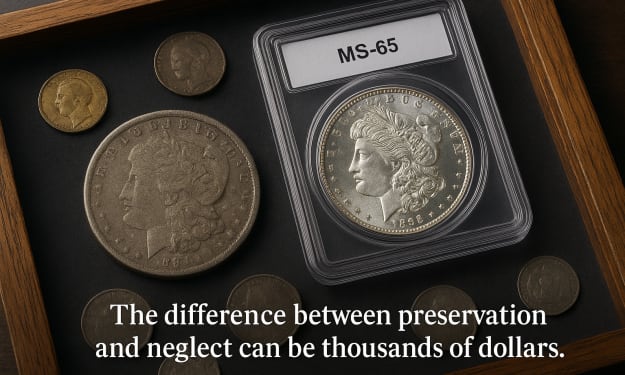
Smart Storage & Grading for U.S. Coin Collections: a Checklist. AI-Generated.
Phase 1: First Aid for Your Collection (The 24-Hour Triage) Before buying any special supplies, you need to perform some emergency triage. Think of this as stopping the bleeding. The goal here is to prevent any active damage right now.
By Laura Bennett19 days ago in Education
Haunted Visions. AI-Generated.
Some images never fade. They linger in the corners of the mind, returning uninvited in dreams, reflections, and quiet moments. These are haunted visions—memories, sights, or imaginings that carry emotional weight long after the moment has passed. Whether born from trauma, imagination, history, or fear, haunted visions shape how we see the world and ourselves.
By Aarif Lashari19 days ago in The Swamp
GoHighLevel for Agencies – Honest Review (2026): What Is GoHighLevel?. AI-Generated.
In 2026, digital agencies are under more pressure than ever to deliver faster results, manage multiple clients efficiently, and keep costs under control. With dozens of tools available for CRM, email marketing, automation, funnels, and client communication, many agencies struggle with fragmented systems and rising software expenses.
By Aarif Lashari19 days ago in The Swamp
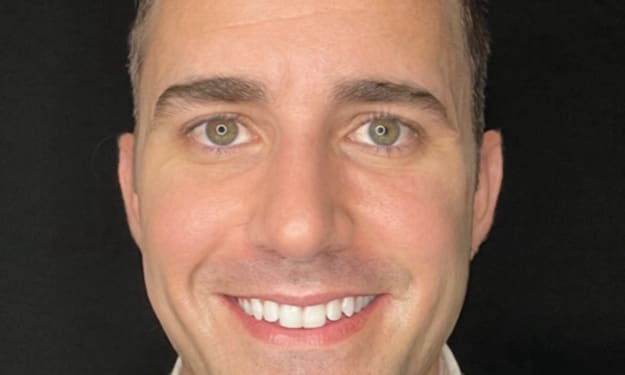
Elevate Your Style: The Ultimate 2026 Guide to Men’s Hair Highlights. AI-Generated.
In the evolving world of men’s grooming, hair color is no longer just about covering up grays. Today, highlights have become a powerful tool for self-expression, allowing men to add depth, character, and a modern edge to their appearance.
By Alex Morgan19 days ago in Blush
Trump Says He Will ‘100%’ Carry Out Greenland Tariffs Threat as EU Vows to Protect Its Interests. AI-Generated.
Former U.S. President Donald Trump has once again stirred global debate by declaring that he would “100%” follow through on imposing tariffs related to Greenland if his demands are not met. The remarks have reignited tensions between the United States and the European Union, with EU leaders quickly responding that they are prepared to defend their economic and strategic interests. What began years ago as an unconventional proposal to purchase Greenland has now evolved into a serious geopolitical and economic confrontation. Why Greenland Matters Greenland, an autonomous territory within the Kingdom of Denmark, holds enormous strategic value. It is rich in rare earth minerals, sits astride critical Arctic shipping routes, and plays a vital role in global climate and security calculations. As melting ice opens new trade passages and access to resources, major powers—including the U.S., China, and Russia—have increased their focus on the Arctic. Trump has long viewed Greenland through a transactional lens, arguing that the United States should exert greater influence over the territory to counter rivals and secure access to critical minerals needed for advanced technologies and defense systems. When Denmark firmly rejected any idea of selling Greenland, Trump’s interest did not fade—it shifted into economic pressure. The Tariffs Threat Explained Trump’s renewed statement suggests that tariffs could be imposed on European goods, particularly targeting Denmark or broader EU exports, if U.S. strategic interests in Greenland are blocked. While details remain vague, the rhetoric alone has already caused unease in financial and diplomatic circles. Tariffs, if enacted, could affect industries ranging from renewable energy equipment to shipping and pharmaceuticals. Denmark, a small but globally connected economy, would be particularly exposed, but the broader EU could also feel the impact depending on how widely the measures are applied. EU Pushes Back Strongly The European Union has responded with unusual unity. EU officials have stated clearly that any unilateral tariffs would be met with countermeasures under international trade rules. Brussels has emphasized that Greenland’s status is not negotiable and that economic coercion will not change that reality. EU leaders argue that weaponizing trade undermines long-standing transatlantic relationships and risks escalating into a broader trade dispute at a time when global economic stability is already fragile. Inflation, supply chain disruptions, and geopolitical conflicts have left little appetite in Europe for another tariff war. Economic and Political Implications Markets tend to react swiftly to tariff threats, even before policies are implemented. Investors worry that renewed U.S.-EU trade tensions could disrupt supply chains and dampen growth. European exporters fear reduced access to the U.S. market, while American companies dependent on European inputs could face higher costs. Politically, Trump’s stance resonates with his “America First” base, reinforcing his image as a leader willing to use economic tools aggressively to pursue national interests. Critics, however, argue that such tactics alienate allies and weaken collective Western influence at a time when cooperation is crucial. Greenland’s Voice Often Overlooked Amid the high-level rhetoric, Greenland’s own perspective is often sidelined. Greenlandic leaders have repeatedly stated that the territory is not for sale and that its future should be decided by its people. Many residents support greater autonomy and economic development but reject being treated as a bargaining chip in global power struggles. Local officials have also expressed concern that increased militarization or economic pressure could harm Greenland’s environment and traditional ways of life, particularly as climate change already poses significant challenges. What Comes Next? Whether Trump’s tariff threat becomes reality depends on political developments in the United States and diplomatic maneuvering behind the scenes. If enacted, tariffs could trigger a cycle of retaliation, drawing both sides into a prolonged trade conflict. If cooler heads prevail, negotiations may refocus on cooperation in the Arctic, including joint investment, security coordination, and environmental protection. What is clear is that Greenland has become a symbol of a larger shift in global politics—where strategic geography, resources, and economic power intersect. Trump’s declaration has ensured that the Arctic, once considered remote, is now firmly at the center of international debate. Final Thoughts Trump’s promise to “100%” carry out Greenland-related tariffs underscores how economic tools are increasingly used as instruments of geopolitical pressure. As the EU prepares to defend its interests, the episode highlights rising tensions within the Western alliance and the growing importance of the Arctic in global strategy. For readers and policymakers alike, the situation serves as a reminder that in today’s interconnected world, trade, politics, and geography are more closely linked than ever.
By Fiaz Ahmed Brohi19 days ago in The Swamp