Latest Stories
Most recently published stories on Vocal.
Dream log #7
I want to keep up to date with these dream logs cause some of them are bizarre. The you get others that make no sense and some just stay with you for a long time. This is one of those dreams because it it all set in one place. It was set in an Odean Cinema that no longer exists but the layout reminds me of the theatre at my local arts centre because of the way the seats are stacked up and the way the darkness loomed.
By Chloe Gilholy18 days ago in Journal
The Chair by the Window That No One Sits On Anymore
The chair is still there, facing the window, exactly where it has always been. Dust gathers on it now, quietly, patiently, like it knows no one is coming back to claim it. Some absences do not leave empty rooms. They leave furniture behind.
By Salman Writes18 days ago in Fiction
Commercial Refrigeration Market: Retail & Supermarket Demand, Advanced Cooling & Outlook. AI-Generated.
According to IMARC Group's latest research publication, The global commercial refrigeration market size reached USD 30.5 Billion in 2024. Looking forward, IMARC Group expects the market to reach USD 43.8 Billion by 2033, exhibiting a growth rate (CAGR) of 3.89% during 2025-2033.
By Olivia Smith18 days ago in Futurism
Cat Food Market: Functional Nutrition, Digestive & Urinary Health & Growth Outlook. AI-Generated.
According to IMARC Group's latest research publication, The global cat food market size was valued at USD 37.07 Billion in 2024. Looking forward, IMARC Group estimates the market to reach USD 49.80 Billion by 2033, exhibiting a CAGR of 2.99% from 2025-2033
By Michael Richard18 days ago in Futurism
Baby Food and Infant Formula Market: Early-Life Nutrition Focus, Fortified Formulas & Growth Ahead. AI-Generated.
According to IMARC Group's latest research publication, The global baby food and infant formula market size reached USD 53.73 Billion in 2024. Looking forward, IMARC Group expects the market to reach USD 84.06 Billion by 2033 exhibiting a growth rate (CAGR) of 4.58% during 2025-2033.
By Olivia Smith18 days ago in Futurism
Breakfast Cereals Market Trends and Consumer Demand Analysis. AI-Generated.
According to IMARC Group's latest research publication, The global breakfast cereals market size was valued at USD 108.89 Billion in 2024. Looking forward, IMARC Group estimates the market to reach USD 149.07 Billion by 2033, exhibiting a CAGR of 3.55% from 2025-2033
By Michael Richard18 days ago in Futurism
Tributes Pour In for Beloved Actress Catherine O’Hara. AI-Generated.
Tributes are pouring in from fans, fellow actors, and filmmakers celebrating the career and influence of Catherine O’Hara, one of the most beloved figures in film and television comedy. Known for her unforgettable roles, sharp wit, and emotional range, O’Hara has built a legacy that spans decades and generations of audiences.
By Aarif Lashari18 days ago in Earth
Do We Ever Really Heal, or Just Learn to Hide It?
No one tells you this, but healing is rarely loud or dramatic. It does not arrive with a clear ending, a final conversation, or a moment where everything suddenly makes sense. Most days, it looks like waking up tired, pretending you are fine, and carrying memories you no longer talk about. Maybe that is not healing at all. Maybe it is just survival wearing a calmer face.
By Salman Writes18 days ago in Psyche
UAE Battery Recycling Market Analysis: Industry Overview, Key Players & Future Outlook. AI-Generated.
According to IMARC Group's latest research publication, UAE battery recycling market size reached USD 81.1 Million in 2024. The market is projected to reach USD 193.9 Million by 2033, exhibiting a growth rate (CAGR) of 10.18% during 2025-2033.
By Abhay Rajput18 days ago in Futurism
Musk says steps to stop Russia from using Starlink seem to have worked. AI-Generated.
Elon Musk has stated that recent measures taken to prevent Russia from using Starlink satellite internet services in the war against Ukraine appear to be effective. His comments come amid growing scrutiny of the role private technology companies play in modern conflicts and the challenges of controlling dual-use technologies that can serve both civilian and military purposes. Speaking in an online exchange, Musk said that safeguards were implemented to restrict access in areas where Starlink terminals could be exploited for military operations by Russian forces. “We took steps to prevent misuse, and it seems to have worked,” he noted, without revealing specific technical details. Starlink and the Ukraine War Starlink, operated by Musk’s company SpaceX, has been a crucial communication tool in Ukraine since the early months of Russia’s invasion. When traditional infrastructure was damaged by missile strikes, Starlink terminals helped maintain internet connectivity for hospitals, emergency services, and government agencies. The system also proved vital for Ukraine’s military operations, allowing real-time coordination and battlefield communication. However, concerns emerged that Russian forces could also gain access to the network by capturing terminals or acquiring them through third-party markets. Reports surfaced that Starlink devices were appearing in Russian-controlled territories, raising questions about how widely the service could be controlled in a war zone. Musk has previously emphasized that Starlink was intended primarily for civilian and humanitarian use, not as a weapon of war. Still, the reality of modern conflict has made it difficult to separate civilian technology from military applications. Measures to Prevent Misuse According to Musk, SpaceX worked with governments and security experts to limit unauthorized access. While he did not specify the exact steps taken, analysts believe they may include geofencing, software updates, and monitoring of suspicious activity patterns. Geofencing allows service providers to restrict usage in certain geographic areas. If a terminal is detected in a prohibited zone, its connection can be disabled. Other measures may involve authentication systems that verify authorized users and prevent cloning or black-market distribution. “These systems were not originally designed for war,” said a satellite communications expert. “What we’re seeing now is the rapid adaptation of commercial technology for security purposes.” Political and Ethical Questions Musk’s statement has renewed debate over the responsibility of private companies in conflicts. Starlink is not owned by a government, yet its influence on the battlefield is significant. Some critics argue that SpaceX holds too much power in deciding who can communicate and who cannot. Others defend Musk’s position, saying that restricting Russian access is a necessary step to prevent the technology from being used to support aggression. “This highlights the uncomfortable reality that private firms now shape outcomes in international security,” said a foreign policy analyst. “Governments depend on them, but control over these systems remains limited.” The issue also raises concerns about transparency. Because SpaceX has not released detailed technical explanations, independent observers cannot easily verify how effective the restrictions truly are. Ukraine’s Reliance on Starlink Ukrainian officials have repeatedly praised Starlink for keeping the country connected during attacks on power grids and telecom infrastructure. The system has been described as a lifeline for both civilians and soldiers. At the same time, Ukraine and its allies have pushed for assurances that the service will not be exploited by Russian forces. Musk’s latest comments may provide some reassurance, though questions remain about long-term enforcement. Ukraine’s military has increasingly integrated Starlink into drone operations and command systems, making reliable access critical to its defense strategy. Risks of Escalation Some experts warn that as technology companies become more involved in conflict zones, they risk becoming targets themselves. Cyberattacks, sanctions, and political pressure could be used to influence corporate decisions. There are also fears that restricting access could set a precedent for future conflicts, where companies are expected to choose sides. “This is new territory,” said a security researcher. “We are moving into an era where corporations are not neutral actors. Their platforms can determine who has information and who does not.” International Response Western governments have largely supported efforts to limit Russian access to advanced communication tools. Several officials have said that preventing misuse of satellite internet aligns with broader sanctions and security objectives. However, humanitarian groups caution that any restrictions must avoid harming civilians. Starlink is also used by aid workers, journalists, and emergency responders in conflict areas. Balancing security concerns with humanitarian needs remains a delicate task. What Comes Next Musk’s statement suggests that SpaceX will continue refining its control systems as the war evolves. Analysts expect further collaboration between private tech firms and governments to manage the role of satellite networks in warfare. Future regulations may also emerge, defining clearer rules for how commercial satellite services can be used in conflict zones. For now, Musk’s claim that the measures “seem to have worked” signals a temporary success in limiting Russian use of Starlink. But the broader challenge remains: how to regulate powerful private technologies in an increasingly unstable global environment. As wars become more dependent on digital infrastructure, the line between civilian innovation and military utility continues to blur. The Starlink case illustrates how modern conflicts are no longer fought only with weapons, but with networks, software, and satellites orbiting far above the battlefield.
By Fiaz Ahmed 18 days ago in The Swamp
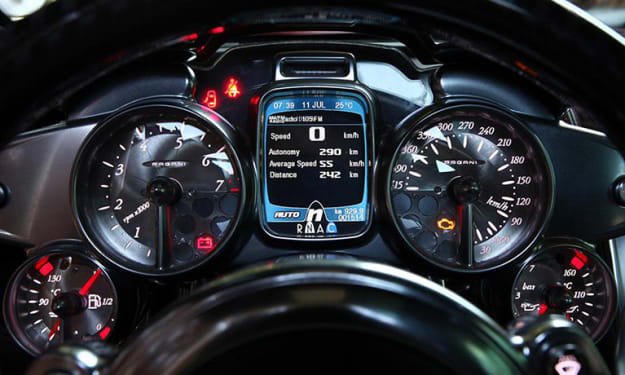
Automotive Instrument Cluster Market Outlook: Technology Trends and Growth Opportunities. AI-Generated.
Rising vehicle production, increasing demand for advanced driver information systems, and shift toward digital cockpits are driving growth in the automotive instrument cluster market. Integration of digital displays, head-up displays, and customizable interfaces enhances user experience and safety. According to IMARC Group's latest research publication, global automotive instrument cluster market size reached USD 8.7 Billion in 2024. Looking forward, IMARC Group expects the market to reach USD 13.70 Billion by 2033, exhibiting a growth rate (CAGR) of 5.17% during 2025-2033.
By Michael Richard18 days ago in Futurism