Latest Stories
Most recently published stories on Vocal.
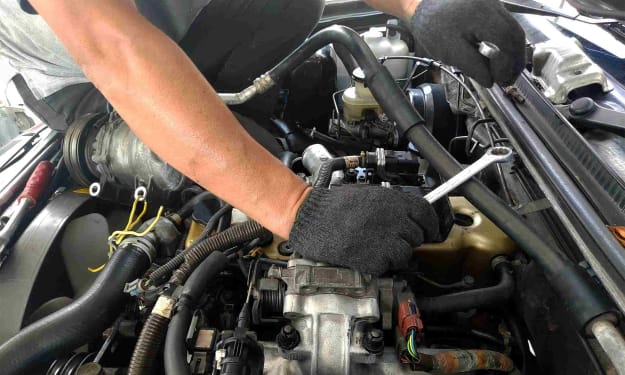
All-Terrain Vehicle Market Size & Forecast 2026–2034: Off-Road Mobility Drives the Next Growth Phase. AI-Generated.
Introduction The global All-Terrain Vehicle (ATV) market is entering a phase of steady and structurally supported growth as off-road mobility continues to gain importance across recreation, agriculture, defense, and industrial applications. According to Renub Research-based estimates, the All-Terrain Vehicle Market is expected to expand from US$ 4.73 billion in 2025 to US$ 6.29 billion by 2034, registering a compound annual growth rate (CAGR) of 3.21% during 2026–2034.
By Sakshi Sharma18 days ago in The Swamp
Saudi Arabia Automotive Temperature Sensor Market Trends: Connected Cars, Thermal Efficiency & Growth Drivers. AI-Generated.
According to IMARC Group's latest research publication, Saudi Arabia automotive temperature sensor market size reached USD 71.4 Million in 2025. The market is projected to reach USD 126.5 Million by 2034, exhibiting a growth rate of 6.56% during 2026-2034.
By Faisal Al-Harbi18 days ago in Futurism
IOC President Gives Clearest Signal So Far That Russia Could Be at 2028 Olympics. AI-Generated.
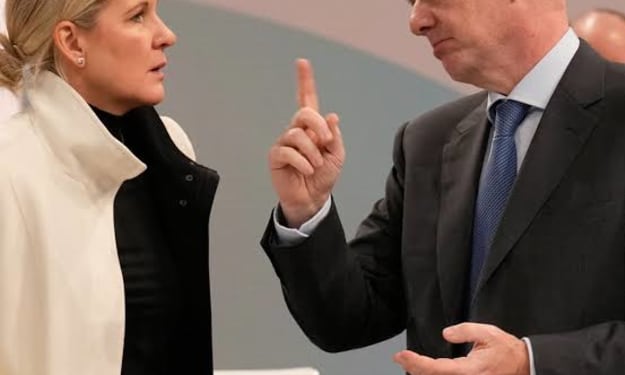
The president of the International Olympic Committee (IOC) has delivered the clearest indication yet that Russia may be allowed to return to the Olympic Games in 2028, marking a potential turning point in one of the most politically sensitive debates in modern sports history. The comments suggest a shift away from the strict exclusion imposed after Russia’s invasion of Ukraine and toward a framework that could see Russian athletes competing once again on the world’s biggest sporting stage. Since 2022, Russian and Belarusian athletes have largely been banned from international competitions under IOC guidance, with only limited participation allowed under neutral status in some events. The new remarks signal that the IOC is beginning to consider what long-term reintegration might look like, especially as the 2028 Summer Olympics in Los Angeles draw closer. A Change in Tone from Olympic Leadership The IOC president emphasized that the Olympic movement should remain politically neutral and focused on athletes rather than governments. While stopping short of confirming Russia’s full participation, the statement acknowledged that “athletes should not be punished for the actions of their states,” a phrase that has become central to arguments for Russia’s return. This is the strongest indication yet that the IOC is preparing the groundwork for a policy change. Until now, Olympic leaders had avoided making commitments beyond the Paris 2024 Games, where Russian athletes are expected to compete only as neutrals under strict conditions, without national flags, anthems, or official representation. The latest comments suggest that the IOC may expand this approach or move toward a more formal reintegration process by 2028, depending on geopolitical developments and security conditions. The Background of Russia’s Exclusion Russia’s sporting isolation followed the invasion of Ukraine in February 2022, when the IOC recommended that international federations bar Russian and Belarusian athletes from competition. The decision was unprecedented in scale and reflected concerns about safety, fairness, and the politicization of sport. In 2023 and 2024, some Russian athletes were allowed back into certain competitions as “neutral athletes,” provided they did not publicly support the war or have ties to the military. This compromise was designed to uphold Olympic principles while responding to pressure from Ukraine and its allies. However, the policy has remained controversial. Ukraine has consistently argued that any Russian participation legitimizes aggression, while Russia has accused the IOC of discrimination and hypocrisy. Growing Pressure from International Federations Several international sports federations have quietly begun easing restrictions on Russian athletes, especially in individual sports such as tennis, fencing, and gymnastics. These organizations argue that prolonged exclusion undermines competition and punishes athletes who have no role in political decisions. The IOC president’s remarks appear to reflect this shifting landscape. By signaling openness to Russia’s return in 2028, the IOC aligns itself with federations seeking stability and long-term planning. Los Angeles organizers have also indicated they are preparing for multiple scenarios, including the possibility that Russian athletes will participate in some form. Logistically, this would require security planning and coordination with U.S. authorities, given the political sensitivity of the issue. Political and Ethical Tensions The prospect of Russia’s return to the Olympics raises deep ethical and political questions. Supporters argue that the Olympic Charter promotes peace and inclusion and that excluding an entire nation contradicts those values. They also warn that sport should not become a permanent tool of political punishment. Critics counter that allowing Russia back too soon would undermine international solidarity with Ukraine and weaken the symbolic power of sanctions. They point out that previous Olympic bans, such as those during apartheid-era South Africa, were designed to pressure governments through sporting isolation. Ukraine has already stated it would strongly oppose any move to fully reinstate Russia without significant changes in the war situation. Several European nations are expected to echo this stance, creating the possibility of diplomatic tensions within the Olympic movement. The Role of Neutral Athletes One likely outcome is a continuation of the “neutral athlete” model used in Paris 2024. Under this system, Russian athletes compete without national symbols and under strict eligibility criteria. This approach allows individuals to participate while distancing the Games from state representation. The IOC president’s comments suggest this model could evolve into a longer-term solution rather than a temporary exception. By 2028, the IOC may refine the rules, potentially expanding eligibility while maintaining symbolic neutrality. This compromise, however, may satisfy neither side completely. Russian officials have criticized the neutral status as humiliating, while Ukrainian leaders argue it still provides visibility to athletes from an aggressor state. Implications for the 2028 Games If Russia does participate in the Los Angeles Olympics, it would mark its first appearance since 2021’s Tokyo Games under full national representation. Even a neutral return would be a major development in global sports diplomacy. The decision will likely depend on several factors: the state of the war in Ukraine, international sanctions, pressure from sports federations, and public opinion in host countries. The IOC has made clear that it will continue to monitor geopolitical conditions before making a final determination. Conclusion The IOC president’s latest statement represents the clearest signal yet that Russia could return to the Olympic Games in 2028, ending years of uncertainty over its sporting future. While no final decision has been made, the tone has shifted from exclusion to cautious reintegration. As the Olympic movement navigates the intersection of sport and politics, the debate over Russia’s participation will remain one of the most contentious issues leading up to Los Angeles 2028. Whether framed as a triumph of neutrality or a compromise too far, the decision will shape the legacy of the next Olympic Games—and test the limits of the Olympic ideal in a divided world.
By Fiaz Ahmed 18 days ago in The Swamp
melinda gates. AI-Generated.
Melinda Gates, widely known as Melinda French Gates, has long been recognized as one of the most influential philanthropists of the modern era. While many first learned her name through her marriage to Microsoft co-founder Bill Gates, her identity and impact extend far beyond that association. Over the years, Melinda Gates has built a reputation grounded in leadership, advocacy for women, and a deep commitment to global health and social equity. In recent times, however, public discussions around the Bill Gates Epstein files have added a new layer of attention to her personal and professional journey.
By Saboor Brohi 18 days ago in The Swamp
Farmer Baulks at £40,000 Cost to Remove Dumped Waste. AI-Generated.
Illegal waste dumping, or fly-tipping, has long been a problem in the UK. But for one Hertfordshire farmer, it became a massive financial headache — a £40,000 bill for clearing waste dumped on his land. This story sheds light on a hidden crisis affecting rural landowners across England.
By Ayesha Lashari18 days ago in The Swamp
Milano Cortina 2026: When Winter Sports Meet History, Innovation, and the Italian Soul
The 2026 Winter Olympics, officially known as Milano Cortina 2026, are set to redefine what a modern Olympic Games can look like. Scheduled to take place from February 6 to February 22, 2026, these Games will bring the world’s top winter athletes to Italy, blending elite competition with centuries of culture, alpine beauty, and forward-thinking sustainability.
By Story Prism18 days ago in Earth
Saudi Gigaproject Unveils the World’s Largest and Fastest Roller Coaster. AI-Generated.
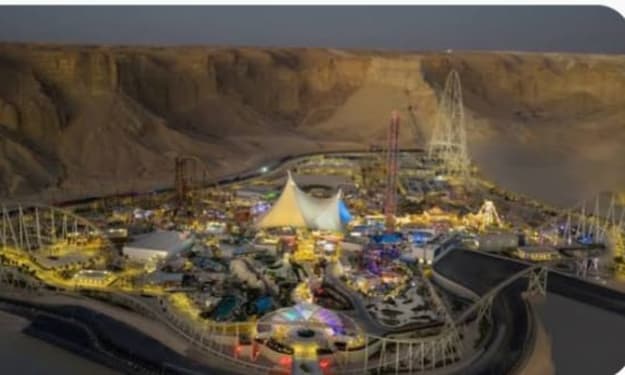
Saudi Arabia has once again captured global attention with the grand opening of Six Flags Qiddiya City, a flagship entertainment destination located near Riyadh. The park made headlines on December 31, 2025, with the debut of Falcon’s Flight, now officially recognized as the world’s tallest, fastest, and longest roller coaster. This landmark attraction is part of the Kingdom’s ambitious Vision 2030 initiative, aiming to diversify its economy and establish Saudi Arabia as a global hub for tourism and entertainment.
By Ayesha Lashari18 days ago in The Swamp
Spain Cracks Down on Social Media for Under‑16s: Pedro Sánchez Sparks Global Debate. AI-Generated.
Spain has just taken a bold step that’s shaking up the global conversation about children and social media. On February 3, 2026, Prime Minister Pedro Sánchez announced a plan to ban social media access for all users under 16. This decision isn’t just about Instagram or TikTok—it’s about redefining the responsibilities of tech giants, the role of governments, and the future of digital childhood.
By Ayesha Lashari18 days ago in The Swamp
Michalene Melges Wisconsin and the New Standard for AI Robotics Project Leadership. AI-Generated.
Artificial intelligence and robotics are no longer experimental concepts operating on the margins of industry. They are rapidly becoming central to how organizations design systems, deliver services, and solve complex problems. As automation grows more capable and autonomous, the leadership guiding these initiatives has become just as important as the technology itself. Technical excellence alone is no longer enough. Modern AI robotics projects require leaders who can connect engineering precision with ethical responsibility, strategic clarity, and a deep understanding of human impact.
By Michalene Melges18 days ago in Futurism