Latest Stories
Most recently published stories on Vocal.
Chevron Signs Initial Deal to Explore Syrian Waters. AI-Generated.
Chevron has signed a preliminary agreement to explore offshore energy resources in Syrian territorial waters, marking one of the first major steps by a Western energy company toward re-engagement with Syria’s hydrocarbon sector after more than a decade of war and international isolation. The move signals cautious optimism among global energy firms seeking new reserves in the eastern Mediterranean, while also raising political and legal questions surrounding sanctions and regional stability. According to officials familiar with the negotiations, the agreement is an initial framework deal that allows Chevron to conduct seismic surveys and technical assessments rather than immediate drilling. The arrangement is expected to involve cooperation with Syria’s state-owned General Petroleum Corporation and oversight from regional partners who have sought to revive Syria’s energy infrastructure. Chevron declined to comment in detail but said in a brief statement that the company “continually evaluates opportunities worldwide in line with international regulations and local laws.” A Strategic Energy Play Syria’s offshore waters in the Mediterranean are believed to hold untapped natural gas reserves similar to fields discovered off the coasts of Israel, Cyprus, and Egypt over the past decade. While Syria’s onshore oil fields were heavily damaged or seized during the civil war, offshore exploration has remained largely untouched due to security risks and sanctions imposed by the United States and the European Union. Energy analysts say Chevron’s decision reflects a growing appetite among international companies to expand operations in politically sensitive regions as competition for natural gas intensifies, especially after Europe reduced its dependence on Russian energy supplies. “The eastern Mediterranean is one of the last frontier basins with significant unexplored potential,” said a regional energy consultant based in Beirut. “Chevron wants to secure an early position before the area becomes crowded.” Legal and Sanctions Concerns The deal is expected to face scrutiny from Western governments, particularly the United States, which maintains strict sanctions on Syria under the Caesar Act. These sanctions restrict financial transactions and business operations that could benefit the Syrian government. Sources familiar with the agreement said Chevron obtained legal assurances that its activities would remain limited to non-commercial exploration and technical studies at this stage. Any move toward production would require additional approvals from U.S. regulators and potentially a special license from the Treasury Department. Human rights groups criticized the announcement, warning that energy revenues could strengthen the Syrian government without meaningful political reform. “Allowing multinational companies to re-enter Syria’s energy sector risks legitimizing a regime that has not addressed accountability for war crimes,” said a spokesperson for an international advocacy organization. Regional Implications The deal could shift regional dynamics in the eastern Mediterranean, where energy exploration has become deeply intertwined with geopolitics. Turkey, Israel, Lebanon, and Cyprus have competing maritime claims and energy interests in the area. Syria has long remained outside these energy forums due to its conflict and diplomatic isolation. If exploration proceeds, Syria could seek to join regional gas initiatives, potentially altering alliances and infrastructure plans. Neighboring countries are already watching closely, concerned about how offshore development might affect maritime boundaries and pipeline routes. “Any drilling activity in Syrian waters will require coordination with neighbors to avoid disputes,” said a European diplomat stationed in the region. “This is not just an energy issue; it is a political one.” Economic Hopes in Damascus For Syria, the agreement represents a rare opportunity to revive a sector that once generated billions of dollars annually before the war. Syria’s oil and gas industry has suffered from damaged facilities, skilled labor shortages, and years of sanctions. Officials in Damascus have publicly stated that offshore gas could become a cornerstone of post-war reconstruction, providing electricity, export revenue, and jobs. The government has previously signed exploration contracts with Russian and Iranian companies, but progress has been slow due to technical challenges and funding constraints. Chevron’s involvement brings advanced technology and experience that smaller state-owned firms lack. Analysts say even limited exploration could help map Syria’s offshore potential and attract additional investment if political conditions improve. “This is as much about information as it is about extraction,” said the Beirut-based consultant. “Once data exists, interest will follow.” Risks and Security Challenges Despite the promise, major risks remain. Syrian coastal waters are close to military zones and heavily monitored by foreign navies. Insurance costs for offshore operations remain high, and any escalation in regional conflict could disrupt exploration plans. There are also concerns about environmental protection. Syria lacks strong regulatory frameworks for offshore drilling, and environmental groups warn that accidents could devastate fisheries and tourism along the Mediterranean coast. “Without transparency and oversight, the environmental risks are enormous,” said a marine conservation expert. “The Mediterranean is already under severe ecological stress.” A Test Case for Re-Engagement Chevron’s initial deal is widely seen as a test case for how far Western companies can go in re-entering Syria’s economy without violating sanctions or provoking political backlash. If successful, it could pave the way for broader energy cooperation and signal a gradual normalization of economic ties. However, observers caution that any expansion will depend on political developments, including peace negotiations and international pressure for reforms. “This agreement doesn’t mean Syria is open for business,” said the European diplomat. “It means companies are testing the water—literally and diplomatically.” As Chevron prepares to begin surveys in Syrian waters, the project highlights the tension between global energy demand and unresolved political conflict. Whether the venture leads to commercial production or stalls under legal and political obstacles will shape the future of Syria’s offshore ambitions and its place in the Mediterranean energy landscape.
By Fiaz Ahmed 18 days ago in The Swamp
Bank of England Expected to Hold Interest Rates. AI-Generated.
The Bank of England is widely expected to keep its benchmark interest rate unchanged at its upcoming policy meeting, as policymakers weigh stubborn inflation pressures against signs of slowing economic growth and fragile household finances. Financial markets and economists anticipate that the central bank will maintain the current base rate while signaling caution over the timing of any future cuts. After a series of aggressive rate increases over the past two years to combat inflation, the Monetary Policy Committee (MPC) now faces a more complex challenge: inflation has cooled from its peak but remains above the Bank’s 2 percent target, while economic momentum has weakened and consumer confidence remains subdued. Inflation Still a Concern Recent data show that UK inflation has eased compared with last year’s highs, largely due to falling energy prices and easing supply chain disruptions. However, core inflation — which strips out volatile food and fuel costs — remains elevated, driven in part by rising wages and persistent service-sector price pressures. Officials have repeatedly stressed that it is too early to declare victory over inflation. Governor Andrew Bailey has warned that cutting rates prematurely could reignite price growth and undermine the Bank’s credibility. “We must be sure that inflation is on a sustainable path back to target,” Bailey said in a recent speech, adding that the Bank would remain “data dependent” in its decisions. Economic Growth Under Pressure At the same time, the UK economy is showing signs of strain. Growth has been weak, and several sectors, including manufacturing and construction, have reported declining output. High borrowing costs have hit businesses and households, particularly those with variable-rate mortgages or loans due for refinancing. Retail sales have been uneven, and consumer spending remains cautious as families grapple with higher food, housing, and utility costs. Analysts warn that keeping rates too high for too long could push the economy into a deeper slowdown. “The Bank is stuck between a rock and a hard place,” said an economist at a London-based investment firm. “Inflation is not fully under control, but growth is clearly fragile. Holding rates steady is the safest option for now.” Markets Expect a Pause Financial markets have largely priced in a rate hold, with traders expecting the Bank to keep the base rate unchanged while offering limited guidance on when cuts might begin. Some investors anticipate the first reduction later this year if inflation continues to fall and wage growth moderates. However, there is little consensus within the MPC itself. In previous meetings, members have been split between those advocating for tighter policy to ensure inflation is crushed and others arguing that the peak has already been reached. Minutes from the last meeting showed growing concern about the impact of high rates on employment and business investment. While unemployment remains relatively low, job vacancies have declined and some firms have begun reducing hiring plans. Impact on Households For millions of UK households, the decision is deeply personal. Mortgage holders have already faced sharp increases in monthly payments over the past year. A continued pause would provide some stability but little immediate relief. “I was hoping for a cut by now,” said Sarah Mitchell, a homeowner in Manchester who recently renewed her mortgage at a much higher rate. “Everything else is more expensive too. We’re just trying to get by.” Renters have also been affected, as landlords pass on higher borrowing costs through increased rents. Housing charities warn that prolonged high interest rates could worsen affordability and homelessness issues. Government Pressure and Political Context The Bank of England’s decision comes amid political pressure as the government seeks to boost economic confidence ahead of key policy announcements and elections. While the central bank is formally independent, its actions have major political consequences. Chancellor Jeremy Hunt has said he supports the Bank’s cautious approach but acknowledged the strain on households. “We want inflation down, but we also want growth to return,” he said recently. “Those two goals must be balanced carefully.” Opposition figures have accused the government of mismanaging the economy and leaving the Bank with few good options. They argue that tighter fiscal policy combined with high interest rates has deepened the cost-of-living crisis. Global Factors at Play The Bank’s decision also reflects global trends. Central banks in the United States and Europe are similarly debating when to begin easing policy after historic tightening cycles. Any move by the Federal Reserve or the European Central Bank could influence the pound and affect the Bank of England’s strategy. Energy markets, geopolitical tensions, and currency fluctuations remain key risks. A spike in oil or gas prices could quickly feed back into inflation and force the Bank to reconsider its stance. Looking Ahead While a hold appears almost certain, attention will focus on the Bank’s statement and projections for clues about future policy. Investors and households alike want to know whether this pause marks the peak of rates or merely a temporary break. Most economists believe that meaningful rate cuts are unlikely until inflation shows consistent improvement and wage growth cools further. Until then, the Bank is expected to maintain a cautious tone. “The message will likely be: we’re not raising rates, but we’re not cutting yet either,” said the London-based economist. “It’s a waiting game.” As the UK navigates a delicate economic recovery, the Bank of England’s decision underscores the difficult balance between fighting inflation and protecting growth. For now, stability appears to be the priority — even as uncertainty remains over what comes next.
By Fiaz Ahmed 18 days ago in The Swamp
Professors Are Being Watched: ‘We’ve Never Seen This Much Surveillance’. AI-Generated.
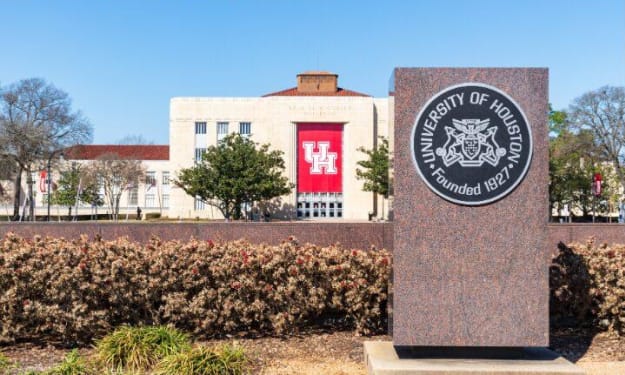
University professors across several countries are reporting an unprecedented rise in monitoring of their teaching, research, and public speech, raising concerns about academic freedom and the future of open inquiry. From recorded lectures and classroom informants to digital tracking and social media scrutiny, faculty members say the level of surveillance they now face is unlike anything seen in modern higher education. Civil liberties groups warn that the trend reflects a broader climate of political polarization, national security anxiety, and ideological conflict that is reshaping universities into contested spaces where professors are increasingly treated as potential risks rather than independent scholars. “We’ve never seen this much surveillance of faculty,” said a senior researcher at an academic freedom watchdog organization. “What used to be isolated incidents are now becoming systematic.” Monitoring Inside the Classroom In several recent cases, students have recorded lectures without professors’ knowledge and submitted clips to outside advocacy groups or government agencies, accusing instructors of political bias or inappropriate speech. Some professors say administrators have quietly installed additional classroom recording systems or requested access to lecture content in advance. At a large public university in the United States, a history professor described receiving an email from administrators informing him that his lectures would be reviewed after complaints from anonymous sources. “It felt like I was being interrogated rather than evaluated,” he said. “My course is about political movements. That alone seems to make it suspicious now.” Universities defend some monitoring as part of quality control or compliance with harassment and discrimination policies. But faculty unions argue that the line between oversight and surveillance is being crossed. Digital Surveillance and Social Media Scrutiny Beyond the classroom, professors say their online lives are increasingly under watch. Academic tweets, blog posts, and even private comments in virtual classrooms have been flagged and forwarded to employers or politicians. In one case, a professor specializing in Middle Eastern politics faced an internal investigation after screenshots of a social media post criticizing a foreign government were circulated by a political group. Although no formal wrongdoing was found, the professor said the experience was chilling. “You start thinking twice before speaking,” she said. “That’s the point of surveillance—it creates fear.” Cybersecurity experts note that universities now use software that can track email communications, monitor internal messaging platforms, and analyze lecture recordings for “compliance risks.” While such tools were initially designed for data protection and campus safety, they are increasingly applied to content and behavior. Political Pressure and National Security Concerns Governments in several countries have expanded scrutiny of academic institutions in the name of national security. Laws requiring disclosure of foreign research funding, collaborations, and travel have grown stricter, particularly for scientists and political scholars working on China, Russia, the Middle East, and emerging technologies. In some regions, faculty members must report contacts with overseas colleagues or face penalties. Critics argue these measures blur the line between legitimate security concerns and ideological policing. “Universities are becoming extensions of the security state,” said a legal scholar who studies higher education policy. “That fundamentally changes what universities are supposed to be.” The pressure is not limited to authoritarian countries. Democratic nations have also seen increased political involvement in curriculum decisions and research agendas, especially on topics such as race, gender, war, and foreign policy. Impact on Teaching and Research Many professors report self-censorship as a result of constant scrutiny. Sensitive topics are avoided, controversial authors removed from syllabi, and classroom debates tightly controlled to prevent misunderstandings. A sociology professor said she now records every lecture herself for legal protection. “I need proof of what I actually said,” she explained. “It’s defensive teaching.” Graduate students and junior faculty are especially vulnerable. Without tenure protections, they risk losing jobs or funding if accused of violating vague conduct rules. Some universities have also introduced anonymous reporting systems that allow students or staff to flag instructors for “concerning behavior.” While intended to promote inclusion, faculty groups warn these systems can be weaponized for political or personal grievances. Universities Defend Policies University administrators insist that surveillance measures are not meant to suppress ideas but to ensure safety and accountability. Many point to rising threats, online harassment, and campus tensions as reasons for stronger monitoring systems. “We are responsible for protecting students and staff,” said a university spokesperson. “That includes responding to complaints and maintaining respectful learning environments.” However, transparency remains a key concern. Faculty members often do not know when they are being monitored, how data is used, or who has access to recordings and reports. A Global Trend International academic organizations say the problem is growing worldwide. In Europe, new laws regulating “political neutrality” in classrooms have raised alarms. In parts of Asia and the Middle East, surveillance of professors has long been common, but digital tools have made it far more pervasive. “What’s new is the scale and technology,” said an official from a global education group. “Surveillance used to be physical. Now it’s constant and invisible.” The Future of Academic Freedom Legal challenges are beginning to emerge. Faculty unions and civil rights groups are pushing for clearer boundaries between legitimate oversight and intrusive monitoring. Some courts have ruled that academic speech deserves strong protection, but enforcement remains uneven. For many professors, the fear is not just disciplinary action but the erosion of trust between teachers and students. “The classroom should be a place of curiosity and disagreement,” one professor said. “If everyone is watching everyone else, that disappears.” As universities balance safety, politics, and technology, the question remains whether higher education can preserve its core mission: fostering independent thought in an age of constant observation. The answer may determine not only the future of academia, but the health of democratic debate itself.
By Fiaz Ahmed 18 days ago in Education
The Disappearance of Nancy Guthrie: What We Know, What We Don’t, and What Comes Next
What began as a missing person case has evolved into something far more troubling. There are blood droplets at the front of the house. A Ring camera is gone. There are alleged ransom notes circulating. Helicopters have circled low overhead. Deputies have conducted grid searches through cactus-studded desert terrain. And yet, despite all of this activity, law enforcement maintains a clear position: there is currently no identified suspect or person of interest.
By Lawrence Lease18 days ago in Criminal
Why Is Plant-Based Meat Changing the Way the World Thinks About Food?
Food choices are evolving rapidly as people become more conscious of health, sustainability, and ethical consumption. Among the most significant changes in recent years is the growing popularity of plant-based meat. Once considered a niche option for vegetarians and vegans, plant-based meat has entered the mainstream and is now being embraced by a wide range of consumers, including flexitarians and environmentally conscious eaters.
By Rohit Shah18 days ago in Futurism
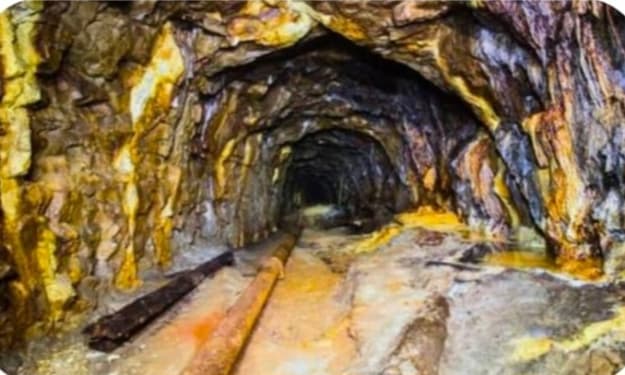
Buried for 33 Years: The Dream to Revive One of the Country’s Largest Gold Mines Suddenly Back on the Map. AI-Generated.
Introduction: In the heart of a country long known for its vast natural resources, an unexpected revival is stirring. For over three decades, a once-thriving gold mine lay dormant, its resources untapped and forgotten by many. Now, against all odds, the dream of resurrecting one of the country’s largest and richest gold mines is back on the map, with renewed investment and strategic government interest propelling it into the future.
By Ayesha Lashari18 days ago in Journal