
Women's Health Diagnostics Market: The Silent Revolution
Why early detection and smarter screening are reshaping women’s healthcare worldwide
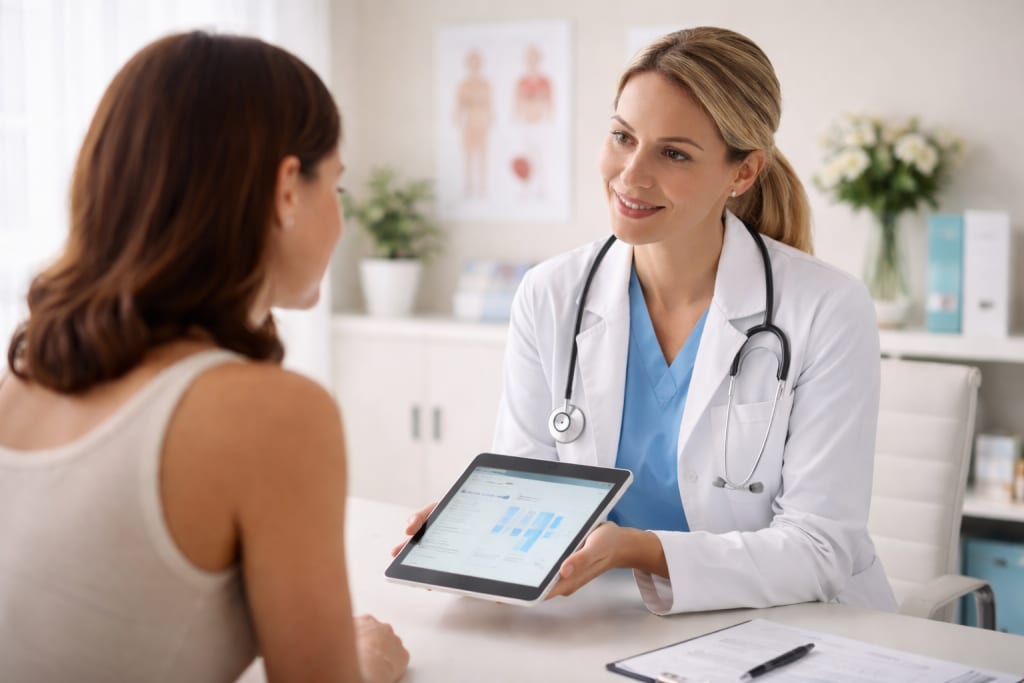
She scrolls through the results slowly.
A soft glow from the tablet reflects in her eyes as she waits for the doctor to speak. In that quiet pause lives something millions of women understand intimately—anticipation mixed with vulnerability. A routine test. A preventive screening. A moment that could mean reassurance or life-altering news.
Diagnostics in women’s health rarely make headlines. They are subtle, often quiet processes happening behind clinic doors. Yet they form the backbone of preventive medicine.
According to Mordor Intelligence, the Women's Health Diagnostics Market Size was valued at USD 30.73 billion in 2025 and estimated to grow from USD 32.68 billion in 2026 to reach USD 44.42 billion by 2031, at a CAGR of 6.33% during the forecast period (2026-2031). That single growth rate reflects a profound shift: from reactive treatment to proactive detection.
If you’ve searched online:
- “Best screening tests for women?”
- “How often should women get diagnostic tests?”
- “Women’s health diagnostics market growth?”
- “Early detection tools for breast and cervical cancer?”
You’re tapping into a global movement toward informed healthcare.
The Rise of Preventive Awareness
For decades, women’s health conversations were often reactive. Symptoms first. Diagnosis later.
Today, preventive diagnostics are at the forefront. Routine screenings for breast cancer, cervical cancer, fertility health, osteoporosis, infectious diseases, and hormonal imbalances are increasingly integrated into primary care.
This transformation is driven by:
- Rising awareness campaigns
- Improved access to healthcare services
- Technological innovation in diagnostic imaging and laboratory testing
- Government-backed screening programs
Early detection does not merely improve outcomes—it reduces long-term healthcare costs and enhances quality of life.
Search behavior reflects this evolution:
- “When should women start mammograms?”
- “Cervical cancer screening age guidelines?”
- “Hormone testing for women symptoms?”
Women are no longer passive recipients of care. They are active participants seeking clarity and control.
The projected 6.333% CAGR underscores consistent global investment in diagnostics infrastructure, laboratory advancements, and imaging capabilities.
Technology Changing the Diagnostic Landscape
Walk into a modern women’s health clinic, and you’ll see how technology has transformed screening experiences.
Digital mammography offers clearer imaging. Molecular diagnostics detect infections earlier. Automated laboratory analyzers accelerate blood test processing. Portable ultrasound devices bring imaging to underserved communities.
Innovation in this market spans several key areas:
- Imaging diagnostics
- Molecular diagnostics
- Immunoassays
- Point-of-care testing
The integration of artificial intelligence into imaging analysis is further reshaping early detection capabilities. AI algorithms can assist in identifying subtle abnormalities, supporting clinicians in decision-making.
Patients searching:
- “AI in breast cancer detection?”
- “Latest advancements in women’s health screening?”
- “Future of diagnostic testing for women?”
are increasingly encountering answers grounded in digital transformation.
The Women Health Diagnostics Market is not expanding simply because of disease prevalence—it is growing because technology is making detection faster, more accurate, and more accessible.
Global Growth and Access Equity
While developed nations maintain established screening infrastructures, emerging markets are witnessing accelerated expansion in diagnostic access.
Urbanization, rising disposable incomes, and healthcare modernization efforts are expanding laboratory networks and imaging facilities in developing regions.
Yet access disparities remain a critical issue.
In rural or underserved areas, women may still face barriers including:
- Limited diagnostic centers
- Transportation challenges
- Cost concerns
- Cultural stigma surrounding certain screenings
Bridging these gaps is central to sustainable growth in the Women Health Diagnostics Market.
Healthcare systems worldwide are investing in:
- Mobile diagnostic units
- Public-private partnerships
- Telehealth-enabled consultations
- Community awareness initiatives
The steady CAGR of 6.33% reflects not only market opportunity but systemic healthcare expansion.
As more women gain access to reliable screening tools, early diagnosis becomes less of a privilege and more of a standard.
Beyond Disease: Fertility, Hormones, and Lifelong Care
Women’s health diagnostics extend beyond oncology and infectious disease screening.
Reproductive health, fertility assessments, prenatal diagnostics, menopause monitoring, and bone density testing all contribute to the broader ecosystem.
The conversation has widened to include:
- “Fertility testing options?”
- “Hormone imbalance diagnosis?”
- “Best prenatal screening tests?”
Diagnostics are no longer episodic—they are lifelong touchpoints across different stages of a woman’s life.
From adolescence to post-menopause, screening plays a central role in guiding medical decisions and lifestyle adjustments.
This continuity of care strengthens recurring demand in the market, contributing to steady long-term growth.
The Emotional Layer of Diagnostics
Numbers and CAGR projections tell one story. The emotional reality tells another.
For many women, a diagnostic appointment carries unspoken fears. The waiting room silence. The phone call requesting a follow-up. The breath held while opening a lab report online.
Yet diagnostics also bring relief. A negative result. An early-stage detection. A manageable condition identified before complications arise.
The Women Health Diagnostics Market exists within this emotional spectrum.
Each test represents:
- Knowledge
- Prevention
- Preparedness
- Empowerment
The expansion of this market reflects not only clinical necessity but emotional reassurance.
When early detection becomes routine rather than rare, anxiety gradually shifts toward agency.
Digital Health and the Future of Screening
The next phase of growth will likely center around digital integration.
Patient portals now allow direct access to lab reports. Wearable health devices monitor physiological parameters. At-home testing kits are becoming more sophisticated.
Search queries increasingly include:
- “At-home women’s health tests?”
- “Digital diagnostic platforms for women?”
- “Remote health screening options?”
Telemedicine consultations combined with remote diagnostics are expanding care reach beyond traditional clinic walls.
The 6.33% CAGR projected by Mordor Intelligence signals continued adoption of advanced diagnostic technologies across global healthcare systems.
As artificial intelligence, automation, and molecular science evolve, diagnostic precision will likely improve further—reducing false positives and enhancing early-stage detection.
Why This Market Matters
Healthcare conversations are shifting toward prevention, personalization, and patient empowerment.
The Women Health Diagnostics Market embodies all three.
It supports:
- Earlier cancer detection
- Improved maternal health monitoring
- Better reproductive planning
- Chronic disease management
- Hormonal health optimization
In a broader context, diagnostics reduce long-term treatment burdens and enhance economic productivity by preventing advanced-stage disease complications.
This market’s steady growth reflects a deeper truth: healthcare systems are prioritizing women’s health more visibly and systematically than ever before.
The Road Ahead
With a projected CAGR of 6.3%, the Women Health Diagnostics Market is positioned for sustained growth driven by awareness, innovation, and infrastructure development.
But growth alone is not the ultimate goal.
The real objective is ensuring that early detection becomes universally accessible—across income levels, regions, and cultural contexts.
Because every diagnostic test carries a quiet promise: the chance to intervene before it’s too late.
And perhaps that is the most powerful shift of all.
As technology advances and awareness continues to rise, one question remains:
If early detection is the key to transforming outcomes, how can we ensure that every woman—everywhere—has access to the diagnostics that could change her future?
About the Creator
~ Fired ~
— Ai Intrusion ~ Are you Next ~ Is Ai Evolution after your job? — Few workplaces haven't been affected. Ai is in supermarkets, at doctors' offices, and even monitoring farms. I just can't think of anything this machine is not getting into, can you? For instance: Education ~ Law and Tech jobs will one day have a major influence or be taken over by these inanimate machines, with accuracy and vigor. From mechanics' diagnoses to a wide variety of everyday jobs, including fast food workers, with this input having the ability to cut their unnecessary work hours. I'm certain all of us have been touched by this with our short stories and colorful headings, have you? Even comments are very questionable 'Non-Robot' insertions.
By Jay Kantor22 days ago in Journal
Dream Journal - Entry Six
Dream Journaling: Unlock the Hidden World Within Every night, you journey to a realm where the impossible becomes real, where you fly without wings, converse with strangers who feel like old friends, and experience emotions more vivid than waking life itself. Yet by morning, these extraordinary adventures fade like mist in sunlight, leaving only fragments—or nothing at all.
By Parsley Rose 5 days ago in Journal
Echoes
I stepped carefully around the corner, the familiar sights and sounds hitting me like a brick to the face. My eyes watered. I could practically see us, all of us, back then, clustered around the outdoor tables in front of the pizza shop, the bar, the coffee shop. I could smell the various stalls from the events we’d been to on this street. I could taste the churros and nachos.
By Phoenixica24a day ago in Fiction


Comments
There are no comments for this story
Be the first to respond and start the conversation.