
Wireless Control and IoT Integration in Modern Double Girder EOT Crane Designs
Transforming the Efficiency, Safety, and Intelligence of Heavy Lifting

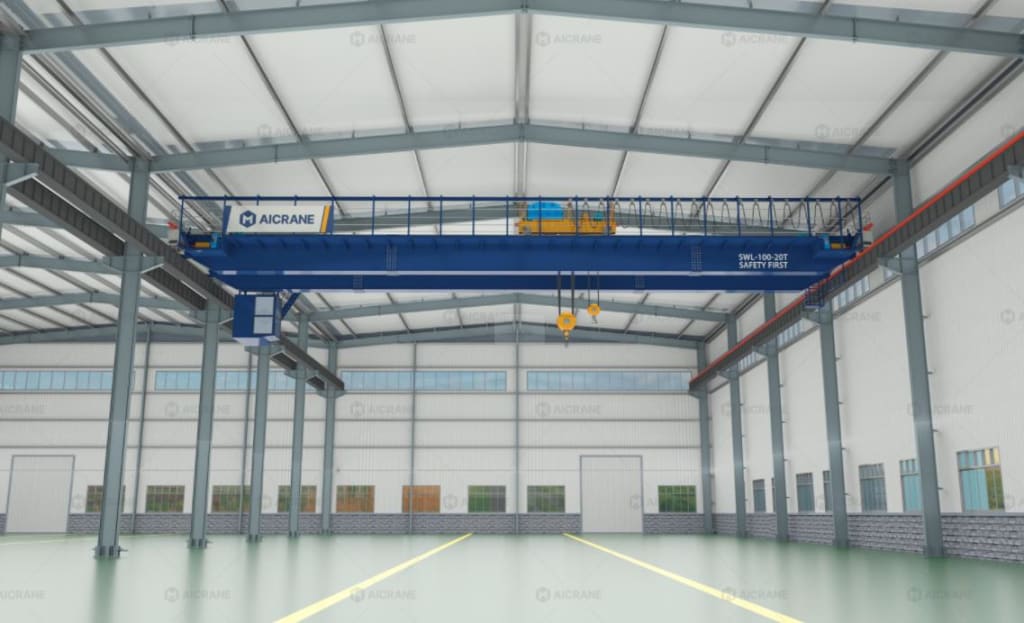
In today’s rapidly evolving industrial landscape, modern manufacturing, warehousing, and heavy-duty lifting applications are increasingly reliant on advanced technology to ensure efficiency, safety, and reliability. One of the most significant technological shifts in recent years has been the integration of wireless control systems and Internet of Things (IoT) technologies into the design and operation of double girder Electric Overhead Traveling (EOT) cranes. These innovations are transforming how cranes are operated, maintained, and optimized, making them smarter, safer, and more productive.
Understanding Double Girder EOT Cranes
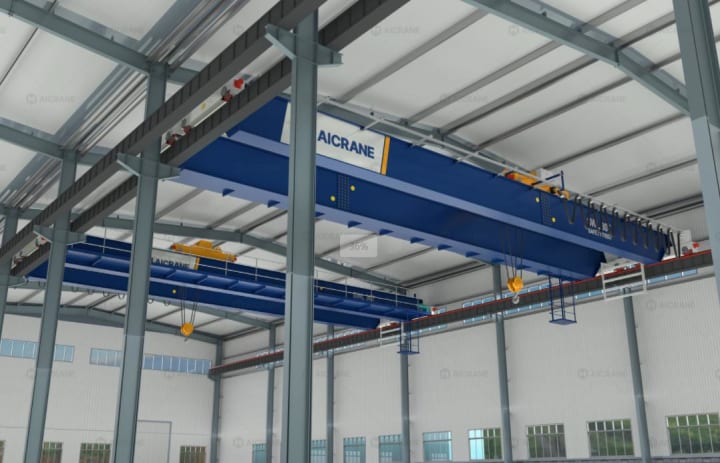
Double girder EOT cranes are a type of overhead crane that features two bridge girders supported on end trucks. The hoist and trolley run on top of the bridge girders, offering higher hook heights and greater load-bearing capabilities compared to single girder cranes. These cranes are commonly used in heavy-duty industrial environments such as steel plants, power stations, shipyards, and large warehouses, where high-capacity lifting and precision control are required.
Traditionally, these double girder eot cranes were operated using pendant controls or wired remote systems. While functional, these methods imposed physical limitations and presented safety and efficiency challenges. The evolution toward wireless control and IoT integration marks a significant upgrade in operational capabilities.
Wireless Control Systems: Enhancing Flexibility and Safety
Wireless control systems use radio frequency (RF) or Bluetooth technology to transmit signals from a handheld transmitter to a receiver installed on the crane. This allows the operator to control the crane from a safe distance, avoiding hazardous areas and improving visibility.
Benefits of Wireless Control:
Increased Operator Mobility
Operators are no longer tethered to a fixed control station or cable, giving them the freedom to choose the safest and most convenient vantage point for crane operation.
Enhanced Safety
With wireless control, operators can maintain a safe distance from suspended loads, reducing the risk of injury from falling objects or collisions.
Operational Efficiency
Wireless systems reduce setup time and eliminate the risk of cable entanglement or damage, which can cause operational delays or maintenance issues.
Multiple Crane Operation
Advanced wireless controllers can be programmed to control multiple cranes or trolleys from a single device, streamlining operations in complex lifting environments.
Ergonomic Design
Handheld transmitters are typically lightweight and designed for comfort, reducing operator fatigue during long shifts.
IoT Integration: Making Cranes Smarter
The Internet of Things (IoT) refers to the network of interconnected devices that can collect and exchange data. In the context of double girder EOT cranes, IoT integration means embedding sensors and communication modules into the crane system to collect real-time data and transmit it to a centralized platform for monitoring, analysis, and decision-making.
Key Features of IoT-Enabled Cranes:
Real-Time Monitoring
Sensors on motors, hoists, brakes, and structural components provide real-time information on operational parameters such as load weight, motor temperature, and crane positioning.
Predictive Maintenance
By analyzing historical data and usage patterns, IoT systems can predict when components are likely to fail and alert maintenance teams in advance, reducing unplanned downtime.
Data Logging and Reporting
IoT systems can generate comprehensive reports on crane usage, load cycles, and performance metrics, supporting compliance with safety regulations and internal audits.
Remote Diagnostics
Engineers and maintenance teams can access crane diagnostics remotely, speeding up troubleshooting and minimizing on-site intervention.
Energy Efficiency
IoT platforms can optimize crane operation by reducing idle times, managing power consumption, and identifying energy-saving opportunities.
Integration of Wireless Control and IoT: A Synergistic Approach
When combined, wireless control and IoT create a powerful system that enhances every aspect of crane operation. Wireless control provides the operator with mobility and convenience, while IoT delivers actionable insights and automation capabilities.
Use Case Example: Steel Manufacturing Plant
In a steel fabrication facility, a double girder overhead crane equipped with wireless control and IoT integration allows the operator to safely maneuver molten steel ladles from a distance using a handheld remote. Meanwhile, IoT sensors monitor the crane’s load weight, temperature, and motor performance in real-time. If abnormal vibration or overheating is detected, the system can alert the maintenance team and even trigger an automatic shutdown to prevent accidents.
Design Considerations for Integration
For successful implementation of wireless control and IoT in double girder EOT cranes, certain design considerations must be addressed:
Signal Reliability and Security
Industrial environments often involve RF interference. Wireless systems must be robust enough to maintain signal integrity, and IoT networks must incorporate encryption and cybersecurity protocols to prevent unauthorized access.
Power Supply Management
IoT devices and wireless controllers require reliable power sources. Battery life and power management must be optimized, especially for systems that operate continuously.
Modular and Scalable Architecture
The control and IoT architecture should be modular to allow for easy upgrades and scalability, accommodating additional sensors or new functionality as needed.
User Interface and Software Integration
A user-friendly interface for operators and maintenance teams is crucial. Integration with existing enterprise resource planning (ERP) and computerized maintenance management systems (CMMS) can further streamline workflows.
Environmental Suitability
Components must be rated for the environmental conditions they will face-such as extreme temperatures, humidity, dust, or corrosive elements.
Future Trends and Innovations
As wireless technologies and IoT platforms continue to evolve, several emerging trends are shaping the future of double girder EOT crane design:
5G Connectivity: With its high bandwidth and ultra-low latency, 5G will enhance remote control responsiveness and enable real-time video streaming for crane operation.
Artificial Intelligence (AI): Machine learning algorithms will analyze crane usage patterns to improve performance optimization, failure prediction, and automated decision-making.
Digital Twin Technology: By creating a virtual replica of the crane system, engineers can simulate operations, run diagnostics, and test configurations in a risk-free digital environment.
Integration with Smart Factory Ecosystems: IoT-enabled cranes will become an integral part of smart manufacturing systems, communicating with autonomous vehicles, robotic arms, and other equipment for synchronized production workflows.
Conclusion
The integration of wireless control and IoT technology into modern double girder EOT crane designs marks a significant leap forward in industrial lifting solutions. These innovations provide a wide range of benefits including improved safety, enhanced operational efficiency, reduced downtime, and smarter maintenance practices.
For businesses seeking to stay competitive in high-demand industrial sectors, adopting these technologies is no longer optional - it is essential. By investing in advanced crane systems with wireless and IoT capabilities, companies not only ensure greater reliability and safety but also position themselves at the forefront of Industry 4.0.
About the Creator
Aicrane01
Welcome to the Aicrane Blog, your practical guide to lifting solutions. Discover articles covering overhead cranes, gantry cranes, winches, steel structures, boat lifts, and more.
Website: https://steelmillcranes.com/
~ Fired ~
— Ai Intrusion ~ Are you Next ~ Is Ai Evolution after your job? — Few workplaces haven't been affected. Ai is in supermarkets, at doctors' offices, and even monitoring farms. I just can't think of anything this machine is not getting into, can you? For instance: Education ~ Law and Tech jobs will one day have a major influence or be taken over by these inanimate machines, with accuracy and vigor. From mechanics' diagnoses to a wide variety of everyday jobs, including fast food workers, with this input having the ability to cut their unnecessary work hours. I'm certain all of us have been touched by this with our short stories and colorful headings, have you? Even comments are very questionable 'Non-Robot' insertions.
By Jay Kantor4 days ago in Journal
How Visibility Changed When Search Stopped Living in One Place
Search no longer looks the way it used to There was a time when being visible online meant ranking on Google and calling it a day. If your website showed up on the first page, you had done your job well. That era is slowly fading. Today, people search in far more places than a traditional browser, often without even realizing they are searching at all.
By Anthony Rodgersabout 23 hours ago in Journal
Cabin Fever Because of Snow, Sleet, and Freezing Rain That Turned to Icy Roads
What Is Cabin Fever? The short answer is that cabin fever is restlessness from being in a confined area. Cabin fever is the distressing irritability or restlessness experienced when a person or group is stuck at an isolated location or in confined quarters for an extended time. Research shows that prolonged cold, gray skies, and being stuck indoors can trigger mood shifts similar to “winter blues.”
By Margaret Minnicks4 days ago in Humans



Comments
There are no comments for this story
Be the first to respond and start the conversation.