
Why Are the US and Israel Attacking Iran? What We Know So Far
Rising Tensions in the Middle East: Nuclear Fears, Military Strikes, and the Risk of Regional War
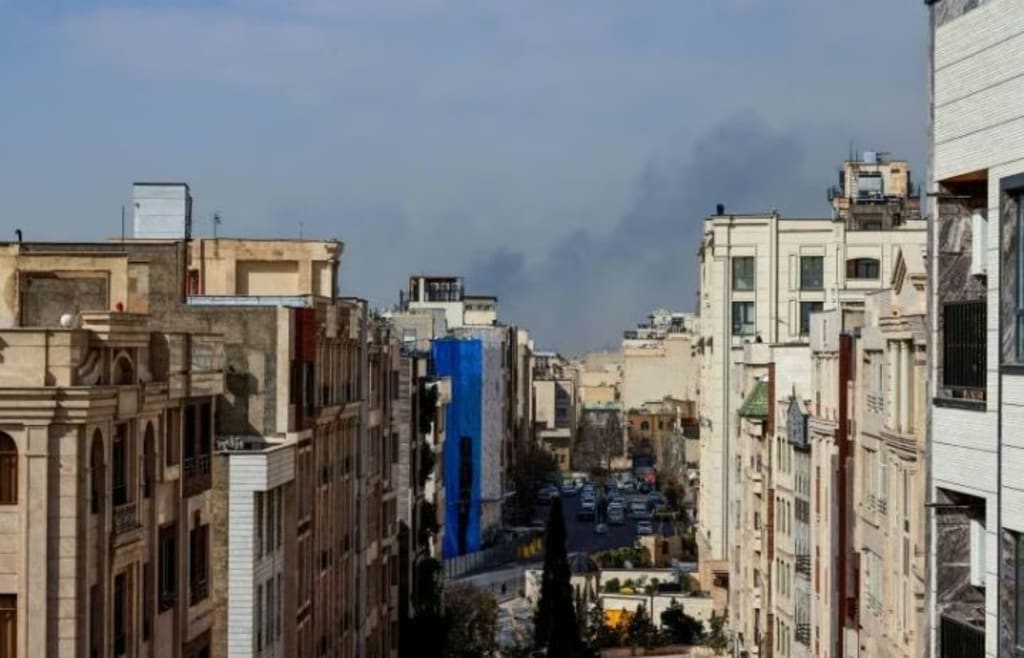
A Long-Simmering Conflict Reaches a Boil
Tensions between the United States, Israel, and Iran are not new. Since the 1979 Iranian Revolution, relations between Washington and Tehran have been hostile. Israel, meanwhile, has consistently viewed Iran as its most significant regional threat, particularly because of Tehran’s support for armed groups hostile to Israel.
For years, conflict has largely played out indirectly — through cyberattacks, proxy militias, airstrikes in Syria, sanctions, and covert operations. But this latest escalation signals something different: a more open and coordinated show of force.
The Official Reasons Behind the Strikes
According to statements from Washington and Jerusalem, the recent military action is aimed at preventing Iran from becoming a nuclear weapons power and curbing what they describe as destabilizing military expansion across the region.
Officials in both countries argue that Iran has accelerated uranium enrichment beyond previous agreements and expanded its ballistic missile capabilities. From their perspective, waiting longer could mean allowing Iran to cross a “point of no return” in nuclear development.
Israel has long maintained that it will not allow Iran to obtain nuclear weapons under any circumstances. The United States echoes that concern, stating that military action was taken to neutralize immediate threats to regional security and allied forces.
What Was Targeted?
Reports suggest that the strikes focused on:
Missile production and storage facilities
Military command centers
Infrastructure linked to Iran’s defense network
Strategic sites believed to support weapons development
The operations appear calculated to weaken Iran’s military capabilities rather than target civilian infrastructure. However, as in many modern conflicts, reports of civilian casualties have surfaced, drawing international concern and condemnation from humanitarian groups.
Iranian officials have labeled the strikes as acts of aggression and violations of international law.
Iran’s Response
Iran has not remained silent. In response, Tehran launched missiles and drones toward Israeli territory and at U.S. military positions in the broader region. Iranian leaders have vowed that the attacks will not go unanswered and warned that any further aggression will lead to stronger retaliation.
This back-and-forth exchange significantly raises the risk of wider regional war. Neighboring countries with U.S. military bases or strategic alliances now find themselves watching closely — and nervously.
Why Now?
The timing of this escalation is critical. Several factors likely contributed:
1. Nuclear Negotiations Stalling
Diplomatic talks over Iran’s nuclear program have faced repeated setbacks in recent months. Frustration among Western leaders has grown over inspection limitations and enrichment levels.
2. Regional Power Struggles
Iran’s influence in countries such as Syria, Lebanon, Iraq, and Yemen has expanded over the years. Israel sees this growing presence as an encirclement strategy designed to threaten its borders from multiple fronts.
3. Domestic Political Pressures
Leadership dynamics in both Washington and Jerusalem may also play a role. Strong stances on Iran have historically resonated with key voter bases in both countries. When diplomacy stalls, political leaders sometimes shift toward displays of military resolve.
Global Reactions
The international community has responded with caution and concern. European leaders have urged immediate restraint. Some global powers have criticized the strikes as destabilizing, while others emphasize Iran’s role in escalating tensions.
Oil prices have fluctuated sharply amid fears that a prolonged conflict could disrupt supply routes in the Persian Gulf. Markets worldwide are reacting to the possibility of prolonged instability.
The United Nations has called for de-escalation, warning that continued retaliation could spiral into a broader conflict involving multiple nations.
The Human Cost
Beyond strategy and geopolitics lies the human reality. Civilians in Iran and Israel are bracing for uncertainty. Families worry about air raid sirens, potential infrastructure damage, and economic fallout.
Whenever major powers engage militarily, ordinary people bear the emotional and economic burden. Fear spreads faster than missiles, and instability affects everything from food prices to fuel availability.
Could This Become a Wider War?
This is the question analysts are asking globally. Several scenarios are possible:
Limited exchange: Both sides strike specific targets and then step back under diplomatic pressure.
Proxy escalation: Conflict spreads indirectly through allied groups in neighboring countries.
Full regional conflict: Multiple countries become directly involved.
At the moment, leaders appear to be signaling strength while also leaving room for strategic pause. Whether that pause happens depends largely on the next round of actions.
What This Means for the Future
The confrontation underscores a deeper issue: the unresolved nuclear question and the absence of lasting diplomatic solutions. Sanctions, threats, and limited strikes have shaped policy for years, but they have not eliminated mistrust.
If negotiations do not resume in earnest, cycles of confrontation may continue. Conversely, intense escalation sometimes forces renewed diplomacy — history shows that even bitter adversaries can return to the table after brinkmanship.
Final Thoughts
So, why are the US and Israel attacking Iran?
From their perspective, it is about preventing nuclear proliferation and countering military threats. From Iran’s perspective, it is about defending sovereignty against foreign aggression.
The truth lies in decades of mistrust, regional rivalry, political pressure, and competing security visions. What we know so far is that the situation remains fluid, dangerous, and deeply consequential for the Middle East and the world.
The coming days will determine whether this moment becomes a brief flare-up — or a defining chapter in modern geopolitical history.
About the Creator
Rethinking Healthcare Supply Chain Systems
Have you ever wondered how hospitals manage to provide the right medications, equipment, and supplies exactly when patients need them? Behind every successful treatment lies a carefully coordinated system known as supply chain management for healthcare organizations. This system ensures that essential resources move smoothly from manufacturers to healthcare facilities and ultimately to patients.
By Brady Beitlich5 days ago in Journal



Comments
There are no comments for this story
Be the first to respond and start the conversation.