
Weed Management Strategies for Field Peas using Glyphosate-based Herbicides
Herbicide with Glyphosate
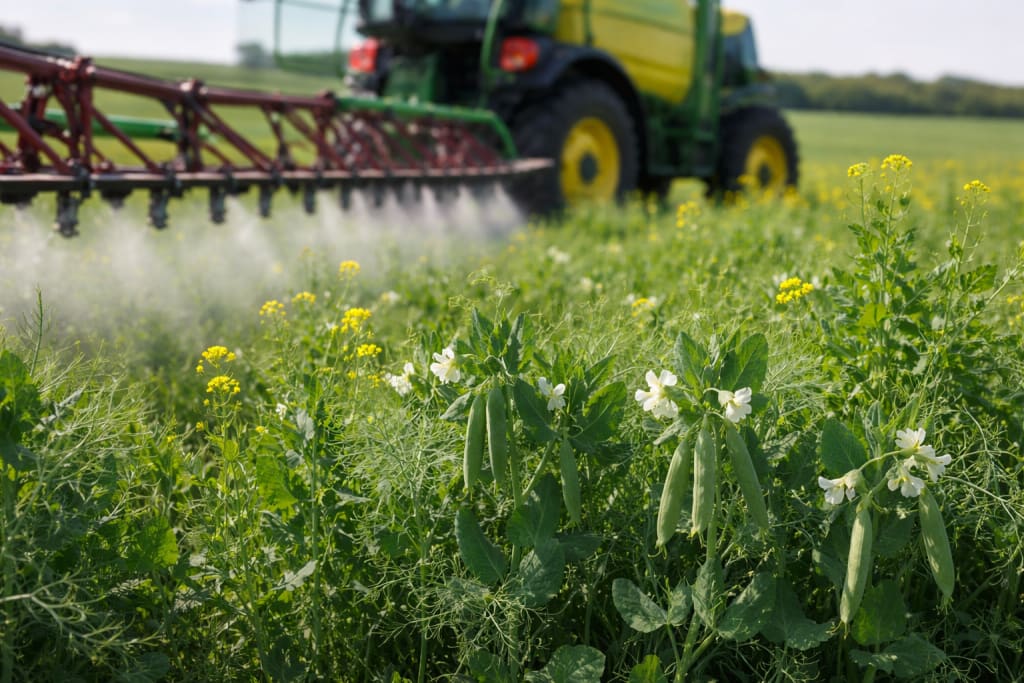
Pea cultivation occurs throughout most agricultural fields. They add nitrogen back into the soil through nitrogen fixation and provide farmers an opportunity to diversify their rotations. Peas have gained popularity in recent years because they can be used as rotation crops to improve soil health while requiring less fertiliser input. Field peas will require weed management due to their limited competitiveness against particular weed species. Pea fields contain a variety of weed species that require different management tactics.
Because field peas experience yield losses from early-season weed pressure, an integrated weed management approach is required to control the multiple weed species present in fields effectively. Field peas grow relatively slowly in the early stages of development when compared to some weed species. Early-season weed control can help prevent diseases and insect damage to pea crops. As a result, the development and implementation of comprehensive weed management strategies is essential for successful field pea production. Among these strategies is the use of glyphosate-based herbicides. When integrated thoughtfully with cultural and agronomic practices, it remains a cornerstone of pre-emergence weed control. By tailoring weed management programs to local conditions and staying informed about best practices, growers can protect their investment, maximise productivity and contribute to the long-term sustainability of their farming operations.
Pre-Plant & Pre-Emergence Tips
Spraying herbicides before seeding field peas requires precise timing based on weed life cycles. Ideally, when field peas emerge, they will enter a field that has already been treated for weeds, reducing competition. Because field peas do not compete well with weeds early on, it is essential to limit weed presence before or at emergence. Rainfall, soil texture and air temperature can also affect the application of herbicide for field peas, which is why programs need to be tailored to specific areas. In some situations, choosing a shallow tillage pass or a stale seedbed technique before seeding can further reduce weed pressure.
Identify which weed species are most common in the field and spray before field pea emergence. Focus on controlling weeds that will emerge before field peas, such as broadleaf weeds like lambs quarters, pigweed and wild mustard. Some grasses, such as foxtail and volunteer cereals, also emerge before field peas do. Applying a herbicide with glyphosate helps control weed seedlings.
When spraying an entire field, walk it beforehand to identify which weed species are present and at what growth stage. Note soil moisture and temperature levels, as these can also affect herbicide efficacy. Apply during the weeds' growing season for best results. Keep track of which herbicides were used on fields in the past to assess any risk of herbicide carryover.
Crop rotation and glyphosate spraying as part of a weed management program when growing cereal or oilseed crops help control weeds in field peas. Regardless of the program used, an integrated weed management strategy will yield the best results. Waiting to apply a herbicide until weeds emerge, then applying glyphosate before seeding, can help reduce weed competitiveness in the field. Tillage can help reduce the weed seed bank, but only if it is used correctly to prevent soil erosion. Always apply the recommended rate listed on the herbicide label and spray when weeds are small. Using multiple modes of action helps limit the selection pressure for herbicide-resistant weeds, whereas crop rotation helps reduce weed populations, improves soil health and can reduce disease pressure.
Best Practices for Herbicide Application and Post-Application
When weed management practices—such as spray dates, products used, weather conditions and outcomes—are consistently documented, a valuable resource is gradually established. Through diligent recording of these details, a comprehensive historical record is created that can be referenced in subsequent seasons. By regularly reviewing these records, patterns in weed pressure, herbicide effectiveness and recurring problem areas within fields are more easily identified. As a result, subtle trends that might not be apparent in a single season are revealed through ongoing documentation, enabling a more nuanced understanding of weed dynamics and herbicide performance over time.
Shifts in weed populations, the emergence of herbicide resistance or changes in the efficacy of certain products are detected more promptly when accurate records are maintained. This information enables timely adjustments to management strategies, ensuring that herbicide applications remain effective and that resistance risks are minimised. Additionally, evaluating past applications across different environmental conditions provides valuable insights into which practices are most effective under varying conditions.
Through these practices, a data-driven approach to weed management is enabled, enabling continuous improvement year after year. As a result, crop productivity and sustainability are better supported and long-term weed control success is enhanced. Ultimately, consistent, thorough documentation of herbicide application and post-application outcomes is a cornerstone of integrated weed management, ensuring that decisions are guided by evidence and experience.
About the Creator
Keep reading
More stories from Angelo Ean and writers in Journal and other communities.
Cognitive Impairment: Healthcare Consulting's Role in Improving Patient Care under NSQHS Standard 5
Cognitive impairment presents significant challenges in healthcare settings, requiring a structured and comprehensive approach to ensure patient safety and quality of care.
By Angelo Ean10 months ago in Journal
~ Fired ~
— Ai Intrusion ~ Are you Next ~ Is Ai Evolution after your job? — Few workplaces haven't been affected. Ai is in supermarkets, at doctors' offices, and even monitoring farms. I just can't think of anything this machine is not getting into, can you? For instance: Education ~ Law and Tech jobs will one day have a major influence or be taken over by these inanimate machines, with accuracy and vigor. From mechanics' diagnoses to a wide variety of everyday jobs, including fast food workers, with this input having the ability to cut their unnecessary work hours. I'm certain all of us have been touched by this with our short stories and colorful headings, have you? Even comments are very questionable 'Non-Robot' insertions.
By Jay Kantor9 days ago in Journal
The Panama Canal Is Forgotten: A New Interoceanic Corridor Opens That Will Change Global Trade
For more than a century, the Panama Canal has stood as one of the most important arteries of global trade. Since its opening in 1914, the canal has linked the Atlantic and Pacific Oceans, saving ships weeks of travel around South America and becoming a symbol of engineering brilliance and geopolitical power. Yet today, a growing number of experts argue that the Panama Canal is no longer the uncontested king of interoceanic trade. A new generation of interoceanic corridors—combining rail, road, port, and pipeline infrastructure—is emerging, with the potential to reshape global trade flows and reduce reliance on the historic waterway.
By Sadaqat Ali2 days ago in Journal




Comments
There are no comments for this story
Be the first to respond and start the conversation.