
US and Israel Carry Out Joint Attack on Iran as Tehran Launches Retaliatory Strikes
Rising regional tensions explode into open warfare as coordinated U.S.–Israeli strikes hit Iranian targets, prompting swift missile retaliation from Tehran and raising fears of a broader Middle East conflict.
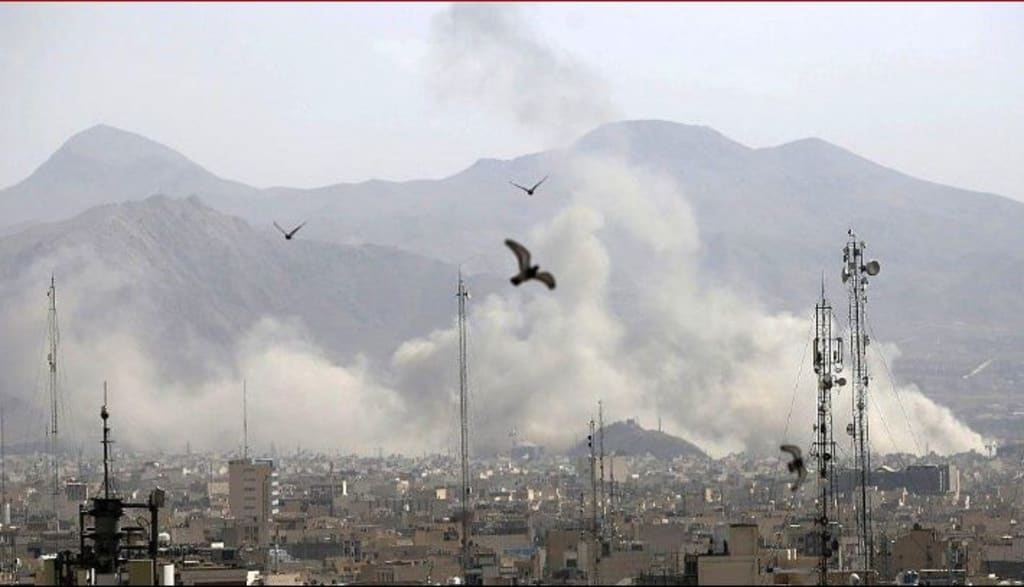
This unfolding crisis is not just another flashpoint — it marks one of the most direct and high-stakes military engagements involving these powers in decades.
🔥 What Triggered the Joint Operation?
According to officials in Washington and Tel Aviv, the operation was described as a pre-emptive strike designed to counter what they called “imminent threats” from Iran’s missile and military infrastructure.
U.S. President Donald Trump stated that the strikes were necessary to defend American interests and protect allies in the region. Meanwhile, Israeli Prime Minister Benjamin Netanyahu emphasized that Iran’s expanding missile program and alleged nuclear advancements posed an existential threat to Israel.
Israeli officials referred to the mission as Operation Lion’s Roar, a campaign reportedly targeting strategic military facilities, missile production sites, and command centers across Iran.
🎯 Where Did the Strikes Hit?
Reports indicate that multiple cities across Iran experienced explosions and air defense activity, including:
Tehran
Isfahan
Qom
Kermanshah
Smoke plumes were seen rising from various districts, and Iranian authorities temporarily shut down national airspace. Early accounts suggest that missile production facilities and military command structures were among the primary targets.
Iranian state media also reported civilian casualties, though independent verification remains limited as the situation continues to evolve.
🚀 Iran’s Swift Retaliation
Tehran did not wait long to respond.
Within hours, Iranian forces launched retaliatory missile and drone strikes aimed at Israeli territory and U.S. military bases in the region. Iranian officials labeled the joint attack an “act of aggression” and vowed continued resistance.
Missiles were reportedly fired toward:
Israel
U.S. installations in Gulf nations such as Bahrain
United Arab Emirates
Saudi Arabia
Several defensive systems intercepted incoming threats, but debris reportedly caused casualties in parts of the Gulf.
Iran’s leadership signaled that American and Israeli interests across the Middle East are now considered legitimate targets if hostilities continue.
🌍 A Region on Edge
The confrontation has sent shockwaves throughout global markets and diplomatic circles. Airspace closures disrupted commercial flights across the region, while oil prices surged amid fears of supply instability.
Regional governments scrambled to strengthen air defenses, and emergency alerts were issued in multiple Gulf states. Meanwhile, international calls for restraint began pouring in from European and Asian capitals concerned about the potential for a broader war.
The situation carries echoes of previous proxy conflicts, but this time the engagement is far more direct.
⚖️ What’s at Stake?
At the heart of this confrontation lies the long-running dispute over Iran’s nuclear ambitions and its regional influence through allied groups across the Middle East. Israel has repeatedly warned that it will not tolerate a nuclear-armed Iran, while Washington has maintained a fluctuating but firm stance against Tehran’s military expansion.
Iran’s Supreme Leader, Ali Khamenei, has reportedly been moved to a secure location. Iranian officials insist the country will defend its sovereignty and retaliate proportionally — or beyond — if attacked again.
For Israel and the United States, the message appears clear: deterrence through decisive action.
For Iran, the message is equally clear: retaliation will be immediate and forceful.
💣 Could This Escalate Further?
The biggest concern now is whether this confrontation remains limited or spirals into a sustained regional war.
Several factors will determine the next phase:
Scale of further retaliation
Civilian casualties and international pressure
Diplomatic backchannel efforts
Involvement of regional militias or allied forces
If proxy groups aligned with Tehran become actively engaged, the conflict could expand across multiple fronts — from Lebanon to the Gulf.
🕊️ Is Diplomacy Still Possible?
Despite the military escalation, diplomatic channels may not be entirely closed. Historically, even during intense confrontations, indirect negotiations have emerged behind the scenes.
However, the political climate in all three capitals — Washington, Jerusalem, and Tehran — currently favors strength over compromise. Public rhetoric has hardened, and national pride is deeply entwined with each government's position.
📌 Final Thoughts
The joint U.S.–Israeli strikes on Iran and Tehran’s retaliatory response represent a defining moment in Middle Eastern geopolitics. Unlike previous shadow conflicts, this confrontation is overt, high-profile, and dangerously unpredictable.
The coming days will reveal whether this becomes a short-lived but intense exchange — or the opening chapter of a prolonged regional conflict with global consequences.
One thing is certain: the world is watching closely, and the stakes have rarely been higher.
If you'd like, I can also write:
A geopolitical analysis version
A humanitarian impact angle
Or a market and oil price impact breakdown
About the Creator
What Is the Hanging Man Doji Pattern? Meaning, Strategy & Examples for 2025
Trading can feel confusing when market trends suddenly reverse. The hanging man doji is a critical candlestick pattern that traders rely on to identify possible reversals. For a deeper look at the hanging man doji, including its technical structure and real examples, traders often explore candlestick resources to refine their chart-reading skills. This guide will help you grasp its structure and how it indicates changes in market direction.
By Sanjeev Kumar3 days ago in Journal


Comments
There are no comments for this story
Be the first to respond and start the conversation.