
Texas’ Big Bend Braces for Border Wall in National Park, Worrying Local Republicans and Democrats
As Border Security Plans Advance, a Rare Bipartisan Coalition Emerges to Protect Big Bend’s Landscape, Economy, and Identity
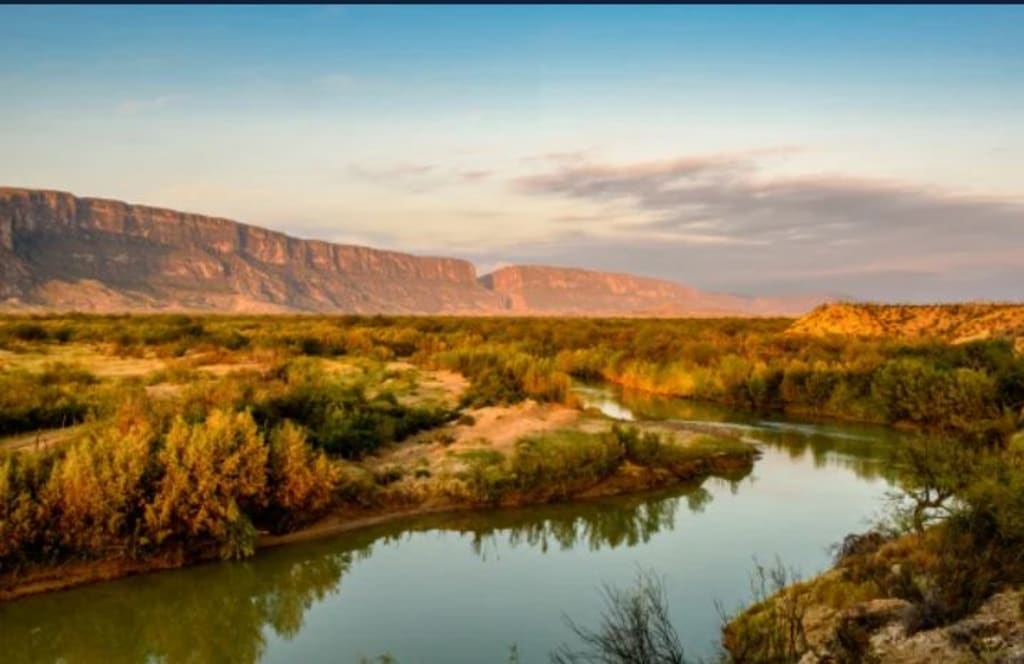
Deep in Far West Texas, where the desert stretches endlessly and the rugged canyons of the Rio Grande carve dramatic paths through ancient rock, a quiet but profound debate is unfolding. Big Bend National Park — one of America’s most remote and beloved national parks — is now at the center of renewed border wall discussions.
What makes this moment unusual is not just the proposal itself, but the reaction. In a region known for its conservative roots, Republicans and Democrats alike are voicing concern. Ranchers, sheriffs, county judges, conservationists, and small business owners are finding rare common ground: they fear the construction of a border wall could permanently alter the landscape and the economy that sustains it.
Why Big Bend Is Different
Unlike more urbanized stretches of the U.S.–Mexico border, Big Bend is defined by its remoteness. There are no sprawling cities hugging the boundary line. Instead, towering cliffs, vast desert plains, and the winding path of the Rio Grande form a natural divide between Texas and Mexico.
For decades, many locals have argued that this rugged terrain already serves as a formidable barrier. The steep canyons and isolated environment make large-scale crossings difficult and dangerous. Because of that, proposals to build a traditional steel border wall through parts of the park and nearby public lands have struck many residents as unnecessary.
Supporters of expanded border infrastructure argue that physical barriers combined with technology improve enforcement. Critics, however, question whether building through a protected national park is the right solution for this particular region.
A Rare Bipartisan Concern
In today’s political climate, bipartisan agreement can feel almost impossible. Yet in Brewster County and neighboring areas, concern over potential wall construction has crossed party lines.
Local Republican officials — including county judges and sheriffs — have raised doubts about both the effectiveness and practicality of installing miles of fencing in such rugged terrain. They emphasize that tourism, not heavy industry, fuels the regional economy.
Democratic leaders have echoed these concerns, urging state and federal officials to reconsider permanent wall construction within or near protected lands. Their argument is straightforward: protect the environment, preserve tourism, and invest in smarter border solutions.
The fact that Republicans and Democrats are aligned on this issue reflects how deeply Big Bend is woven into the identity of West Texas communities.
The Economic Lifeline at Stake
Tourism is not just a side industry in Big Bend — it is the lifeblood of the region.
According to the National Park Service, visitors to Big Bend National Park contribute tens of millions of dollars annually to local economies. Hotels, restaurants, river guides, outfitters, and gas stations in small towns like Study Butte and Terlingua depend heavily on seasonal travelers seeking adventure and solitude.
Many local business owners worry that large-scale construction projects, restricted access to river areas, or even the perception of industrialization could discourage visitors. Big Bend’s appeal lies in its untouched beauty and sense of remoteness. A towering steel structure cutting through desert vistas could fundamentally change that image.
For communities already operating on thin margins, even a modest drop in tourism could have outsized consequences.
Environmental and Wildlife Concerns
Environmental advocates argue that constructing a wall through sensitive desert ecosystems would disrupt wildlife migration patterns and fragment habitats.
Big Bend is home to black bears, mountain lions, javelinas, and hundreds of bird species. The Rio Grande corridor also serves as an essential pathway for wildlife movement between the United States and Mexico.
Barriers could block those natural routes. Past wall projects in other border regions have raised similar concerns, with conservationists documenting changes in animal behavior and restricted movement.
Additionally, flash flooding is common in desert environments. Critics warn that solid barriers can trap debris during heavy rains, increasing the risk of structural damage and environmental harm.
Cultural and Historical Dimensions
Beyond economics and ecology, Big Bend carries cultural significance. The region has a rich Indigenous history, along with centuries of cross-border exchange between communities on both sides of the Rio Grande.
Residents often describe the border here not as a line of division but as a shared landscape. Families, traditions, and histories have long stretched across the river.
Opponents of the wall argue that inserting heavy infrastructure into this setting risks erasing elements of that shared heritage. They say the decision should not be made without careful consultation and transparent dialogue with local stakeholders.
Federal Justifications and Waivers
Federal officials maintain that strengthening border infrastructure is necessary for national security. In some cases, environmental and land-use regulations have been waived to expedite border construction elsewhere along the southern border.
Such waivers have sparked additional concern in Big Bend, where many residents feel their voices may not carry enough weight in Washington. They want assurances that the park’s protected status and environmental safeguards will not be sidelined.
The debate reflects a broader national tension: how to balance border enforcement priorities with conservation values and local autonomy.
Technology vs. Steel: A Modern Debate
Another key question raised by locals is whether physical walls are the most effective solution in 2026.
Advancements in surveillance technology — including sensors, drones, and mobile response units — have transformed border enforcement capabilities. Some West Texas officials suggest that investing in these tools would provide flexibility without permanently altering protected landscapes.
The argument is not necessarily against border security itself, but against a one-size-fits-all approach. Big Bend’s geography, they contend, requires tailored solutions rather than uniform construction.
What Happens Next?
For now, Big Bend stands in a state of uncertainty.
Community meetings, petitions, and public statements continue to surface. Residents are watching closely for federal announcements regarding land surveys, construction contracts, or environmental reviews.
Whether wall segments ultimately rise along this remote stretch of Texas remains to be seen. But what is already clear is that the conversation has reshaped local political dynamics. In a time when division dominates headlines, Big Bend offers an unusual example of unity — not around ideology, but around place.
A Landscape Worth Protecting
At sunset, when the desert sky turns brilliant shades of orange and purple over Big Bend’s mountains, it becomes easier to understand why emotions run high. This is not just empty land. It is a sanctuary, an economic anchor, and a cultural crossroads.
The debate over border infrastructure in Big Bend is about more than policy. It is about identity, stewardship, and what kind of legacy West Texans want to leave behind.
As Republicans and Democrats continue to voice shared concerns, one message echoes across the desert: whatever the decision, it must respect the land that defines them all.
About the Creator
~ Fired ~
— Ai Intrusion ~ Are you Next ~ Is Ai Evolution after your job? — Few workplaces haven't been affected. Ai is in supermarkets, at doctors' offices, and even monitoring farms. I just can't think of anything this machine is not getting into, can you? For instance: Education ~ Law and Tech jobs will one day have a major influence or be taken over by these inanimate machines, with accuracy and vigor. From mechanics' diagnoses to a wide variety of everyday jobs, including fast food workers, with this input having the ability to cut their unnecessary work hours. I'm certain all of us have been touched by this with our short stories and colorful headings, have you? Even comments are very questionable 'Non-Robot' insertions.
By Jay Kantor27 days ago in Journal
Why Small Businesses Are Prime Targets for Cyber Attacks
Key Takeaways: SMBs are more likely to be targeted if they have limited cybersecurity resources. Common attacks: phishing, ransomware, and data breaches. Cybersecurity strategies that reduce risks: password management, employee training, and software security updates. Tapping into affordable cybersecurity services can prove vital for SMBs.
By William Powell4 days ago in Journal



Comments
There are no comments for this story
Be the first to respond and start the conversation.