
Upgrading Steel Building Structures to Support New Overhead Crane Loads
Ensure Safe and Efficient Overhead Crane Installation
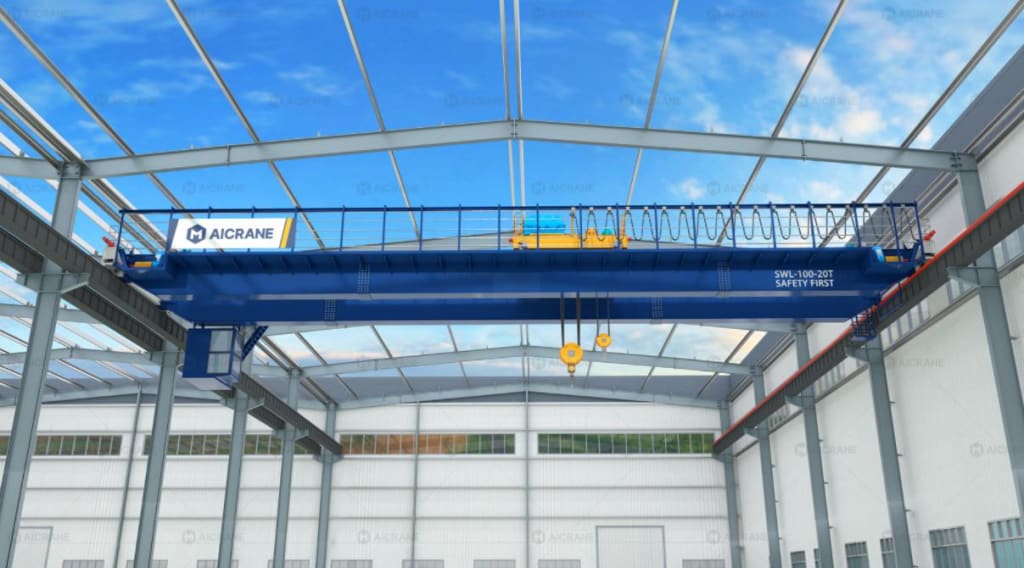
As industries grow and operations become more complex, the demand for efficient material handling systems increases significantly. One of the most effective solutions to improve material handling is the installation or upgrade of overhead cranes. However, introducing new overhead crane loads into an existing steel building is not as simple as bolting a crane system to the structure. It requires thorough planning, structural evaluation, and often, significant modifications to the building framework. This article explores the process of upgrading steel building structures to support new overhead crane loads, including the key considerations, evaluation methods, structural reinforcements, and best practices.
Understanding the Need for Upgrades
Overhead cranes are used in manufacturing plants, warehouses, assembly lines, and maintenance facilities to move heavy loads efficiently. Adding or upgrading an overhead bridge crane in an existing steel structure may be driven by:
- Increased production capacity
- Change in manufacturing processes
- Introduction of heavier or larger components
- Improved workplace efficiency and safety
- Facility repurposing or modernization
Each of these reasons introduces additional loads, including static loads (from the crane structure), dynamic loads (from hoisting operations), and lateral loads (due to crane movement). Existing steel structures may not have been designed to accommodate these new forces, making structural upgrades essential to ensure safety and compliance.
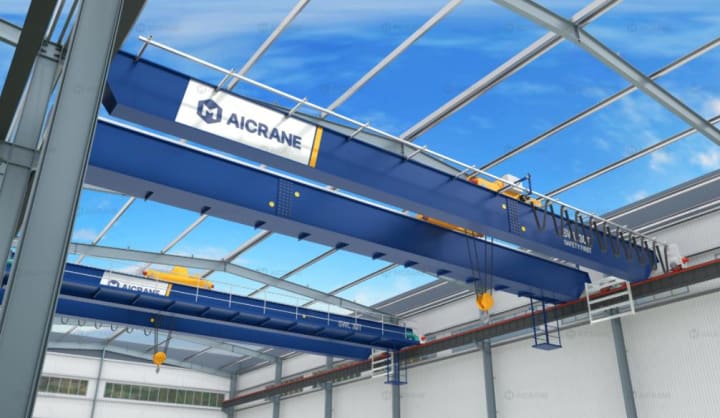
Step 1: Evaluating the Existing Building Structure
Before any modifications can begin, the existing steel building must be evaluated by a qualified structural engineer. This evaluation includes:
1.1 Reviewing As-Built Drawings and Specifications
Original design drawings, structural specifications, and previous load calculations should be collected. These documents provide a baseline for understanding how the structure was originally intended to perform.
1.2 Structural Integrity Assessment
A thorough site inspection is conducted to examine columns, beams, bracings, anchorages, and connections for signs of wear, corrosion, deformation, or previous damage. Nondestructive testing methods may also be used to assess internal conditions.
1.3 Load Capacity Analysis
Using software modeling or manual calculations, engineers will analyze the load-bearing capacity of the building. This includes checking:
- Column and beam strength
- Roof and floor load distribution
- Foundation strength and settlement
- Resistance to crane-induced vibrations and lateral forces
If the structure was not originally designed to carry crane loads, it is likely to fall short in one or more of these areas, prompting the need for reinforcements.
Step 2: Defining Crane Requirements
To design effective structural upgrades, the new crane system’s specifications must be clearly defined:
- Crane type (single girder, double girder, top-running, under-running)
- Load capacity (e.g., 5 tons, 10 tons, 50 tons)
- Span and travel length
- Lifting height
- Hoisting and travel speeds
- Duty cycle and classification (e.g., FEM or CMAA class)
These factors directly influence the magnitude and distribution of loads imposed on the building structure.
Step 3: Designing Structural Reinforcements
Based on the evaluation and crane specifications, engineers will design a reinforcement strategy. This may include:
3.1 Strengthening Columns and Beams
One common method is reinforcing existing structural members with additional steel plates or sections. Columns may be encased or stiffened using channel sections or welded steel plates, while beams may be supplemented to increase moment resistance.
3.2 Installing Crane Runway Beams
Crane runway beams are critical for top-running overhead cranes. These are typically added as independent structures or integrated into existing roof trusses and supported by vertical columns. These beams must be carefully aligned and braced to minimize deflection and vibration.
3.3 Adding or Upgrading Bracing Systems
Lateral forces generated by crane acceleration and deceleration can stress a building’s frame. Bracing systems (X-bracing, K-bracing, portal frames) are often added or enhanced to maintain structural stability.
3.4 Modifying Foundations
In many cases, existing foundations may not be able to support the added loads from crane operations. Reinforcement may include:
- Enlarging footings
- Adding piles or caissons
- Increasing foundation depth
- Pouring new concrete piers
3.5 Independent Support Structures
In situations where upgrading the building structure is not feasible, an independent support structure for the overhead crane can be installed within the existing facility. This freestanding frame supports the crane without transferring loads to the building’s primary structure.
Step 4: Complying with Regulations and Standards
All modifications must comply with relevant building codes and crane design standards. Depending on the region, this may include:
- American Institute of Steel Construction (AISC) standards
- Occupational Safety and Health Administration (OSHA) regulations
- CMAA (Crane Manufacturers Association of America) specifications
- ASCE 7 (Minimum Design Loads for Buildings and Other Structures)
- Local building codes
Designs should be reviewed and approved by licensed professionals, and necessary permits must be obtained before construction begins.
Step 5: Implementation and Quality Control
5.1 Construction Planning
Once the upgrade design is finalized, a detailed construction plan is developed. This includes:
- Material procurement
- Construction sequencing
- Safety protocols
- Temporary support systems
Construction activities should minimize disruption to ongoing operations, especially in active production facilities.
5.2 On-Site Execution
Experienced contractors and welders carry out the reinforcement work, adhering strictly to design specifications. Welds, bolted connections, and alignments must be inspected for quality and safety compliance.
5.3 Final Inspection and Testing
After structural upgrades are completed and the crane is installed, a final inspection is carried out. Load testing of the crane may also be required to confirm the system performs as intended without overloading the structure.
Common Challenges in Structural Upgrades
Lack of original design documents: Makes evaluation difficult
Tight installation spaces: Limits crane size and structure reinforcement
Operational constraints: Minimizing downtime can be a challenge
Hidden defects: Corrosion or fatigue not visible during inspection
Cost management: Balancing upgrade cost against new construction or crane alternatives
Benefits of Upgrading Steel Structures for Cranes
Though upgrading steel building structures may be complex and costly, it offers numerous benefits:
- Extended facility lifespan
- Increased production efficiency
- Improved workplace safety
- Avoidance of new construction
- Better asset utilization
It also provides flexibility for future expansions or heavier lifting operations.
Conclusion
Upgrading an existing steel building to support new overhead crane loads is a strategic investment that enhances operational capability. However, it requires a multi-disciplinary approach involving structural engineers, crane manufacturers, contractors, and regulatory bodies. A thorough evaluation, clear understanding of crane requirements, and professionally designed reinforcements are crucial to the success of such upgrades.
At Aicrane, we specialize in customized overhead crane solutions and can help you assess your existing facility, design structural upgrades, and provide reliable crane systems that meet your operational demands. Whether you are planning to increase lifting capacity or modernize your operations, our team is here to support your upgrade journey safely and efficiently.
About the Creator
Aicrane01
Welcome to the Aicrane Blog, your practical guide to lifting solutions. Discover articles covering overhead cranes, gantry cranes, winches, steel structures, boat lifts, and more.
Website: https://steelmillcranes.com/
~ Fired ~
— Ai Intrusion ~ Are you Next ~ Is Ai Evolution after your job? — Few workplaces haven't been affected. Ai is in supermarkets, at doctors' offices, and even monitoring farms. I just can't think of anything this machine is not getting into, can you? For instance: Education ~ Law and Tech jobs will one day have a major influence or be taken over by these inanimate machines, with accuracy and vigor. From mechanics' diagnoses to a wide variety of everyday jobs, including fast food workers, with this input having the ability to cut their unnecessary work hours. I'm certain all of us have been touched by this with our short stories and colorful headings, have you? Even comments are very questionable 'Non-Robot' insertions.
By Jay Kantor3 days ago in Journal
A Love Forboding
The chipped stone slope caused unbearable footing. I slid, skirting on my heels. I cast my shield, relinquishing my guard to stay upright. Left with my double-edge and a prayer to the maker, I skated toward my objective. The earthly stubble gave way to solid ground. I found myself restored, a trail of dust in my wake.
By James U. Rizzi4 days ago in Fiction


Comments
There are no comments for this story
Be the first to respond and start the conversation.