
Ukraine's P1SUN Drone Interceptor Sold to the US for Gulf Defence
Cost: $2,500 each, selling at $15,000 a pop

Oh, the irony of it all.
The sale of Ukrainian P1SUN interceptor drones to the US is a hugely significant event. This agreement, which involves the delivery of an initial 1,000 units to the Middle East, reflects the urgent requirement for cost-effective solutions to counter prolific loitering munitions such as the Iranian-designed Shahed series.
By migrating from multi million-dollar missile interceptors to agile, low-cost unmanned aerial vehicles, the US and its regional partners are attempting to re-balance the economic equation of aerial defence.
It means that despite the much touted technological wizardry of the US, they were caught on the wrong foot and just do not have the technology to defeat the hordes of Shaheds that Iran has launched at their Middle East bases and the infrastructure of their allies.
Trump has publicly insulted President Zelenskyy on several occasions, to his face and online. And now the US military have told Trump that he needs Ukraine's technology and expertise in defeating Iranian drones. Trump has had to beg.
The P1SUN drone: Ukrainian innovation in aerial defence
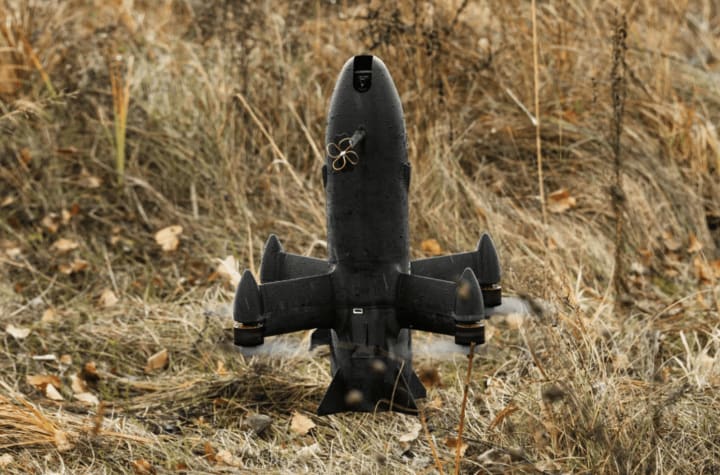
The P1SUN is a specialised interceptor drone developed by the Ukrainian firm SkyFall. Unlike traditional reconnaissance or strike platforms, the P1SUN is engineered specifically for the pursuit and kinetic destruction of other unmanned systems.
It features a modular architecture that relies heavily on 3D-printed fuselage components, allowing for rapid mass production and easy field repairs. Technically, the platform has seen significant iterative improvements based on active combat data from the Russo-Ukrainian war.
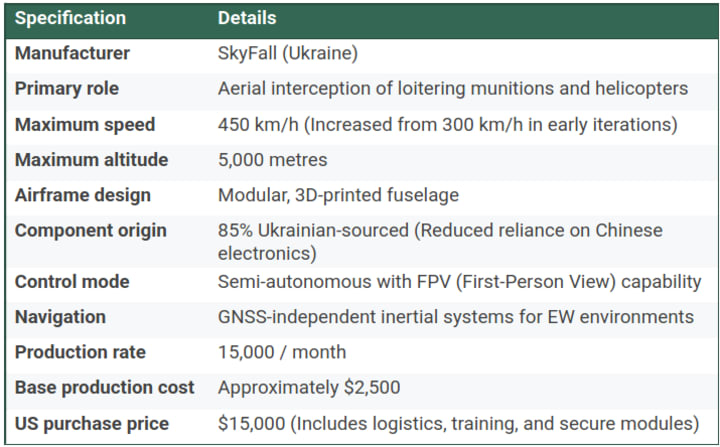
Current models are capable of reaching altitudes of up to 5 kilometres and have achieved top speeds exceeding 450 kilometres per hour, representing a 50 per cent increase over earlier prototypes.
This velocity is critical for intercepting fast-moving loitering munitions before they reach high-value targets.
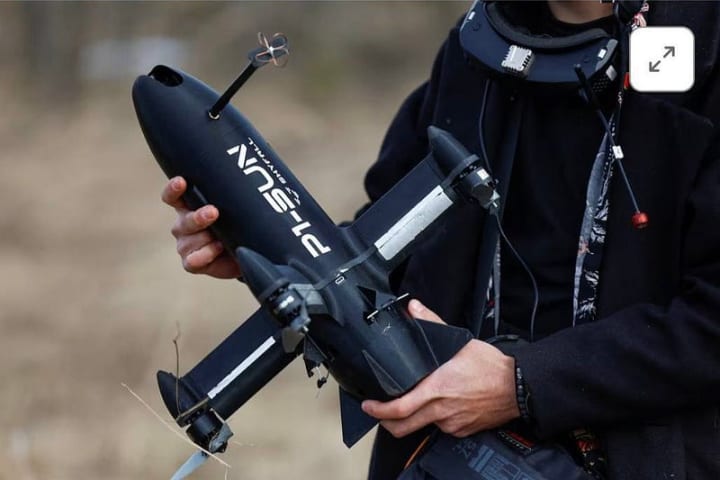
Furthermore, the P1SUN is designed with supply chain resilience in mind; approximately 85 per cent of its components are sourced within Ukraine, significantly reducing the reliance on Chinese-manufactured electronics (and motor magnets) that often complicate Western defence procurement.
Details of the US-Ukraine purchase agreement
The purchase agreement is a component of a broader strategic framework often referred to as the 'Drone Deal'.
Under this arrangement, the US has committed to acquiring Ukrainian-developed unmanned systems to bolster its own capabilities and those of its allies in the Middle East. The first 1,000 units mentioned in recent reports represent an initial tranche intended for immediate operational deployment.
A critical aspect of this agreement is that it involves intergovernmental negotiations rather than simple commercial contracts between the Pentagon and private manufacturers.
The Ukrainian government maintains strict control over the export of these systems to ensure that domestic defence requirements are not compromised.
The deal also includes provisions for the transfer of acoustic detection technologies and electronic warfare suites that complement the P1SUN's kinetic capabilities.
Economics of the markup: From $2,500 cost to $15,000 sale price
The financial structure of the P1SUN deal highlights a significant disparity between production costs and final export prices. While the base manufacturing cost of a P1SUN unit is approximately $2,500, the US is purchasing these units at $15,000 each.
This markup, though substantial in percentage terms, is considered highly economical within the context of contemporary air defence.
The $12,500 difference per unit covers several essential overheads. These include the costs of international logistics, secure encrypted communication modules required for integration with Western systems, and the intensive research and development efforts that allow the drone to stay ahead of evolving electronic countermeasures.
Additionally, a portion of the price reflects the 'combat-proven' premium; the P1SUN is not a theoretical concept but a system that has already recorded over 1,000 successful interceptions.
Even at $15,000, the P1SUN remains orders of magnitude cheaper than the Patriot PAC-3 missiles, which can cost upwards of $4 million per launch.
The U.S. burned through 800+ Patriot interceptors in five days at $4 million each, and even before this war started, the Pentagon only had a quarter of the interceptor stockpile it needs to defend all its global commitments. - Twitter citing Pentagon briefing sources
Skyfall, the manufacturer of the P1Sun says that production levels will soon reach 15,000 per month. Yes, that's 500 per day.
The technology security risk
The deployment of Ukrainian interceptor technology to the Middle East introduces substantial counter-intelligence challenges. A primary concern for Western strategists is the potential for Russia or China to acquire intact P1SUN units through battlefield recovery or third-party diversion.
Given the reliance of the Russian military on Iranian drone designs, Moscow has a direct interest in reverse-engineering the specific acoustic and artificial intelligence algorithms that enable the P1SUN to neutralise these threats.
Besides that, China maintains a dominant position in the global drone component supply chain, and any exposure of the proprietary flight controllers or encrypted datalinks within the P1SUN could allow Beijing to develop more sophisticated countermeasures.
The risk of intellectual property theft is heightened in the Middle East, where varied security protocols across different host nations may create vulnerabilities.
To mitigate this, the agreement includes 'fail-safe' software that can remotely sanitise critical systems if a drone is downed in contested territory.
Yes, Ukraine has a kill-switch.
This is an edited version of a story originally published on substack.
About the Creator
James Marinero
I live on a boat and write as I sail slowly around the world. Follow me for a story diet of Tech, AI, Geopolitics and more as the world is rapidly changing. I also write techno thrillers, with six to my name. More of my stories on Medium
Keep reading
More stories from James Marinero and writers in Journal and other communities.
US Submarine Torpedos and Sinks Iranian Frigate: Periscope Footage
The sinking of an Iranian naval vessel by a US submarine is a step change in contemporary maritime engagement and increases the already huge stakes in the Iran-US conflict. This event involved the deployment of advanced underwater ordnance against a surface combatant.
By James Marinero5 days ago in Journal
How Receipt Printers Improve Checkout Speed in Retail Stores
Introduction Retail stores in New Zealand often face long queues during busy hours. Customers expect quick service, especially in supermarkets, convenience stores, and small retail outlets. When checkout lines move slowly, shoppers may feel frustrated and leave the store with a negative experience.
By POS Central NZ2 days ago in Journal
3D Projector Market Set to Hit $5.95B by 2031
When Flat Screens Aren’t Enough Anymore The first time you watch something truly immersive on a massive projection screen, it feels different. Not just bigger—but deeper. Images appear to float, landscapes stretch beyond the frame, and suddenly the experience isn’t just watching… it’s stepping into the scene.
By Andrew Hamiltonabout 7 hours ago in Journal




Comments
There are no comments for this story
Be the first to respond and start the conversation.