
US Submarine Torpedos and Sinks Iranian Frigate: Periscope Footage
The submarine strike on one of Iran's flagships is a serious escalation

The sinking of an Iranian naval vessel by a US submarine is a step change in contemporary maritime engagement and increases the already huge stakes in the Iran-US conflict. This event involved the deployment of advanced underwater ordnance against a surface combatant.
Let’s look at what happened and the wider implications.
The incident: Anatomy of a torpedo strike
The engagement occurred when a US Navy attack submarine identified a surface threat.
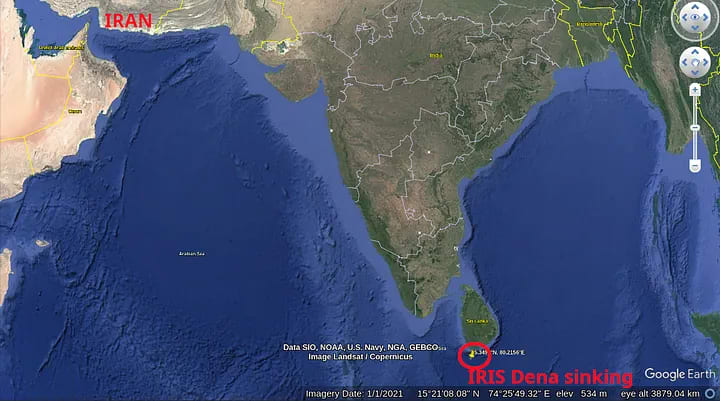
The vessel — the Islamic Republic of Iran Navy ship (IRIS) was targeted while it was in transit back to Iran following its participation in the International Fleet Review 2026 and the Milan multinational naval exercises in Visakhapatnam, India. The specific coordinates for the site of the sinking are: 5.3494°N, 80.2156°E, approximately 40 nautical miles (74 km) south of the coastal city of Galle, Sri Lanka.
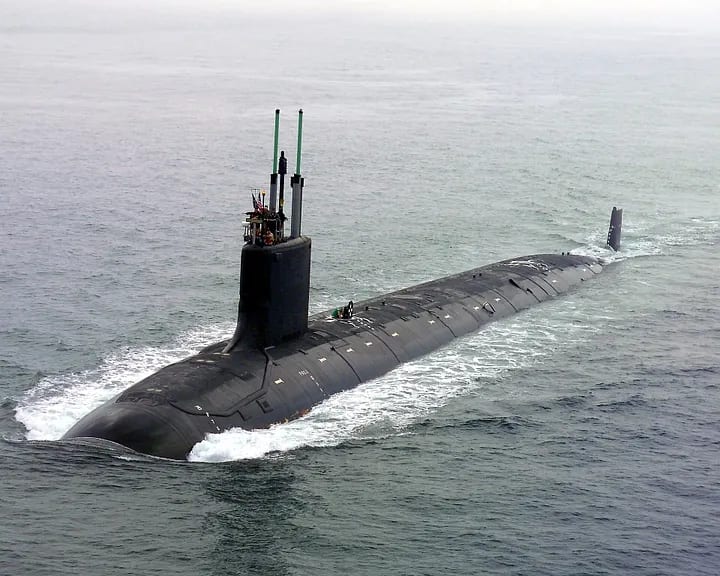
The analysts’ consensus is that the attacking submarine was a Virginia-class nuclear-powered attack submarine (SSN).
This class is the most advanced of the US’s fast-attack fleet, specifically designed for multi-mission operations in both deep-water and near-shore environments. The precision required to track a Mowj-class frigate in the open Indian Ocean and execute a single-shot sinking aligns with the capabilities of this specific class.
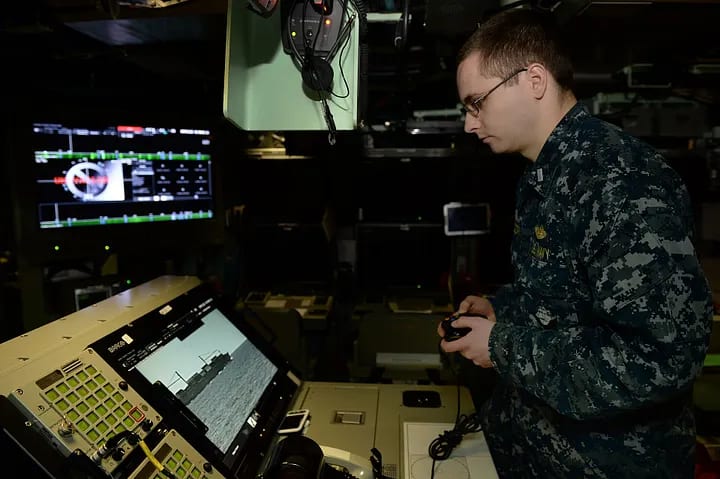
Furthermore, the Pentagon’s release of infrared footage from the engagement — often referred to as ‘periscope footage’ in press briefings — is consistent with the high-resolution imaging systems found on Virginia-class photonics masts.
These masts replace traditional optical periscopes with electronic sensors, allowing for the clear, digital black-and-white recording shared by the Department of Defense. The sensors are controlled using an XBox controller.
Modern submarine warfare relies on stealth and recognising the acoustic signature of the target as well as a visual ID if it is considered safe to work at periscope depth.
Once the command was issued, the submarine launched an Mark 48 ADCAP (Advanced Capability) torpedo. Unlike the unguided projectiles of previous eras, the Mark 48 is a sophisticated heavyweight torpedo designed to detonate beneath the keel of a ship.
When the torpedo reaches its proximity to the hull, the explosion creates a high-pressure gas bubble. This bubble expands and contracts rapidly, lifting the vessel out of the water before the subsequent vacuum causes the hull to collapse under its own weight.
This process, known as breaking the back of the ship, ensures that even heavily armoured vessels suffer catastrophic structural failure. In this instance, the vessel was cleaved into two distinct sections, leading to a rapid loss of buoyancy and a vertical descent to the seabed.
Historical precedent: Torpedo sinkings in modern naval conflict
The destruction of a naval surface ship by a submarine is rare in the post-1945 era. While some commentators, including figures such as Pete Hegseth, have suggested that this is the first instance of a submarine sinking an enemy vessel in wartime since the Second World War, such a claim is factually incorrect.
It overlooks one of the most significant naval engagements of the late twentieth century.
During the Falklands War in 1982, the British Royal Navy nuclear submarine HMS Conqueror intercepted the Argentine cruiser ARA General Belgrano. The submarine fired two Mark 8 torpedoes which hit the vulnerable stern of the vessel, resulting in the sinking of the cruiser and the loss of 323 lives.
This remains the only instance since 1945 where a nuclear-powered submarine has sunk a warship in active combat prior to the current engagement. The General Belgrano sinking forced the Argentine fleet to remain in port for the remainder of the conflict, demonstrating the psychological and physical dominance of subsurface platforms.
However, there has been at least one other sinking of a surface vessel by a submarine (which may not have been nuclear powered). This was the sinking of the Russian cargo vessel Ursa Major in the Mediterranean Sea on 23 December 2025, which I analysed in another story.
The target: Capabilities and role of the IRIS Dena
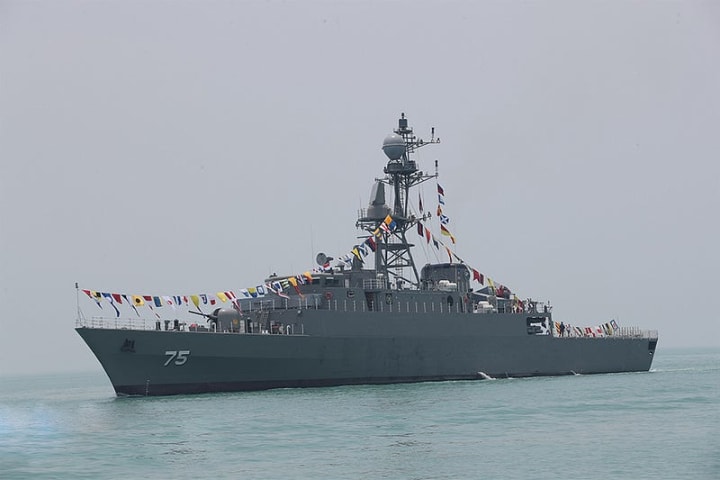
The vessel targeted in this engagement was the IRIS Dena, a Mowj-class frigate.
Commissioned into the Islamic Republic of Iran Navy in 2012, the Dena represented a significant domestic achievement for the Iranian defence industry. It was designed to provide the Iranian Navy with a blue-water capability, allowing for operations beyond the immediate confines of the Persian Gulf.
The Dena was equipped with a variety of sensors and armament, including anti-ship cruise missiles and a 76mm main gun. Despite these surface capabilities, the vessel possessed limited anti-submarine warfare sensor suites.
Modern frigates of this class are vulnerable to quiet, nuclear-powered attack submarines that can remain submerged and undetected for indefinite periods.
The role of the IRIS Dena was primarily focused on maritime presence and the projection of Iranian influence in the Indian Ocean and the Red Sea. Its removal from the order of battle degrades the ability of the Iranian Navy to provide escorts for commercial shipping or to monitor international naval movements in the region.
Strategic implications: Widening the theatre of war
The use of a submarine to neutralise a surface threat indicates an expansion of the operational theatre.
While much of the recent tension in the region has focused on aerial strikes and drone warfare, the introduction of subsurface combatants signals a shift towards high-intensity naval warfare. This engagement demonstrates that the United States is willing to utilise its most secretive and potent assets to achieve its objectives.
This action forces opposing navies to invest heavily in anti-submarine technology, diverting resources away from offensive surface operations.
Furthermore, the sinking of a flagship such as the IRIS Dena serves as a clear signal that territorial waters and international shipping lanes are under the direct protection of advanced subsurface patrols.
Broader ramifications: Escalation risks and naval deterrence
The decision to sink a sovereign naval vessel carries profound risks of escalation. In international law, a naval ship is considered sovereign territory.
An attack on such a vessel is frequently viewed as an act of war, but the meassaging from Washington, despite Trump having used the word ‘war’ in relation to the conflict, is that this is a ‘Major Combat Operation’.
That sounds to me like ‘Kremlin speak’.
The Iranian government is likely to perceive this as a direct provocation, potentially leading to retaliatory strikes against commercial shipping in the Strait of Hormuz, which they have announced as being ‘closed to shipping’.
However, the primary intent behind such a strike is often deterrence. By demonstrating the lethal efficiency of the Mark 48 torpedo and the inability of Iranian sensors to detect a Virginia-class submarine, the United States establishes a clear hierarchy of naval power.
The objective is to make the cost of further maritime aggression prohibitively high. If the Iranian Navy cannot protect its most modern frigates from underwater attack, it becomes difficult for them to maintain a credible naval threat against larger carrier strike groups.
Whichever way you look at it, the Iranian navy has so far taken a serious beating.
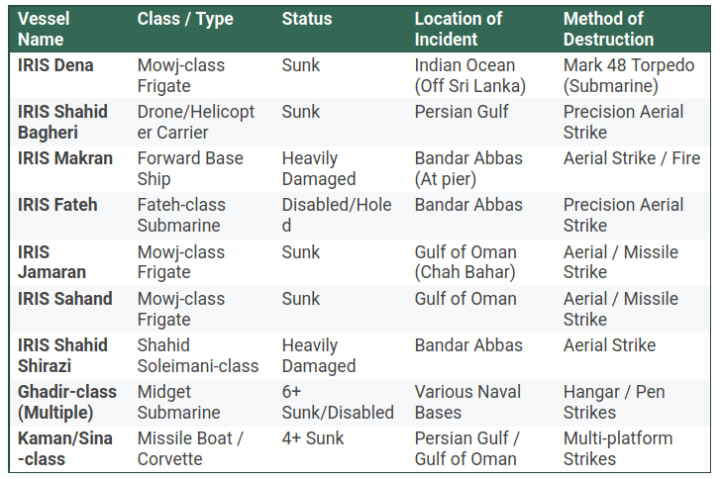
The long-term impact on naval doctrine may be significant. Other regional powers will observe the ease with which a modern frigate was neutralised.
The sinking of the IRIS Dena marks the end of a long period of relative calm in deep-sea naval engagements and reaffirms the submarine as the ultimate referee of the high seas.
This story was originally published on Medium.
(c) James Marinero 2026. All rights reserved.
About the Creator
James Marinero
I live on a boat and write as I sail slowly around the world. Follow me for a story diet of Tech, AI, Geopolitics and more as the world is rapidly changing. I also write techno thrillers, with six to my name. More of my stories on Medium
Keep reading
More stories from James Marinero and writers in Journal and other communities.
Ukraine Using The Copperhead Laser-guided Artillery Shell With Great Success
A video compilation has recently emerged showing the very successful use of the M712 Copperhead laser-guided artillery shell in Ukraine. That led me to a deep dive into the technology of this interesting, supposedly obsolete, weapon and what it teaches us for the future.
By James Marinero4 days ago in Journal
REEEEEEEEE!
I'm on a low road right now. There are a literal million things to do and not one of them worth my time. I would rather sit in place and burn but the orbit takes me on its inevitable route 'round the center; and I a center in my own right, around which others orbit, and so on and so forth, ad infinitum, ad nauseum.
By C. Rommial Butler7 days ago in Poets



Comments
There are no comments for this story
Be the first to respond and start the conversation.