
Trade Finance Market Signals a New Era of Global Deals
Trade finance dynamics shaping modern cross, border commerce
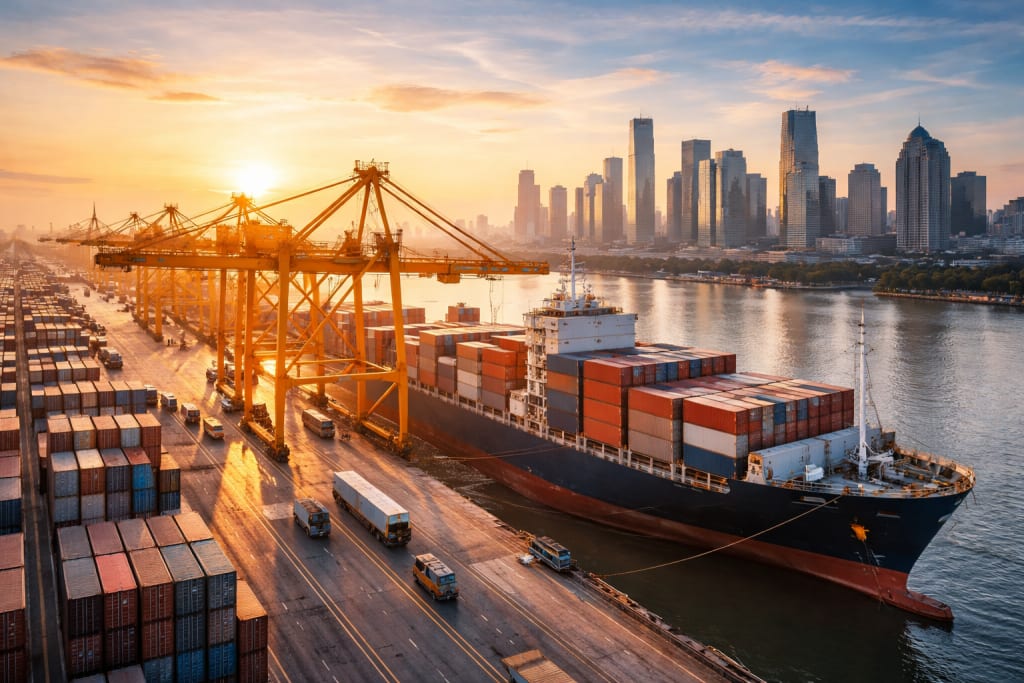
The harbor lights flicker just before dawn as cranes begin lifting steel containers onto a massive cargo ship bound for another continent. Every container carries more than goods, it carries contracts, credit guarantees, risk assessments, and the invisible financial frameworks that make global trade possible.
Behind the movement of commodities lies a sophisticated financial engine. Trade finance quietly powers the global marketplace, connecting exporters, importers, banks, and insurers. As supply chains evolve and economies adapt to digital transformation, the trade finance ecosystem is experiencing a subtle but meaningful shift that reflects deeper changes in global commerce.
After years of disruption, the market is gradually stabilizing while adapting to new financial technologies, regulatory shifts, and rising international trade complexity.
The Global Pulse of Trade Finance in Modern Commerce
International trade would struggle to function without structured financial support. Trade finance provides mechanisms, letters of credit, export financing, guarantees, and insurance, that reduce risk between trading partners separated by geography, regulations, and currencies.
These financial instruments act as bridges of trust. A manufacturer in Asia can confidently ship goods to a retailer in Europe because a financial institution guarantees payment conditions. The system ensures liquidity flows smoothly across borders, enabling trade relationships that might otherwise be considered too risky.
Within this ecosystem, institutions constantly compete to secure trade finance market share by expanding digital services, improving risk evaluation systems, and forming partnerships with global trade platforms. Banks are also integrating blockchain and AI, based document verification tools to reduce paperwork and accelerate approvals.
Technology adoption is especially important as global trade becomes increasingly complex. Businesses now expect faster approvals, real, time transaction tracking, and automated compliance verification. These evolving expectations are gradually reshaping the financial infrastructure behind international commerce.
Financial institutions that adapt quickly to these digital demands are gaining stronger positions in global trade corridors. Meanwhile, smaller exporters benefit from simplified financing access, allowing them to participate in markets previously dominated by large multinational firms.
Market Expansion Reflecting Global Trade Confidence
Economic forecasts suggest steady expansion as international trade stabilizes following supply chain disruptions of recent years. According to Mordor Intelligence, the trade finance market size is estimated at USD 83.42 billion in 2026, rising from USD 80.64 billion in 2025 and projected to reach USD 98.83 billion by 2031, representing a 3.45% compound annual growth rate during 2026, 2031.
These numbers highlight a market that is not only recovering but also evolving alongside global trade modernization.
Several structural forces are reinforcing this expansion:
- Increasing international trade agreements
- Digitization of financial documentation
- Rising participation of small and medium exporters
- Demand for supply, chain financing solutions
As companies diversify supply chains across regions, financial institutions must provide flexible credit structures that adapt to new trade routes. This demand is pushing banks and fintech companies to collaborate more closely.
Another emerging trend is sustainable trade financing. Institutions are beginning to link financing terms with environmental compliance, carbon transparency, and ethical sourcing standards. This adds another layer of accountability while also opening new financial product categories.
The gradual integration of sustainability metrics is becoming a defining feature of modern trade financing strategies.
Strategic Evolution Across the Trade Finance Landscape
Beyond traditional banking systems, new players are entering the trade finance ecosystem. Fintech startups, digital trade platforms, and specialized lenders are building tools that simplify complex financial workflows.
This transformation is driving notable trade finance market growth, particularly in regions where small exporters historically struggled to access traditional bank credit. Digital platforms now allow faster onboarding, automated document verification, and improved credit scoring models.
At the same time, the broader trade finance industry is focusing on reducing the global trade finance gap, a long, standing challenge where businesses lack sufficient funding to complete cross, border deals.
Financial institutions are experimenting with solutions such as:
- Blockchain, enabled document verification
- AI, driven fraud detection systems
- Cloud, based trade documentation platforms
- Digital letters of credit
These innovations are not merely technological upgrades; they represent structural shifts in how global trade is financed.
Another critical development is the growing role of regional development banks and export credit agencies. These organizations provide guarantees and insurance programs that encourage banks to finance international transactions involving emerging markets.
By sharing risk, they help unlock trade opportunities that might otherwise remain financially unviable.
As global commerce becomes increasingly interconnected, trade finance is evolving from a traditional banking service into a dynamic financial ecosystem shaped by technology, collaboration, and economic policy.
The next time a cargo vessel departs a port filled with containers destined for distant markets, remember that each shipment depends on an intricate financial network operating quietly behind the scenes.
Trade finance may rarely make headlines, but it remains one of the most essential pillars of global economic activity.
Which emerging technology do you think will transform global trade finance the most in the coming decade?
About the Creator
The Anatomy of a Comeback
We often hear the phrase “comeback,” but what does it truly mean to rise again? Is it simply about returning to a previous position of success, or is it something deeper — an emotional, mental, and professional rebirth? The journey of John Bonavia illustrates the anatomy of a comeback in ways that are instructive, inspiring, and profoundly human.
By John Bonavia6 days ago in Journal
The Politics of Playing Dress-Up
Well, to start off I'd like to say a happy world book day to all who celebrate. I know I haven't really posted anything on my socials about it but I'm not a jubilant kind of person. I lay low most of the time. Let's start off with a popular anecdote from the vaults...
By Annie Kapur6 days ago in Geeks


Comments
There are no comments for this story
Be the first to respond and start the conversation.