
Top Running Crane Structural Design for Easy Inspection & Maintenance
Ensure Safe, Efficient, and Cost-Effective Maintenance
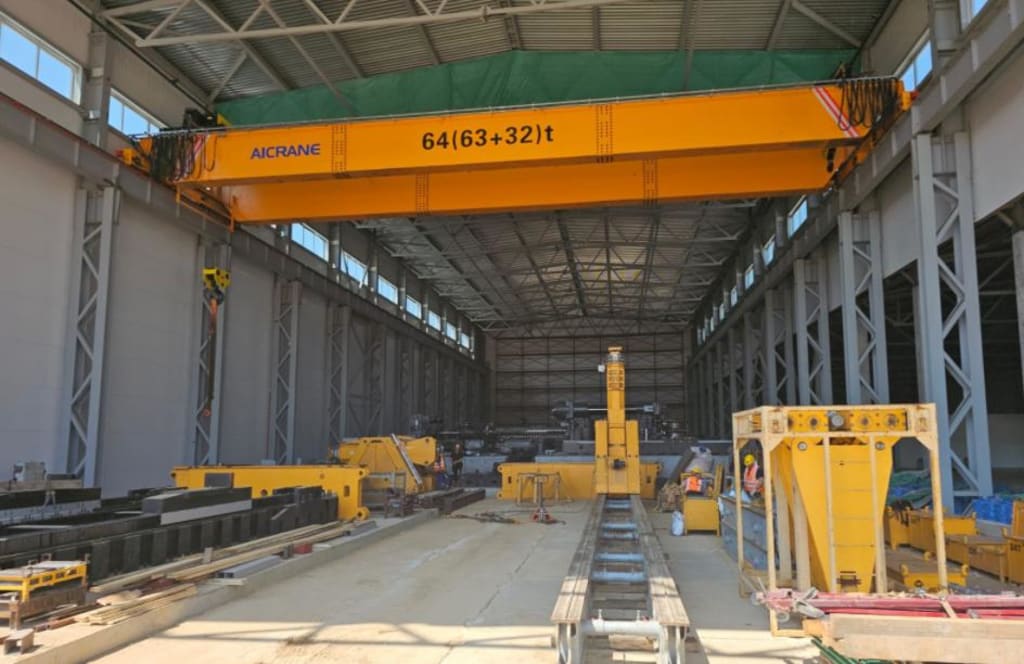
Top running cranes, also known as bridge cranes, are widely used in heavy industrial operations, including steel plants, shipyards, warehouses, and precast concrete yards. Their ability to handle large loads with precision makes them a critical component in many manufacturing and construction environments. However, the efficiency and safety of these cranes depend not only on their lifting capacity and operational features but also on the structural design that facilitates easy inspection and maintenance. Designing a top running crane for accessibility, maintainability, and durability ensures long-term operational efficiency, reduces downtime, and extends the service life of the crane.
Importance of Inspection and Maintenance in Top Running Cranes
Top running cranes are complex machines composed of several structural and mechanical components, including the bridge, trolley, hoist, end trucks, runway rails, and support structures. Regular inspection and maintenance are critical to prevent unexpected failures, ensure operator safety, and comply with industrial safety standards.
Inspections typically cover:
Structural components: Checking for cracks, deformation, corrosion, and wear in girders, end trucks, and crane frames.
Mechanical components: Evaluating hoists, motors, gears, brakes, and wire ropes for wear and proper function.
Electrical systems: Verifying control panels, wiring, and limit switches to prevent operational hazards.
Designing the top running crane structure with inspection and maintenance in mind simplifies these processes, reducing the time, labor, and cost associated with crane upkeep.
Structural Design Features for Easy Inspection
Open and Accessible Bridge Girders
Bridge girders are the main horizontal members that carry the trolley and hoist. Traditional box-section girders can be difficult to inspect internally. Modern designs often use open-web or lattice girders, which allow maintenance personnel to visually inspect the interior of the girder without disassembly. Open-web designs also reduce the overall weight of the crane while maintaining strength.
Walkways and Access Platforms
Integrating walkways along the bridge girder and trolley path allows inspectors to safely access critical components. Guardrails, anti-slip surfaces, and strategically placed ladders ensure compliance with occupational safety standards. For larger cranes, removable or foldable platforms may be added to reduce obstruction during normal operation while providing access for maintenance.
Removable or Hinged Covers
Certain structural elements, like box girders or enclosed compartments housing electrical cables and mechanical components, can be designed with removable or hinged covers. These allow technicians to inspect internal components without requiring crane disassembly, minimizing downtime.
Strategic Component Placement
Components requiring frequent inspection, such as bearings, gearboxes, brake systems, and limit switches, should be placed in accessible locations. Avoid designs that place these parts in narrow or high-risk areas. For example, end trucks can include external inspection panels for wheel and axle monitoring.
Lightweight Structural Materials
Using high-strength, lightweight steel alloys or aluminum for certain crane sections can make it easier for maintenance personnel to handle parts during repair or replacement. Lighter structures also reduce the load on hoist systems and improve operational efficiency.
Modular Design Approach
Modular crane structures allow for individual sections to be removed, repaired, or replaced without affecting the entire crane. This is particularly useful for long-span top running cranes in industrial yards, where complete disassembly would be time-consuming and costly.
Design Features for Easy Maintenance
Hoist and Trolley Accessibility
Maintenance of the hoist and trolley is one of the most critical aspects of crane upkeep. Designs that provide side or top access to the hoist allow technicians to inspect the gearbox, motor, and drum without dismantling the entire trolley. Some cranes include service walkways above the trolley rail for this purpose.
End Truck and Wheel Maintenance
The end trucks support the bridge and roll along the runway rails. Inspecting wheels, bearings, and brakes can be challenging if the end truck is integrated tightly into the bridge. Designing end trucks with removable inspection panels or sliding mechanisms allows for easy visual inspection and lubrication of wheelsets.
Lubrication Points
Centralized and easily accessible lubrication points improve maintenance efficiency. Clearly marked grease fittings and oiling points prevent missed maintenance and reduce the risk of premature component wear. Some cranes integrate automatic lubrication systems that feed critical components continuously, reducing manual maintenance needs.
Cable and Electrical Conduit Routing
Overhead cranes rely on complex electrical and control systems. Proper routing of power cables and control wiring along accessible paths reduces the risk of damage during maintenance. Flexible cable trays, cable carriers, and detachable conduit sections allow for easy inspection and replacement of wiring without disturbing structural elements.
Corrosion Protection and Coatings
Corrosion is a common issue in industrial environments, especially in shipyards or outdoor facilities. Using corrosion-resistant coatings, galvanized surfaces, and weatherproof paints reduces the frequency of maintenance and simplifies inspection. Easy-to-clean surfaces prevent dirt accumulation and make visual inspection more effective.
Vibration Monitoring and Structural Health Sensors
Incorporating structural health monitoring (SHM) sensors, such as strain gauges and vibration sensors, allows maintenance teams to detect early signs of structural fatigue or component wear. Sensors can be integrated into accessible areas of the overhead crane, and data can be remotely monitored, reducing the need for physical inspection in hard-to-reach areas.
Safety Considerations in Inspection and Maintenance Design
Safety must be a priority in top running crane design. Crane structures should include anchoring points for fall protection equipment, safe access ladders, and protective barriers around moving components. Additionally, designing redundant structural supports ensures that inspection and maintenance activities can be performed without compromising crane stability.
Operator training and clear maintenance manuals are equally important. Structural design alone cannot ensure safe inspection; it must be complemented by standard operating procedures, proper use of personal protective equipment (PPE), and scheduled maintenance routines.
Advantages of Easy Inspection & Maintenance Design
Reduced Downtime – Quick access to critical components allows for faster repairs, inspections, and preventive maintenance.
Lower Operational Costs – Simplified maintenance reduces labor costs and the need for heavy equipment during repairs.
Extended Lifespan – Regular and thorough maintenance prevents premature wear and structural damage, extending the service life of the crane.
Enhanced Safety – Clear access and safety features reduce the risk of accidents during inspection and repair operations.
Improved Compliance – Industrial and safety standards often require routine inspections; accessible designs make compliance easier and more consistent.
Conclusion
Top running cranes are essential for modern industrial operations, but their efficiency depends heavily on structural design that prioritizes inspection and maintenance. Open-web girders, accessible walkways, removable covers, modular components, and centralized lubrication points all contribute to easier maintenance. Integrating sensors and planning for safe access further enhance operational efficiency and safety.
Designing with maintainability in mind not only reduces operational costs and downtime but also ensures a longer service life and safer working environment. Manufacturers, engineers, and facility managers should prioritize these structural considerations when specifying or upgrading top running cranes to maximize reliability and productivity.
A top running crane that is easy to inspect and maintain is not just a mechanical tool; it is a strategic investment in the efficiency, safety, and longevity of industrial operations.
About the Creator
Aicrane01
Welcome to the Aicrane Blog, your practical guide to lifting solutions. Discover articles covering overhead cranes, gantry cranes, winches, steel structures, boat lifts, and more.
Website: https://steelmillcranes.com/
~ Fired ~
— Ai Intrusion ~ Are you Next ~ Is Ai Evolution after your job? — Few workplaces haven't been affected. Ai is in supermarkets, at doctors' offices, and even monitoring farms. I just can't think of anything this machine is not getting into, can you? For instance: Education ~ Law and Tech jobs will one day have a major influence or be taken over by these inanimate machines, with accuracy and vigor. From mechanics' diagnoses to a wide variety of everyday jobs, including fast food workers, with this input having the ability to cut their unnecessary work hours. I'm certain all of us have been touched by this with our short stories and colorful headings, have you? Even comments are very questionable 'Non-Robot' insertions.
By Jay Kantor3 days ago in Journal
Thursday 29 January 2026, 10:06 UK
On Thursday 29 January 2026, 10:06 GMT, the United Kingdom experienced a moment that captured attention across the nation. While the precise significance of this timestamp may seem trivial at first glance, it aligns with a broader series of events shaping the political, economic, and social landscape of the UK. In this article, we explore what was happening at that exact moment, why it matters, and the implications for citizens and policymakers alike.
By Aarif Lashari6 days ago in Journal


Comments
There are no comments for this story
Be the first to respond and start the conversation.