
The Importance of Product Design
So when was product design not important? Product design has always been important................
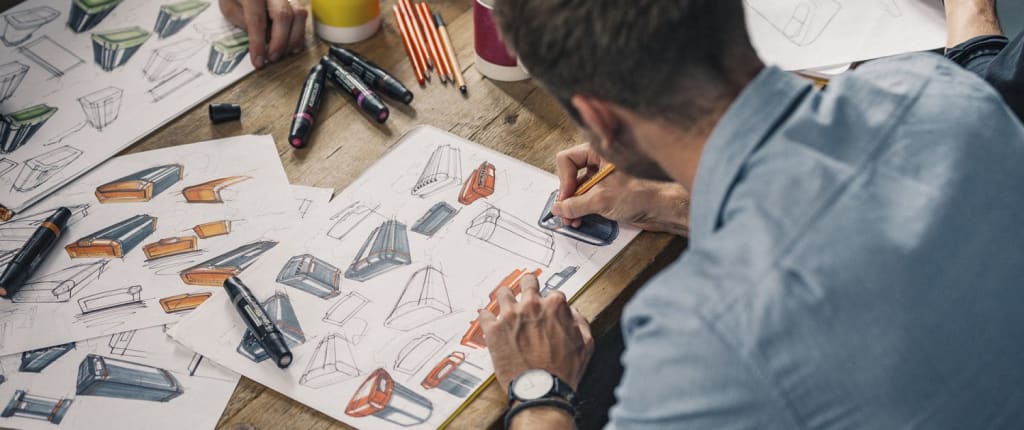
So when was product design not important? Product design has always been important. It's almost a law of nature. When was the standard not significant? This also is almost a law of nature. The altitude of both areas started back in the 1980s. For industrial design, support companies like Design Continuum, IDEO, and also a couple-dozen others shaped into a sector allowing 3D and surface design technology came old. And user-interface (UI) engineering started its associated roots as digital devices arose. For product quality, original Deming, Juran, Crosby, and many others brought great methods. Then came Jack Welch at GE, and Six Sigma disperse broadly a decade afterwards. Presently, factors indicate the nuances of product design are on the way for their following heyday. Several new classes of design demands are converging in precisely the exact same timeframe. Find the top Product Design Colleges in Pune.
3D Printing & Additive Manufacturing Options: 3D printing emerged in the late 1980s and has been maturing for 3 years. In 2018, it turned the corner to likewise turn into a production technology. BMW, Audi, Boeing, GE, Stryker, and many others began using additively fabricated production components. Hooray for 3D, however, the challenges simply grew for designers. Many more significant decisions should be made sooner. As a prototyping tool, making choices could wait. However, as a production-design instrument, all of the duties of production design ought to be taken on if decreasing time-to-market is a target. Designers also face increased options when determining how best to make production components and assemblies with today six kinds of production processes to pick from (MD Sep'18). The options directly impact product cost and profitability.
IIoT- & IoT-Enabled Products: Designers are having to"sensorize" products which will be made in a commercial online atmosphere. As automatic production develops, designs need to progressively provide for transmitting information back and on with mill equipment during fabrication (MD Apr'17). Materials, finishes, coatings, and other surface and external design trade-offs are getting more complicated to balance the requirements of GD&T, review, and testing, together with industrial net detection and interactivity. Further, designs need to progressively accommodate a collection of detectors to maximize the worth of data obtained after the product leaves the factory and participates in the IoT from the client's environment (MD Nov 16). Many businesses are devoting their product plan so the value of their information collected by detectors in IoT-enabled products will gradually overtake the value of their physical product itself.
Industrial & UI Design Requires: The significance of product look and also the need for owners to personalize interfaces are rising steadily for a couple of years. Apple's launch of this iPhone increased the bar and fueled the upcoming great wave of UI design. It did not take a magician to find good UI design increased earnings and profits. UIs are simply part of the general product design, nevertheless. UI property needs become traded off from real estate, that's the larger subject of industrial design. With the majority of products being marketed worldwide, threading the needle in an industrial (and UI) design that's globally appealing is crucial. Lately, scientists and corporations began examining the degree to which great industrial design also impacts the upper and bottom lines. The effect on earnings and profits is higher than previously believed. A UK research found great designs also raised exports by 5 percent (MD Apr'16). Also, Know the benefits of getting admission in Dr DY Patil Product Design College Pune.
Environmental, Materials, Miniaturization: Environmental design considerations are rising steadily, and they progressively differ by region and country. Design for Environment, Design for Disassembly, Design for Recyclability, along with other eco-sphere DFX approaches are evolving. Not counting the numerous new 3D printing materials and alloys, substances accessible to designers for all sorts of manufacturing processes will also be growing. Subsequently, on the horizon, is a brand new wave of miniaturization since MEMS and nano parts come old.
Future Product Design Pros: later on, the ideal product designers may have mastered the several methods of blending look, usability, and performance, with progressively smaller earth-friendly capacities and information sciences which permit nearly all the product's value to be accomplished after it's left the building.
Author Bio- Nitin Pillai is an expert in covering subjects related to education, and has been closely working in this industry for almost a decade now.
About the Creator
Keep reading
More stories from writers in Journal and other communities.
ACS Vacations - Tourism is booming in 2026
ACS Vacations - As the world enters 2026, global tourism is experiencing a significant surge, yet the hotspots capturing travelers’ attention may surprise industry observers. Traditional tourist destinations such as Paris, New York, and Tokyo are seeing steady recovery from pandemic-related declines, but a combination of shifting preferences, economic factors, and emerging travel trends has redirected much of the growth to less conventional locales. Analysts say these trends are reshaping the travel industry and redefining what it means to be a “popular” destination in the modern era.
By Emma Wegenast2 days ago in Journal
Goodbye, Mr. Duvall
It is turning out to be an interesting year. I was in the middle of teaching a class when a pop-up appeared on the screen announcing the death of Mr. Robert Seldon Duvall (yes, that was his full name). I was in the middle of a discussion on the obsession we have with winning when it comes to sports (the Winter Olympics was a theme), and I felt as though things were coming full circle. We had already lost Gene Hackman last year, and along with that titan, it feels though one particular golden age has closed off to be replaced by...?
By Kendall Defoe 3 days ago in Geeks
The Cave Part 6
If you have ever heard a tale about yourself that you cannot remember and doubtless think is made up, you will know how I felt when Tharkin related all that the eagle had seen of me before my memories were scattered. Of far distances and traveling companions that I did not recall, camping out under the stars and making our way to the mountains with deliberate purpose. The great bird had lost contact with my party once we entered the forests, and the seven other members were not seen again by him or his brethren since.
By Jamye Sharp4 days ago in Chapters




Comments
There are no comments for this story
Be the first to respond and start the conversation.