politics
Political figures, histories, and current events in the whole scope of modern and past politics. Work place politics.
Shane Windmeyer and the Promise of 2026 DEI: What to Look Forward To
As 2026 gets underway, it’s worth correcting a common framing error right up front: we’re not looking back from the middle of the year, and we’re not predicting from a distant horizon. We’re at the start of 2026—close enough to feel the carryover from last year, and close enough to shape what happens next.
By Shane Windmeyer26 days ago in Journal
How MAGA Rhetoric Went Viral in Europe
Imagine scrolling your social feed and seeing political debates about France’s elections, Germany’s nationalist rise, or far-right gains in Italy and Poland — all tied, at least in part, to the influence of America’s Make America Great Again (MAGA) movement. What started as an American slogan transformed into a global conversation about nationalism, identity, and political strategy, generating massive public interest, academic analysis, and viral news cycles across the United States and Europe.
By Omasanjuwa Ogharandukun26 days ago in Journal
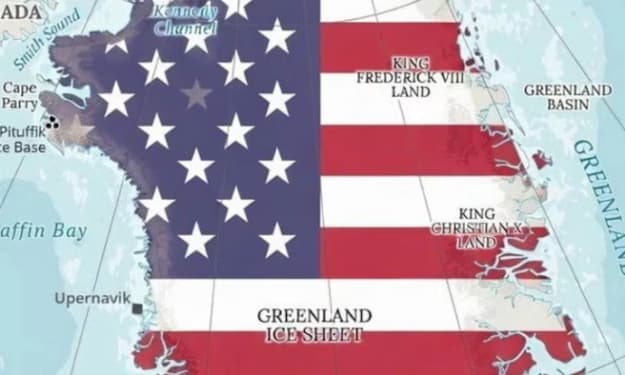
Why the Greenland Crisis Became the Most Viral Geopolitical Story of the Year
Picture this in your feed: The President of the United States publicly threatens to take control of a NATO ally’s territory — and Europe doesn’t just push back… it mobilizes troops, intensifies diplomacy, and ignites fierce debate worldwide. That’s exactly the story gripping global headlines in early 2026 — the Greenland crisis — and it’s gone wildly viral.
By Omasanjuwa Ogharandukun26 days ago in Journal
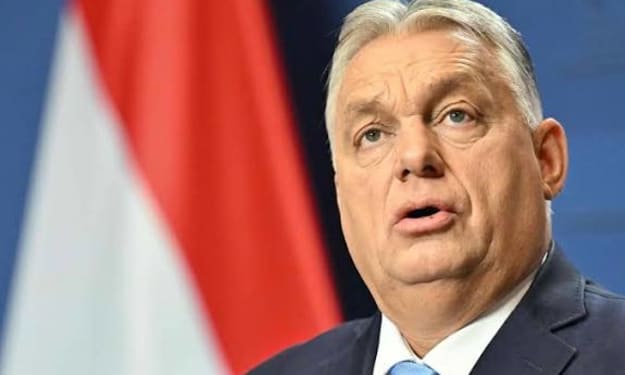
Rightwingers of the World Unite to Endorse Orbán Ahead of Hungary’s Election. AI-Generated.
As Hungary gears up for its next parliamentary elections, Prime Minister Viktor Orbán has found support not just at home but across the global right-wing spectrum. From Europe to the Americas, conservative leaders, nationalist movements, and far-right political organizations are openly backing Orbán, citing his policies on national sovereignty, immigration control, and cultural conservatism as a model for their own agendas.
By Fiaz Ahmed Brohi27 days ago in Journal
Indian weapons must on all 114 Rafale jets, govt tells Dassault . AI-Generated.
India’s defense modernization plans received a strategic boost as the government officially directed Dassault Aviation, the French manufacturer of Rafale fighter jets, to equip all 114 aircraft with Indian-made weapons. This move underlines India’s commitment to self-reliance in defense technology while strengthening the combat readiness of its air force. The Rafale jets, considered among the most advanced multi-role fighters globally, are now set to carry the nation’s indigenous missile systems, bombs, and electronic warfare packages, blending cutting-edge French airframe technology with homegrown armaments. The Rafale Program and Indigenous Weapons India’s Rafale acquisition, initially contracted in 2016, brought 36 jets into the Air Force inventory, with an additional 114 aircraft to be delivered in subsequent batches. While Dassault’s jets are equipped with state-of-the-art French systems, the Indian government has long emphasized the integration of locally produced weapons. These include BrahMos supersonic cruise missiles, Astra beyond-visual-range air-to-air missiles, and indigenous precision-guided bombs. By mandating the use of Indian weapons across all 114 Rafales, the government aims to reduce dependency on foreign arms supplies and ensure that India’s air force maintains operational flexibility in critical combat scenarios. A senior defense official stated, “Our aim is to ensure that the Rafale platform not only brings in technological superiority but also becomes a force multiplier for our indigenous weapons programs.” Strategic Implications The integration of Indian weapons on Rafale jets carries both operational and strategic significance. From an operational perspective, using indigenous weapons allows for standardized maintenance and training protocols across the fleet. It simplifies logistics, reduces costs, and ensures that India is not constrained by export restrictions or supply chain uncertainties from foreign manufacturers. Strategically, the decision sends a strong signal to both allies and adversaries. India demonstrates its growing capability in defense production and its intention to assert technological independence in critical military domains. Given the geopolitical tensions in the Indo-Pacific, particularly with China and Pakistan, equipping the Rafales with locally produced weapons enhances India’s deterrence posture. Challenges in Integration Integrating indigenous weapons with Rafale aircraft, however, is not without technical challenges. Aircraft and weapons systems must be seamlessly compatible, including software integration, aerodynamics, and avionics. The Air Force’s testing and evaluation teams, along with Dassault engineers, will have to ensure that Indian missiles, bombs, and sensors work flawlessly with French-designed flight systems. Past collaborations, such as integrating the BrahMos missile on Su-30MKI aircraft, offer a blueprint for success, but the Rafale’s advanced avionics and fly-by-wire systems necessitate meticulous engineering and rigorous testing. Officials assure that phased testing and gradual integration will ensure minimal disruption to the aircraft’s delivery schedules. Boosting India’s Defense Industry This directive aligns closely with India’s “Make in India” initiative, which aims to build a robust domestic defense manufacturing ecosystem. By mandating the use of Indian weapons, the government hopes to create opportunities for local defense firms, enhance research and development capabilities, and encourage private sector participation in high-tech defense projects. According to industry experts, this approach will provide a significant boost to companies involved in missile development, precision-guided munitions, and electronic warfare systems. It also signals potential for future export opportunities, as Rafale jets equipped with Indian weapons could be offered to other countries, increasing India’s global defense footprint. Diplomatic and Industrial Balance While this move strengthens India’s self-reliance, it also requires careful diplomatic balancing. Dassault Aviation, which must now adapt its jets to accommodate Indian weapons, plays a critical role in maintaining delivery timelines and contractual obligations. Successful collaboration will require constant communication and technical coordination between French and Indian engineers. In the long term, this partnership could evolve into a model for international collaboration, where global platforms are paired with indigenous systems to create hybrid solutions tailored to specific national needs. Looking Ahead India’s decision to equip all Rafale jets with local weapons is a bold step toward achieving strategic autonomy in defense. It demonstrates the country’s commitment to blending cutting-edge technology with self-reliance, ensuring that the Air Force is equipped with a versatile, powerful, and locally sustainable arsenal. As the delivery of Rafale jets continues, the coming years will likely see a seamless integration of India’s missiles, bombs, and electronic warfare systems into the fleet, creating a formidable air power platform that combines the best of French aeronautical engineering with India’s indigenous defense innovation. This initiative not only strengthens India’s air defense capabilities but also reinforces its position as a rising power in global defense technology. It’s a reminder that modern warfare increasingly depends on the ability to combine advanced platforms with locally developed systems—a strategy India is now executing with clarity and purpose.
By Fiaz Ahmed Brohi27 days ago in Journal
Machado Presented Her Nobel Peace Prize to Trump — But He Didn’t Actually Win It
In a stunning and symbolic moment at the White House, Venezuelan opposition leader María Corina Machado handed President Donald Trump her Nobel Peace Prize medal — a gesture that is now rocking world headlines and social media feeds.
By Omasanjuwa Ogharandukun27 days ago in Journal
The Alberta Government Strikes Again
At coffee this morning, there was some rather vibrant talk around the table of the Alberta Government and its latest dealings with teachers in the province. This discussion led, of course, to a replay of a conversation held on a previous date around the same coffee table in the same restaurant. If I recollect correctly, I think it all went something like this.
By John Oliver Smith28 days ago in Journal
THE GLACIER AND THE FIRE. AI-Generated.
Greenland has never known true silence. Beneath the apparent immobility of its frost-laden shrouds, the island throbs with a millennial movement—a muted language composed of tectonic cracks, abyssal currents, and aeolian rages. But this murmur of genesis, once reserved for the Arctic’s initiates, has shifted into a clamor of a different sort. It is no longer merely the song of ice collapsing into the Atlantic or the groan of the ice cap thinning under the assault of carbon; it is the thud of boots and the cold calculations of general staffs. It is the roar of covetousness. Greenland, this white giant once thought to be slumbering on the fringes of history, has become the epicenter of a geopolitical earthquake capable of shattering the West. What is unfolding today is no longer a mere diplomatic rivalry, but the specter of a total rupture within the Atlantic Alliance, where the rights of peoples vanish before the logic of the strongest.
By Laurenceau Porte28 days ago in Journal
américa - atl. san luis
I found it in my father’s wallet after he passed. Tucked behind his ID, worn soft at the edges, was a ticket stub from a match twenty years ago. The ink had faded, the date blurred, but I remembered the day: rain falling sideways, the stadium half-empty, our team losing badly. We’d left before the final whistle, soaked and silent.
By KAMRAN AHMAD28 days ago in Journal
albacete - real madrid
I didn’t go for the game. I went for my nephew. He’s twelve, wears a faded jersey two sizes too big, and talks about football like it’s scripture. “It’s not about winning, Tío,” he’d said, eyes bright. “It’s about who shows up when no one’s watching.”
By KAMRAN AHMAD28 days ago in Journal
The Hour the World Went Quiet
It began with a flicker. Not of light, but of absence. The hum of my devices—the soft chime of messages, the buzz of updates, the endless scroll of curated lives—simply stopped. At first, I thought it was a glitch. I tapped screens. Checked cords. Restarted everything twice. But the silence held.
By KAMRAN AHMAD28 days ago in Journal