
Stock Market Today: Oil Prices Push Higher Despite IEA Oil Release
Global energy markets remain volatile as the International Energy Agency’s release of strategic reserves fails to curb rising oil prices, impacting stocks and investor sentiment worldwide.
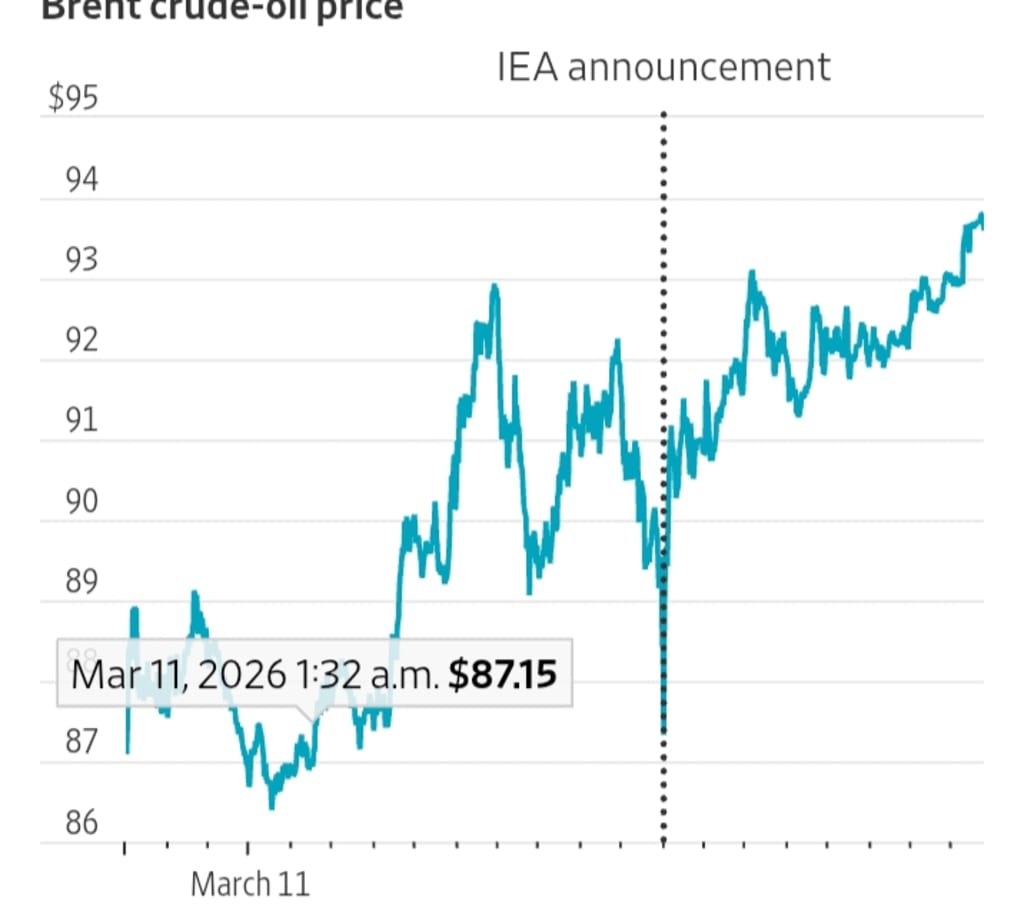
Global financial markets opened this week amid a swirl of uncertainty as oil prices continued to climb, defying expectations after the International Energy Agency (IEA) announced a release from its strategic petroleum reserves. Analysts and investors are trying to make sense of why crude continues to rise despite efforts to stabilize supply, and what this means for broader market performance.
Oil Prices Surge: What’s Driving the Spike?
The price of Brent crude has climbed above $85 per barrel, while West Texas Intermediate (WTI) has reached new highs for the month. Multiple factors are contributing to this trend:
Geopolitical Tensions: Conflicts in the Middle East, particularly ongoing hostilities involving Iran, continue to create supply concerns. Threats to critical shipping lanes like the Strait of Hormuz have heightened fears of disruption in global crude exports.
Market Speculation: Traders are increasingly factoring in potential further instability in oil-producing regions. Futures markets show strong demand for hedging against supply shocks, pushing prices higher even as additional barrels are released from reserves.
Supply Constraints: While the IEA release added volume to the market, it is modest compared to total global demand. Analysts note that some countries are still facing production bottlenecks and maintenance-related downtime, limiting the immediate impact of the reserve release.
Energy economists warn that sustained price increases could ripple through the global economy, affecting inflation rates, consumer spending, and corporate earnings.
The IEA Oil Release: Why It Didn’t Stem the Rise
The IEA recently coordinated a release of millions of barrels of oil from its strategic reserves to offset rising prices. Traditionally, such releases are designed to signal sufficient short-term supply and ease price pressures.
However, market reactions were muted. Analysts suggest that:
The release was perceived as insufficient relative to global consumption, especially in light of heightened geopolitical risks.
Traders interpreted the move as temporary relief rather than a sustainable supply solution.
Structural concerns — such as reduced investment in new oil capacity and aging infrastructure — remain unresolved, meaning the market continues to anticipate tight supply.
One commodity strategist commented, “The IEA release is a gesture, but it does not change the underlying reality: global energy markets are strained, and any single release is unlikely to reverse the upward momentum in prices.”
Impact on the Stock Market
Higher oil prices have mixed effects across equity markets.
Energy Sector: Oil and gas stocks have surged, with companies like ExxonMobil, Chevron, and BP posting gains as investor sentiment favors producers benefiting from higher crude prices.
Transportation and Consumer Goods: Rising fuel costs are raising operating expenses for airlines, shipping firms, and trucking companies, leading to downward pressure on their stock valuations.
Broader Market: The S&P 500 and Dow Jones have shown increased volatility. Energy gains are being partially offset by declines in sectors sensitive to inflation and consumer spending.
Financial advisors caution that sustained oil price increases could create a drag on economic growth, particularly if rising costs feed into consumer inflation, prompting central banks to tighten monetary policy.
Geopolitical Risks Amplify Market Sensitivity
The ongoing tension in the Middle East is a key factor sustaining high oil prices. Iran’s regional actions, including missile and drone deployments, have renewed investor concerns about potential supply interruptions.
Similarly, OPEC+ production decisions are under scrutiny. Any reduction in output or deviation from previously agreed quotas could further exacerbate price volatility. Analysts are watching closely to see if geopolitical developments and cartel actions might push Brent crude past $90 per barrel in the near term.
Investor Sentiment and Risk Management
The combination of rising oil prices and global uncertainty has increased market volatility. Investors are employing several strategies to navigate this environment:
Diversification: Spreading investments across sectors less sensitive to energy price swings.
Hedging: Using commodities futures, options, or energy-related ETFs to manage exposure to oil price fluctuations.
Monitoring Central Bank Policy: Rising energy costs could influence interest rate decisions, particularly in the U.S. and Europe.
Analysts note that while energy sector gains can buoy portions of the market, the overall economy may feel pressure if fuel costs feed into higher consumer prices, reducing disposable income and slowing retail activity.
Looking Ahead: Key Factors to Watch
Several indicators will shape market dynamics in the coming weeks:
IEA and National Reserve Releases: Additional releases or coordinated actions by governments could moderate price increases.
OPEC+ Decisions: Compliance with production targets and adjustments to output quotas will affect global supply balances.
Geopolitical Developments: Military conflicts, sanctions, and diplomatic negotiations can dramatically influence investor expectations.
Economic Data: Inflation reports, employment figures, and GDP growth metrics will determine how sustained oil prices may affect broader markets.
Energy analysts emphasize that short-term volatility is likely to persist, with traders closely monitoring news from both the Middle East and global economic indicators.
Conclusion
Despite the IEA’s strategic oil release, crude prices continue to rise, reflecting a combination of geopolitical tension, market speculation, and structural supply concerns. The stock market has responded with sector-specific gains and losses, highlighting the interconnectedness of energy prices and broader economic performance.
Investors are now navigating a complex landscape where energy volatility, geopolitical risk, and economic uncertainty converge, demanding careful attention to market signals, corporate earnings reports, and policy developments.
As the situation unfolds, oil prices will remain a key barometer of both Middle East stability and global economic health, while the stock market reflects the ripple effects across industries and sectors worldwide.
About the Creator
Twitter founder Jack Dorsey fired 4,000 people over AI and issued a warning to the business world.
On Thursday, February 26, Jack Dorsey cofounder of Twitter and CEO of Block, one of the world's largest digital payments companies published an internal memo that went viral within hours. Block, the company that operates Square, Cash App, and its Bitcoin ecosystem, was laying off more than 4,000 people: almost half of its global workforce. The stated reason wasn't a crisis. It was artificial intelligence.
By Omar Rastelli3 days ago in Journal
The Politics of Playing Dress-Up
Well, to start off I'd like to say a happy world book day to all who celebrate. I know I haven't really posted anything on my socials about it but I'm not a jubilant kind of person. I lay low most of the time. Let's start off with a popular anecdote from the vaults...
By Annie Kapur6 days ago in Geeks


Comments
There are no comments for this story
Be the first to respond and start the conversation.