
Security Features to Include During Legacy App Modernization
Legacy App Modernization

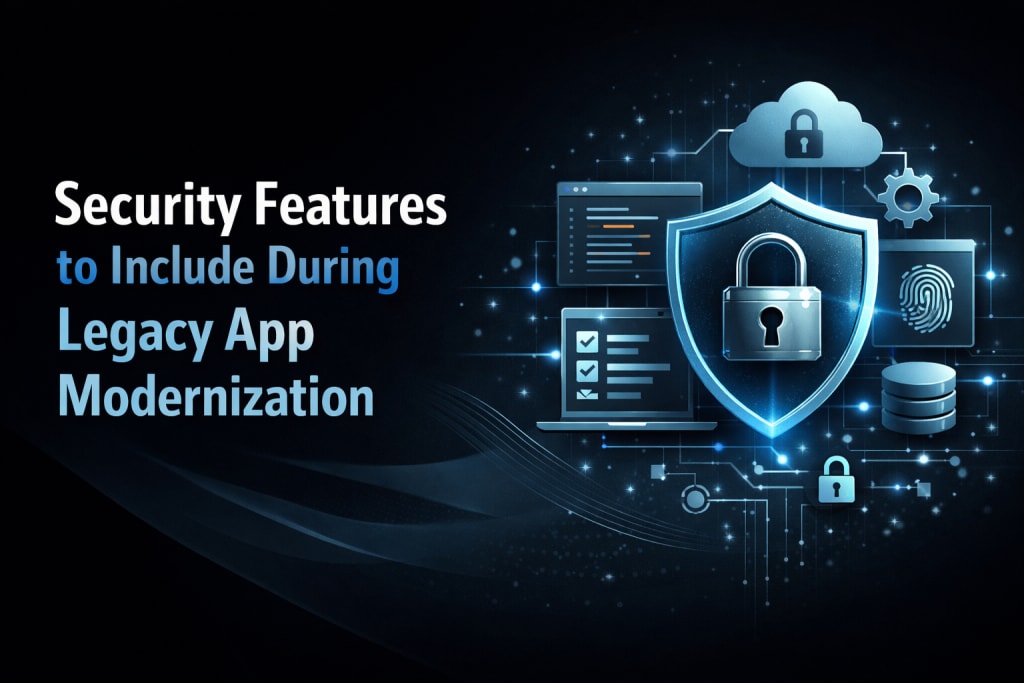
Modernizing a legacy application offers organizations the opportunity to bring outdated systems into the modern era of security, performance, and scalability. However, modernization isn’t just about updating the UI or integrating with new services - it’s also a critical moment to strengthen the security posture of your application. Legacy systems are often rife with vulnerabilities due to outdated frameworks, poor encryption standards, and insufficient access controls. As cyber threats grow more sophisticated, ensuring that key security features are integrated during modernization is essential for protecting data, maintaining compliance, and building user trust.
In this blog, we explore the most important security features to include during legacy app modernization, why they matter, and how they can be effectively implemented.
1. Robust Authentication and Authorization
Authentication and authorization are the foundation of secure access control. With legacy applications, it is common to find simplistic login methods, weak password policies, and role management that is hard‑coded or poorly enforced. During modernization, these must be re‑architected.
Key improvements to implement:
Multi‑Factor Authentication (MFA): Adding an extra layer beyond passwords (e.g., SMS, authenticator apps, biometrics) drastically reduces the risk of account compromise.
Role‑Based Access Control (RBAC): Define clear user roles with permissions scoped according to least privilege principles.
Single Sign‑On (SSO): Enable users to authenticate across systems securely with one set of credentials, reducing password fatigue.
OAuth & OpenID Connect: Adopt token‑based authentication with modern standards that support delegated access and API security.
Why it matters: Weak authentication is one of the most exploited vulnerabilities. Modern authentication frameworks protect against credential theft, brute force attacks, and unauthorized access.
2. Strong Encryption - In Transit and At Rest
Encryption is not optional it is a necessity. Legacy systems often used weaker encryption protocols or stored sensitive data in plain text. During modernization, encryption must be made holistic.
Areas to focus on:
TLS 1.2+ for Data in Transit: Upgrade legacy SSL protocols to modern TLS standards to secure data moving between clients, servers, and APIs.
AES‑256 for Data at Rest: Encrypt sensitive stored data using strong symmetric encryption to safeguard it from database breaches.
Key Management: Use secure vaults (like AWS KMS, Azure Key Vault) for encryption key storage and rotation.
Tokenization: Replace sensitive data (like credit card numbers) with tokens to minimize exposure.
Why it matters: Without encryption, attackers can intercept communications or access sensitive data directly from servers or backups. Modern cryptographic practices protect data even if other defenses fail.
3. Secure API Design and Management
Modern apps increasingly rely on APIs to enable integrations with third‑party services, mobile apps, and internal microservices. Unfortunately, APIs are a common source of security breaches in poorly modernized systems.
Best practices during modernization:
API Gateways: Centralize access control, throttling, and monitoring with API gateways to enforce policies uniformly.
Authentication & Authorization: Use API tokens, OAuth scopes, and rate limits to restrict access.
Input Validation: Ensure all API inputs are strictly validated and sanitized to prevent injection attacks.
Versioning and Deprecation Policies: Maintain older API versions securely while planning for safe sunsetting.
Why it matters: Unsecured APIs expose sensitive endpoints that attackers can exploit. Building API security into the modernization process prevents data leakage and abuse.
4. Real‑Time Monitoring and Logging
Security visibility is critical, especially for modernized systems that may span cloud, on premises, and hybrid environments. Legacy systems often lack centralized logging or real‑time detection capabilities.
Key elements to implement:
Centralized Logging: Aggregate logs from all components into a SIEM (Security Information and Event Management) system.
Real‑Time Alerts: Set up alerts for suspicious activities like repeated failed logins, unexpected admin changes, or data export events.
Audit Trails: Maintain immutable logs of user actions and system changes for forensic analysis and compliance.
Threat Detection Tools: Use anomaly detection and behavioral analytics to identify breaches early.
Why it matters: Without visibility, threats can remain undetected for months. Real‑time monitoring enables proactive defense and rapid response.
5. Automated Testing and Vulnerability Scanning
Modernization presents the perfect opportunity to bake automated security testing into your development lifecycle. Legacy applications often lack any form of continuous testing.
What to include:
Static Application Security Testing (SAST): Analyze source code for vulnerabilities during development.
Dynamic Application Security Testing (DAST): Test running applications for exploitable flaws.
Dependency Scanning: Detect vulnerabilities in open‑source libraries or outdated components.
Penetration Testing: Conduct regular manual security testing to uncover complex issues.
Why it matters: Continuous testing prevents the introduction of new vulnerabilities and ensures that modernization doesn’t inadvertently weaken security.
6. Secure Session Management
Legacy apps frequently rely on insecure session handling — such as predictable session IDs, lack of expiration, or no logout capabilities.
Modern security should include:
Session Timeouts: Automatically expire sessions after inactivity.
Token Security: Use HTTP‑only, secure cookies or signed JWT tokens.
Session Rotation: Refresh session IDs on privilege changes.
Logout Everywhere: Allow users to invalidate all sessions.
Why it matters: Secure session management protects against session hijacking, fixation, and replay attacks.
7. Compliance and Data Privacy Controls
Modern applications must comply with regulations such as GDPR, CCPA, HIPAA, and PCI DSS, depending on industry and region. Legacy systems rarely meet these standards.
Steps to align with compliance:
Data Minimization: Only collect and store data necessary for operations.
Consent Management: Track and enforce user consents for data usage.
Data Residency Controls: Ensure data storage complies with local regulations.
Regular Audits: Perform audits to ensure adherence to compliance mandates.
Why it matters: Non‑compliance can lead to hefty fines and reputational damage. Embedding compliance into the modernization roadmap protects legal standing and customer trust.
8. Role of DevSecOps in Modernization
Security should not be an afterthought. DevSecOps integrates security practices into development and operations, ensuring security is shared across teams.
DevSecOps practices to adopt:
Security in CI/CD Pipelines: Automate security checks during builds and deployments.
Developer Training: Educate teams on secure coding practices.
Infrastructure as Code (IaC) Security: Scan IaC templates for misconfigurations.
Continuous Feedback: Use metrics and dashboards to drive security improvements.
Why it matters: DevSecOps creates a culture of shared responsibility and continuous improvement, drastically reducing the risk of vulnerabilities slipping into production.
Conclusion
Legacy app modernization is not merely a cosmetic upgrade, it’s a strategic overhaul that must prioritize security at every layer. From authentication and encryption, to API security, monitoring, automated testing, and compliance, embedding modern security features ensures your application is resilient against today’s threats and tomorrow’s challenges.
Taking a proactive and holistic approach to security not only protects your data and users but also strengthens trust and competitive advantage in an increasingly digital world.
About the Creator
keith laurance
Keith Laurance, a Tech Blogger and Entrepreneur working with Octal IT Solution. I'm passionate about my work and want to spread knowledge everywhere, so everyone can take advantage of the latest technologies and trends.
Keep reading
More stories from keith laurance and writers in Journal and other communities.
The Role of Digital Transformation in Healthcare Systems Worldwide
Healthcare Digital Transformation is changing how healthcare organizations execute their work and provide medical services and interact with their patients throughout the world. Healthcare providers shift their operations from traditional approaches to technology-driven systems which include advanced data systems and interconnected medical equipment.
By keith laurancea day ago in Writers
~ Fired ~
— Ai Intrusion ~ Are you Next ~ Is Ai Evolution after your job? — Few workplaces haven't been affected. Ai is in supermarkets, at doctors' offices, and even monitoring farms. I just can't think of anything this machine is not getting into, can you? For instance: Education ~ Law and Tech jobs will one day have a major influence or be taken over by these inanimate machines, with accuracy and vigor. From mechanics' diagnoses to a wide variety of everyday jobs, including fast food workers, with this input having the ability to cut their unnecessary work hours. I'm certain all of us have been touched by this with our short stories and colorful headings, have you? Even comments are very questionable 'Non-Robot' insertions.
By Jay Kantor6 days ago in Journal
The 2026 Report: Who Is Actually Moving the Needle for Karachi’s Economy?
If you are running a business in Karachi right now, you know the reality. The grid is unstable, the rupee is fluctuating, and the old ways of doing business—relying purely on local foot traffic—are fading. In 2026, the only real stability comes from foreign currency.
By Mahnoor Qureshi6 days ago in Journal


Comments
There are no comments for this story
Be the first to respond and start the conversation.