
Nvidia Shares Slide After Sales Forecast Underwhelms Investors
When “Beating Expectations” Isn’t Enough in the Age of AI
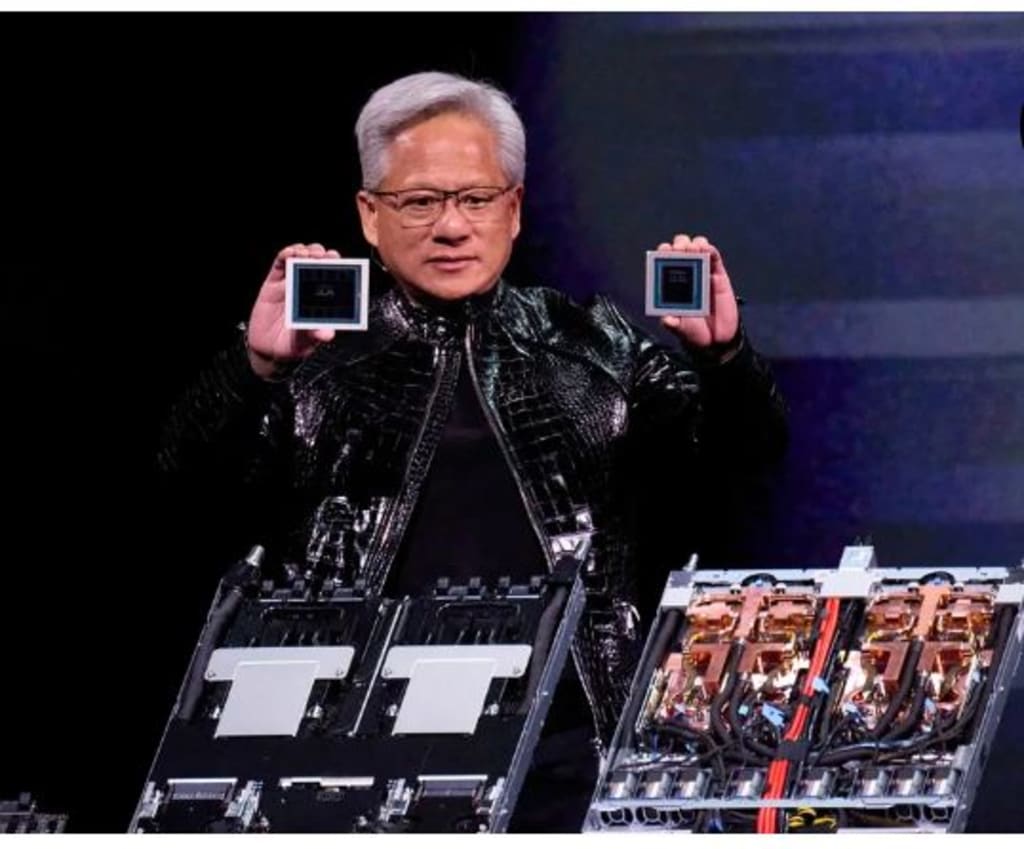
The artificial intelligence boom has transformed the stock market over the past few years, and no company has symbolized that surge more than Nvidia. From powering data centers to enabling generative AI tools, Nvidia has become the backbone of the modern AI revolution.
Yet in a surprising twist, Nvidia shares recently slid after the company issued a sales forecast that — while strong — failed to thrill investors. The reaction highlights a powerful truth about today’s tech market: once expectations soar high enough, even extraordinary performance can feel underwhelming.
Let’s break down what happened, why investors reacted the way they did, and what it means for the future of AI stocks.
A Quarter That Would Be “Amazing” for Anyone Else
By traditional standards, Nvidia’s latest earnings report was nothing short of spectacular.
The company posted record-breaking quarterly revenue, driven primarily by surging demand for AI chips used in massive data centers. Cloud providers, tech giants, and AI startups continue to invest heavily in high-performance computing infrastructure — and Nvidia remains the dominant supplier.
Revenue growth once again beat Wall Street’s official estimates. Profit margins stayed strong. Demand remained elevated. On paper, it looked like another flawless quarter.
But markets don’t trade on paper performance — they trade on expectations.
The Forecast That Changed the Mood
The turning point wasn’t the past quarter. It was the forecast.
Nvidia projected revenue for the upcoming quarter that exceeded average analyst estimates but fell slightly short of the most optimistic projections circulating among investors.
In normal market conditions, beating estimates would send shares higher. But Nvidia is no longer operating in a “normal” environment. It’s operating in an AI-fueled hyper-valuation era where investors expect not just growth — but accelerating growth.
When the company’s guidance suggested strong yet steady expansion instead of explosive upside, some investors interpreted it as a signal that momentum may be stabilizing.
The stock dipped as a result.
The Burden of Being the AI Leader
Nvidia’s success has created its own challenge.
Because it has become the face of the AI revolution, its stock price reflects massive long-term optimism. Investors have priced in:
Multi-year AI infrastructure spending
Continued chip shortages favoring Nvidia
Strong pricing power
Sustained double- or triple-digit growth in key segments
When expectations are that high, even a minor shift in tone can cause volatility.
In many ways, Nvidia is experiencing the classic “priced for perfection” scenario. There’s very little room for disappointment — even if that disappointment is relative rather than absolute.
Are AI Spending Levels Sustainable?
One of the biggest questions now circulating in the market is simple:
Will AI spending stay this high?
Major tech companies are pouring hundreds of billions of dollars into data centers and AI hardware. Nvidia’s chips power much of that infrastructure. But investors are beginning to ask:
Are these investments generating enough returns?
Will companies slow spending once initial buildouts are complete?
Is the AI boom entering a more mature phase?
So far, there’s no clear evidence of a dramatic slowdown. But markets are forward-looking. Even the suggestion of moderation can trigger selling in stocks that have already surged dramatically.
Customer Concentration: A Growing Focus
Another factor adding to investor caution is customer concentration.
A large portion of Nvidia’s data-center revenue comes from a small group of hyperscale technology companies. If even one of them decides to adjust spending plans, it could impact Nvidia’s short-term growth trajectory.
This doesn’t necessarily mean demand is weakening. It simply means investors are analyzing the business more closely now that it has reached mega-cap status.
When companies are small and disruptive, markets focus on potential. When they become giants, markets focus on sustainability.
Nvidia has clearly entered the second phase.
Market Ripple Effects
Because Nvidia is one of the largest companies in the world by market capitalization, movements in its stock have broad consequences.
When Nvidia slides, major indexes — particularly tech-heavy ones — often move with it. Semiconductor stocks frequently follow Nvidia’s direction as well, since it serves as a barometer for AI hardware demand.
The recent decline wasn’t catastrophic. It wasn’t a crash. But it was enough to remind investors that even the most dominant AI company is not immune to market psychology.
Skeptics and Bubble Talk
No major tech rally is complete without bubble discussions — and AI is no exception.
Some market skeptics argue that AI enthusiasm resembles past technology cycles where expectations eventually outpaced near-term reality. They point to:
Massive capital expenditures
Aggressive supply commitments
Sky-high valuations
However, Nvidia continues to post real revenue, real profits, and real demand. Unlike many speculative tech booms of the past, this one is backed by measurable enterprise spending.
Still, when valuations stretch, the market becomes hypersensitive to even small changes in tone.
Leadership’s Confidence Remains Strong
Despite the market’s reaction, Nvidia’s leadership has remained confident.
Executives have emphasized that AI demand remains robust and that the company’s roadmap of next-generation chips will continue driving growth. They’ve also pointed to expanding use cases across industries — from healthcare to autonomous systems — that could sustain long-term demand.
In short, the company sees no immediate red flags.
The stock’s reaction appears more about expectation calibration than business deterioration.
A Market Maturing Around AI
What we’re witnessing may not be weakness — but evolution.
Early in the AI surge, investors were focused on growth at any cost. Now they are:
Scrutinizing margins
Analyzing long-term demand visibility
Watching capital spending efficiency
Comparing forecast growth to valuation multiples
This shift is typical when a disruptive company becomes an established powerhouse.
Nvidia is no longer just a high-growth story. It’s infrastructure for the AI economy. And infrastructure companies are judged differently than breakout disruptors.
What Happens Next?
Short-term volatility is likely to continue. Nvidia’s stock has experienced dramatic rallies over the past few years, and periodic pullbacks are normal in such runs.
The bigger question is whether AI demand continues compounding at a pace that justifies current valuations.
If spending remains aggressive and applications generate meaningful returns, Nvidia’s long-term thesis stays intact.
If AI investment slows meaningfully, the market may reassess how quickly growth can continue.
For now, the story remains one of extraordinary performance meeting extraordinary expectations.
Final Thoughts
Nvidia’s recent share slide is not a story of failure. It’s a story of how high the bar has been set.
The company delivered record revenue. It issued strong forward guidance. It remains the undisputed leader in AI chips.
And yet, the stock dipped.
That’s the paradox of modern markets: success is expected. Only surprise drives euphoria.
As the AI revolution moves from hype to infrastructure, Nvidia will likely continue facing intense scrutiny. But if history has shown anything, it’s that transformational technologies don’t unfold in straight lines — they evolve through cycles of excitement, recalibration, and renewed growth.
For investors and tech watchers alike, Nvidia remains one of the most important companies to monitor. Not just because of its stock price — but because its performance reflects the pulse of the entire AI economy.
About the Creator
Rethinking Healthcare Supply Chain Systems
Have you ever wondered how hospitals manage to provide the right medications, equipment, and supplies exactly when patients need them? Behind every successful treatment lies a carefully coordinated system known as supply chain management for healthcare organizations. This system ensures that essential resources move smoothly from manufacturers to healthcare facilities and ultimately to patients.
By Brady Beitlich4 days ago in Journal




Comments
There are no comments for this story
Be the first to respond and start the conversation.