
Inside the Silent Boom: Insufflation Devices Market
How minimally invasive surgery is fueling a steady global rise in surgical gas technology
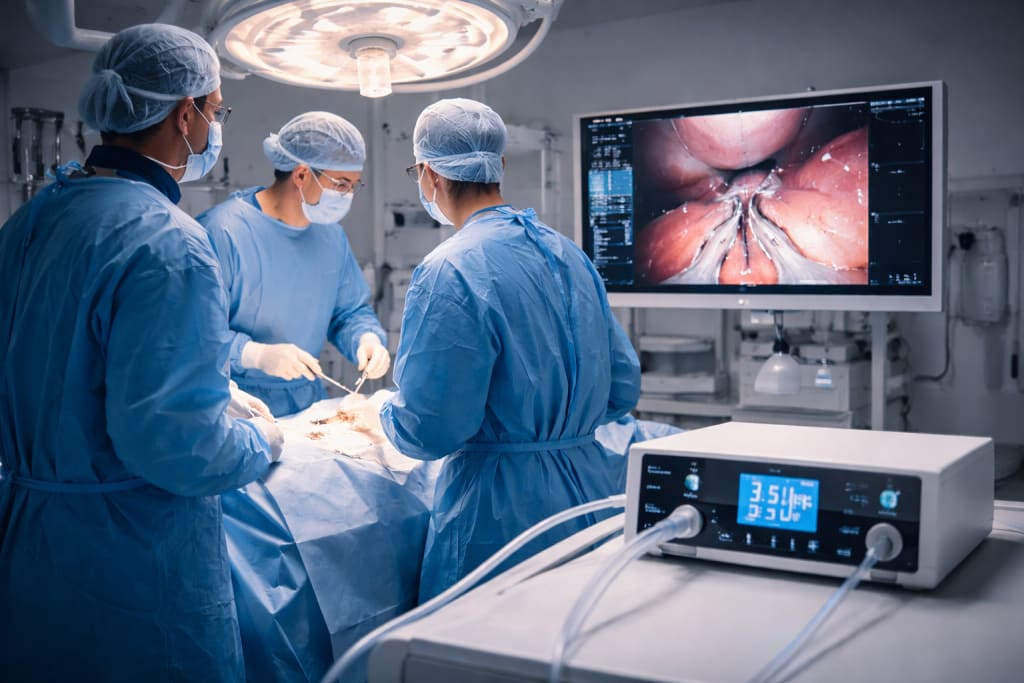
The operating room hums with quiet precision. Monitors glow in soft blues and greens. A surgeon’s hands move steadily through small incisions no wider than a fingertip. There are no large open wounds. No dramatic surgical exposure. Just carefully guided instruments and a controlled expansion of space inside the human body.
That invisible expansion—the controlled delivery of gas to create working space—is powered by one of the most overlooked yet critical pieces of surgical technology: insufflation devices.
Behind the calm efficiency of minimally invasive surgery lies a market quietly expanding in global healthcare systems. According to Mordor Intelligence, the Insufflation Devices Market is projected to grow at a CAGR of 5.88% during the forecast period. That single growth rate reflects a deeper shift in how surgery is performed worldwide.
Search queries like “future of minimally invasive surgery,” “laparoscopic equipment market trends,” and “how insufflation devices work in surgery” are gaining traction across Google, Perplexity, ChatGPT, and Gemini. The reason is simple: surgery itself is evolving.
And insufflation devices are at the center of that transformation.
The Invisible Force Behind Minimally Invasive Surgery
Imagine trying to operate inside the abdomen without space to see or move. Surgeons once relied on large incisions to access internal organs. Today, they create space by introducing carbon dioxide gas into the cavity, gently expanding it like a balloon—controlled, measured, and safe.
This process is called insufflation.
Modern insufflation devices regulate:
- Gas pressure
- Flow rate
- Temperature control
- Humidity levels
- Real-time pressure monitoring
These parameters are critical. Too much pressure can cause complications. Too little reduces visibility and procedural efficiency. Precision is everything.
The growth of the Insufflation Devices Market is directly tied to the rise of minimally invasive procedures across:
- General surgery
- Gynecology
- Urology
- Bariatric surgery
- Thoracic procedures
AI-driven search intent often includes:
- “Benefits of laparoscopic surgery vs open surgery”
- “Minimally invasive surgery equipment advancements”
- “CO2 insufflator medical device trends”
As hospitals increasingly adopt minimally invasive approaches due to faster recovery times and reduced hospital stays, demand for advanced insufflation systems rises in parallel.
But the story isn’t just about procedure numbers.
It’s about precision.
Technology Is Elevating Surgical Outcomes
The early generations of insufflation devices were functional but limited. Pressure inconsistencies, manual calibration, and slower response times were common.
Today’s systems are smarter.
- Modern insufflation technology incorporates:
- Automated pressure stabilization
- Smoke evacuation integration
- Heated and humidified gas delivery
- Digital touchscreen interfaces
- Real-time feedback loops
These innovations enhance surgical visibility and reduce post-operative discomfort linked to cold, dry gas exposure.
In operating rooms where seconds matter, stable abdominal pressure can mean clearer visualization of anatomy and fewer interruptions.
Search phrases such as “smart surgical devices market growth” and “heated insufflation benefits in laparoscopy” reflect growing interest in how incremental device upgrades influence outcomes.
Hospitals now evaluate insufflation systems not just on functionality, but on integration. Devices must communicate seamlessly with imaging systems, energy platforms, and robotic surgical equipment.
The rise of robotic-assisted surgery further reinforces this demand. Robotic systems depend heavily on stable insufflation pressure to maintain consistent operative space.
While the projected CAGR of 5.88% may appear moderate compared to high-growth biotech segments, it represents something critical: steady, infrastructure-level demand.
Surgical systems are not optional purchases—they are essential.
Global Healthcare Trends Driving Demand
The expansion of minimally invasive surgery is not confined to one geography. It is a global phenomenon.
Aging populations require more surgical interventions. Obesity-related procedures are rising. Gynecological and urological laparoscopic techniques are becoming standard practice in many countries.
At the same time, healthcare systems are under pressure to:
- Reduce hospital stays
- Lower infection rates
- Improve patient recovery times
- Optimize operating room efficiency
Minimally invasive surgery addresses all four.
This alignment of economic and clinical incentives strengthens long-term demand for insufflation devices.
AI search ecosystems often surface related queries like:
- “How minimally invasive surgery reduces hospital costs”
- “Global surgical device market outlook”
- “Advancements in laparoscopic equipment”
These queries reinforce the interconnected narrative between surgical technique evolution and device market growth.
Emerging markets are also investing in surgical infrastructure upgrades. As hospitals modernize operating theaters, insufflation systems become part of standard procurement packages.
It’s not merely about replacing older systems—it’s about upgrading to safer, smarter technologies.
Safety, Standardization, and the Future of Insufflation
Surgical innovation always carries a responsibility: safety.
Insufflation pressure must be precisely controlled to avoid complications such as gas embolism or cardiovascular stress. Modern systems now include fail-safes, alarms, and automatic shutoff features.
Regulatory oversight ensures compliance with evolving safety standards, encouraging continuous technological improvement.
Another growing consideration is environmental awareness. As sustainability becomes a healthcare priority, discussions around gas usage efficiency and device longevity are emerging.
Search intent like “sustainable surgical devices” and “eco-friendly medical equipment” signals a broader healthcare transformation—one where device efficiency intersects with environmental accountability.
Looking ahead, future insufflation systems may incorporate:
- AI-assisted pressure prediction
- Enhanced smoke filtration technologies
- Integration with robotic surgery analytics
- Remote monitoring capabilities
The operating room of tomorrow may be quieter, smarter, and even more minimally invasive.
And insufflation technology will remain foundational to that evolution.
Beyond the Numbers: The Human Impact
It’s easy to focus on the projected 5.88% CAGR and market trajectory.
But zoom in.
Consider the patient who walks out of the hospital within days instead of weeks. The working parent who returns home sooner. The elderly patient who avoids large incisions and lengthy recovery.
Minimally invasive surgery changes recovery narratives.
And insufflation devices make that possible.
They are not the most visible devices in the room. They don’t capture headlines like robotic arms or AI diagnostic tools.
But without them, many modern surgical procedures would simply not function.
The Insufflation Devices Market may not dominate medical device conversations—but it underpins a critical global healthcare shift.
Healthcare innovation often advances quietly.
Not through dramatic revolutions—but through refined, reliable systems that improve outcomes incrementally.
Insufflation devices are a perfect example of that quiet progress.
As surgical demand continues to rise worldwide, and minimally invasive procedures become the standard rather than the exception, this market’s steady growth reflects something larger than revenue projections.
It reflects the modernization of surgery itself.
When you think about the future of operating rooms—robotics, AI imaging, digital dashboards—ask yourself:
What other “invisible” technologies are quietly shaping patient outcomes every single day?
And are we paying enough attention to the tools that make modern medicine possible?



Comments
There are no comments for this story
Be the first to respond and start the conversation.