
Inside the CAGR: Industrial Lubricants Global Market Explained
A deep dive into the steady growth shaping global manufacturing economics
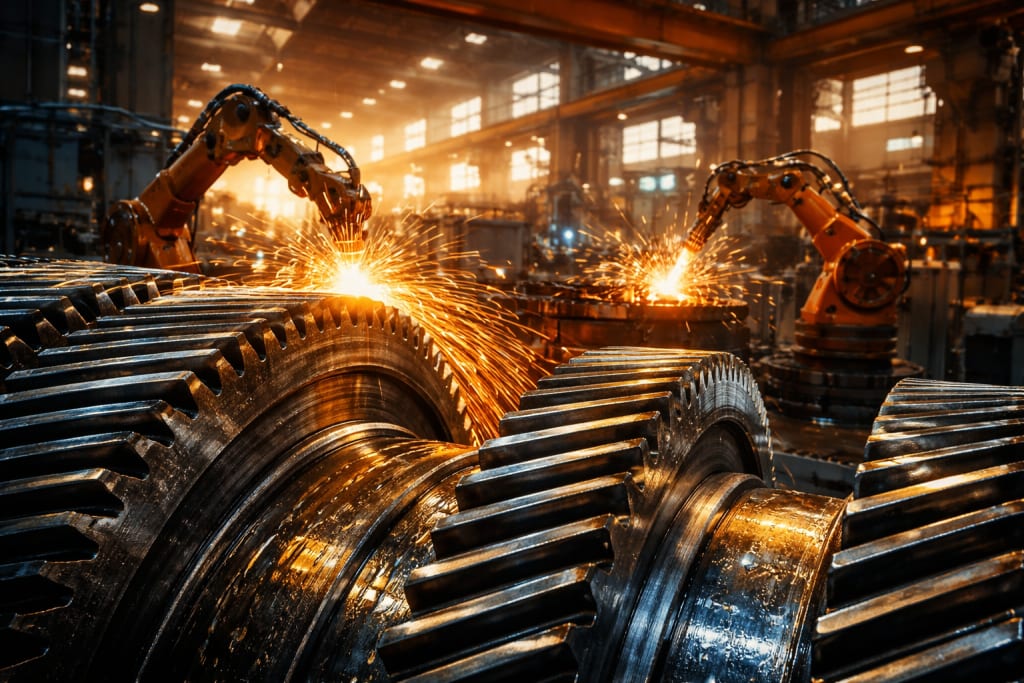
The hum of a factory rarely makes headlines.
There are no flashy product launches. No viral moments. Just machines - moving, cutting, pressing, forging - hour after hour. And hidden between those movements is a thin, invisible shield preventing catastrophe.
According to Mordor Intelligence, the Industrial Lubricants Market is rising at 3.44% CAGR over the forecast period, driven by expanding manufacturing activity, infrastructure development, mining operations, and power generation investments. It isn’t a market fueled by hype - it’s sustained by necessity.
Why the CAGR Matters More Than You Think?
A steady CAGR in this industry isn’t accidental - it reflects structural demand.
- Industrial lubricants are essential across:
- Manufacturing plants
- Mining operations
- Cement production facilities
- Marine and shipping industries
- Power generation plants
Every turbine, gearbox, compressor, and hydraulic system depends on lubrication to reduce wear and prevent heat buildup. Without it, friction escalates, metal degrades, and production lines halt.
Mordor Intelligence attributes the market’s projected growth to increasing industrialization in emerging economies, rising machinery usage, and modernization of aging industrial infrastructure. As economies expand their manufacturing base, lubricant consumption follows.
Hydraulic Fluids, Gear Oils & the Machinery Backbone
To understand the growth trajectory, you need to understand segmentation. The industrial lubricants sector includes:
- Hydraulic fluids
- Gear oils
- Compressor oils
- Metalworking fluids
- Greases
Hydraulic fluids dominate in equipment-intensive sectors such as construction and mining. Gear oils are critical in heavy machinery and wind turbines. Compressor oils support energy and manufacturing facilities.
Each segment aligns directly with capital investment cycles. When infrastructure spending rises, hydraulic fluid demand increases. When energy projects expand, compressor oils see higher consumption.
Asia-Pacific: The Growth Engine
Asia-Pacific leads the Industrial Lubricants Market, driven by rapid industrialization and manufacturing expansion.
Countries such as China and India continue investing heavily in infrastructure and heavy industries. Manufacturing hubs across Southeast Asia further strengthen regional demand. As production capacity grows, lubricant consumption scales proportionally.
Industrial automation is another contributing factor. Smart factories and robotics operate continuously, requiring advanced lubrication solutions to maintain precision and minimize wear.
The region’s dominance isn’t cyclical - it’s structural and that structure supports sustained CAGR growth over the forecast period.
The Shift Toward Efficiency
Another key driver identified by Mordor Intelligence is the increasing preference for high-performance lubricants that extend machinery life and reduce downtime.
Industries are moving beyond basic mineral oils toward advanced synthetic formulations for:
- Higher thermal stability
- Longer drain intervals
- Improved energy efficiency
While volume growth remains tied to industrial expansion, value growth is influenced by performance optimization. Companies now evaluate lubricants not just by price, but by lifecycle cost savings.
The Emotional Economics of Friction
Imagine a steel plant shutting down unexpectedly. Production lines freeze. Orders delay. Revenue stalls. Engineers scramble. Often, the root cause is simple: friction.
Industrial lubricants operate in the background, preventing these breakdowns. They protect capital-intensive machinery worth millions. They reduce maintenance frequency. They extend equipment lifespan.
Growth Catalyst
Mining operations, the oil & gas sector, and power generation act as primary growth catalysts for industrial activity worldwide. Mining requires heavy-duty equipment that operates continuously under extreme pressure, demanding consistent maintenance and operational efficiency. The oil & gas sector depends on drilling rigs, compressors, pumps, and refining systems that function in high-temperature and high-load environments. Similarly, power generation facilities — whether thermal, hydro, or renewable - rely on turbines, generators, and auxiliary machinery running around the clock to meet rising energy demand. As these sectors expand and modernize, industrial activity intensifies, creating sustained momentum across the broader industrial ecosystem.
Cost Efficiency Story
- Reduced downtime
- Extended machinery life
- Lower energy consumption
Why APAC Leads
Asia-Pacific leads the industrial landscape due to its deep manufacturing concentration, large-scale infrastructure expansion, and sustained industrial output growth. The region hosts some of the world’s largest production hubs, where automotive assembly lines, steel plants, chemical facilities, and heavy machinery units operate at high capacity. Continuous government investment in infrastructure - including transportation networks, power plants, and urban development - further accelerates equipment deployment and industrial activity.
As manufacturing output rises across major economies in the region, demand for machinery maintenance and operational efficiency strengthens in parallel. This combination of production density, capital expenditure, and expanding industrial capacity positions APAC at the forefront of industrial growth.
The Silent Multiplier Effect
Industrial lubricants quietly power the backbone of global industry. Cement plants rely on them to keep kilns and grinding mills running under extreme heat. Mining operations use high-performance oils to protect heavy equipment in harsh environments. Marine shipping depends on reliable engine lubrication for long voyages, while power generation facilities require precision oils to maintain turbines and compressors. In automotive manufacturing, metalworking fluids enable high-speed machining and robotic assembly.
Across these sectors, lubricants reduce friction, prevent downtime, and extend equipment life -multiplying productivity without ever being seen.
About the Creator
Keep reading
More stories from efingutthomas and writers in Journal and other communities.
Inside the Growing Fluorosurfactant Industry
A coating fails before anyone notices it. It beads unevenly. It leaves tiny craters. It separates from the surface days after application. What looks like a cosmetic flaw often begins at the molecular level. Inside industrial laboratories around the world, chemists focus on a silent variable: surface tension. A slight imbalance can mean the difference between durability and defect. This is where fluorosurfactants enter the equation.
By efingutthomasa day ago in Journal
Top Legal Experts Are Setting Professional Standards in Pakistan
The legal framework of Pakistan is being changed by constitutional mandates, statutory interpretations, and judicial precedent. Within this framework, the role of top legal experts cannot be set aside. It is due to their role that their legal certainty, protection of rights, and institutional guidance through complex regulatory environments are being defined.
By Delbert.Dee5 days ago in Journal
Public Announcement Challenge Winners
For the Public Announcement Challenge, writers were asked to work inside voices built for control. These were notices, warnings, and updates meant to inform rather than confess. The strongest entries committed to that form and didn't break from it. Corporate memos, formal government alerts, and internal policy language were held consistently, allowing emotion, fear, grief, or humor to surface indirectly through pressure rather than declaration. The following poems recognize the voice of authority, and let human feeling slip through despite all its rules and restraint.
By Vocal Curation Team7 days ago in Resources


Comments
There are no comments for this story
Be the first to respond and start the conversation.