
Choosing the Right Gas for Your Welding Process
Choosing the Right Gas for Your Welding Process

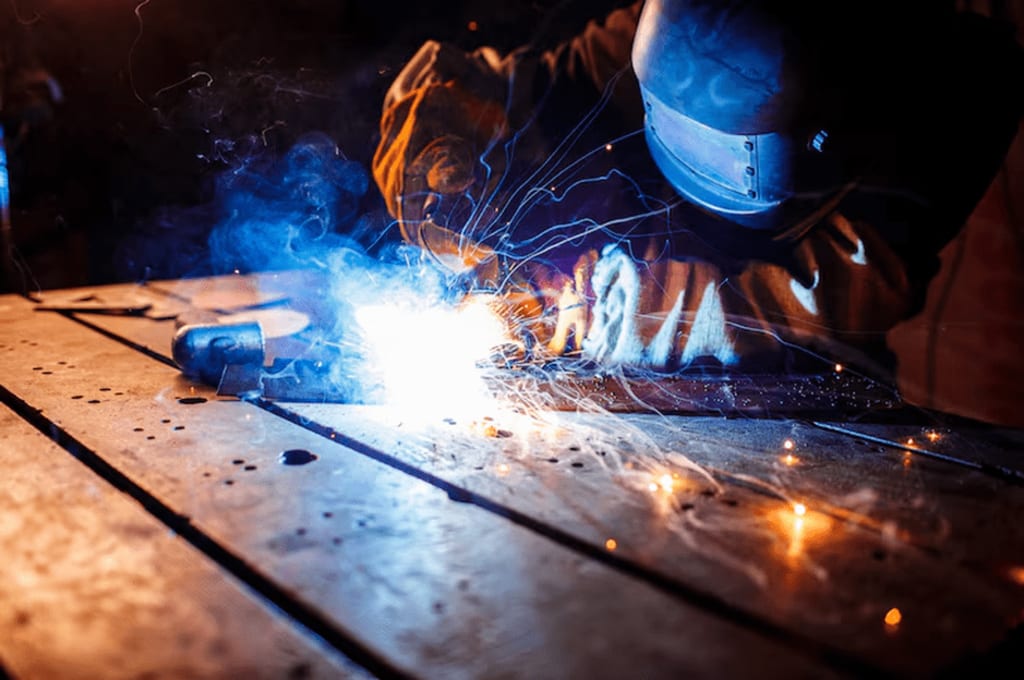
Welding is a complex and skilled task that requires not only expertise in metalwork but also a deep understanding of the materials and tools involved. Among these, the choice of welding gas plays an essential role in ensuring the quality, efficiency, and safety of the welding process. Welding gases serve a variety of functions including protecting the weld area from atmospheric gases, improving the quality of the weld, and even enhancing the welding speed.
Understanding Welding Gases
When selecting a suitable welding gas, it's crucial to consider the material being welded, the welding technique used, and the desired properties of the finished weld. The right welding gas can minimise defects such as porosity and spatter, and ensure a stronger, cleaner weld. There are several types of gases used in welding, each with its own properties and specific applications.
Inert and Active Gases
Welding gases fall into two main categories: inert and active. Inert gases, such as argon and helium, do not react with the metals being welded and are typically used in gas tungsten arc welding (GTAW) or TIG welding. Active gases, on the other hand, participate in the welding process and include gases such as carbon dioxide and oxygen. These are often used in metal inert gas (MIG) welding and gas metal arc welding (GMAW).
Argon and Helium
Argon is a commonly used inert gas that provides a stable arc and is suitable for welding a wide range of materials, including aluminium, steel, and titanium. Helium, another inert gas, is often mixed with argon to increase the welding speed and penetration on thicker materials. Both argon and helium can be used in their pure form or mixed with other gases to fine-tune the welding properties.
Carbon Dioxide and Oxygen
Carbon dioxide is a popular active gas, especially in its pure form for MIG welding. It provides deep penetration but can lead to more spatter when not mixed with other gases. Oxygen, often added in small quantities to argon-based mixtures, can enhance the arc stability and penetration, but too much can lead to oxidation and a reduction in the weld's mechanical properties.
Combining Gases for Optimal Results
Mixed gases combine the benefits of inert and active gases to suit various welding processes. For example, a common blend for MIG welding stainless steel is a mixture of argon, carbon dioxide, and sometimes, a small amount of helium or oxygen. These mixtures can help control the weld puddle, reduce spatter, and provide a smoother bead profile.
Specialised Applications and Gases
Certain welding applications require specialised gases. For instance, nitrogen purging is a process that displaces oxygen and other reactive gases from the weld zone. This technique is often employed in welding scenarios that are prone to oxidation, such as when working with stainless steel and other corrosion-resistant alloys.
Nitrogen is an advantageous choice for purging as it is readily available and relatively economical. As a diatomic molecule, it remains stable at the high temperatures generated during welding, thereby preventing unwanted chemical reactions.
Liquid Nitrogen and Its Uses
When the welding process requires large volumes of nitrogen or rapid cooling, liquid nitrogen becomes a primary choice. As a cryogenic liquid, it offers the cooling properties necessary to control the temperature during extensive welding operations. Its high purity ensures a clean and stable atmosphere for creating high-quality welds.
Choosing the Appropriate Welding Gas
The selection of welding gas should be influenced by several factors: the welding process, base material, and the desired weld characteristics, such as penetration, bead appearance, and corrosion resistance. Professional welders must also consider operational considerations such as cost, gas supply, and equipment capability.
Cost and Availability
Availability and cost are significant factors in the choice of welding gas. While pure argon and carbon dioxide are commonly available and relatively affordable, helium is often more expensive and can be subject to market fluctuations. Mixed gases, although offering enhanced properties, will also come at a higher cost than pure gases.
Welding Speed and Quality
Higher welding speeds can be achieved with certain gas mixes, particularly those containing helium due to its higher thermal conductivity. However, for fine or precise welding work, a more stable arc provided by an argon-based mix may be desirable to ensure quality.
Environmental and Safety Considerations
Environmental and safety considerations should not be overlooked when selecting welding gases. Proper ventilation and handling procedures must be in place to protect the welders from potentially harmful gas emissions. In addition, the environmental impact of gas production and consumption should be assessed as part of a responsible welding practice.
Conclusion
In conclusion, understanding the properties and applications of different welding gases is essential for quality welding outcomes. From inert gases like argon and helium to active gases such as carbon dioxide and the specialised use of nitrogen purging and liquid nitrogen, the correct selection can make a significant difference in the welding process. By paying careful attention to the specific demands of the task at hand, and balancing cost with performance requirements, welders can choose the right gas for their welding needs, ensuring superior quality and efficiency.
About the Creator
Alex Winslow
A Good Writer, Always love to See the world in Peace Image.
Keep reading
More stories from Alex Winslow and writers in Journal and other communities.
Voicebooking vs Respeecher: Choosing the Right Solution for Your Projects
Finding the Right Voice Solution The demand for professional voice content has never been higher. From advertising campaigns and e-learning platforms to podcasts and films, producers and agencies are searching for reliable ways to bring voices into their projects. That’s where Voicebooking and Respeecher enter the picture.
By Alex Winslow5 months ago in Journal
~ Fired ~
— Ai Intrusion ~ Are you Next ~ Is Ai Evolution after your job? — Few workplaces haven't been affected. Ai is in supermarkets, at doctors' offices, and even monitoring farms. I just can't think of anything this machine is not getting into, can you? For instance: Education ~ Law and Tech jobs will one day have a major influence or be taken over by these inanimate machines, with accuracy and vigor. From mechanics' diagnoses to a wide variety of everyday jobs, including fast food workers, with this input having the ability to cut their unnecessary work hours. I'm certain all of us have been touched by this with our short stories and colorful headings, have you? Even comments are very questionable 'Non-Robot' insertions.
By Jay Kantor7 days ago in Journal
Mickey Lolich and the Heavy Calm of a Pitcher Who Endured
Some baseball legends arrive wrapped in constant praise. Others earn their place through long nights, sore arms, and quiet endurance. Mickey Lolich belongs to the second group. His name may not always appear first in conversations about greatness, yet his presence shaped some of the most demanding moments in baseball history. He pitched when expectations were unforgiving and rest was rare. He carried pressure without drama and delivered when the weight felt unbearable. The story of Mickey Lolich is not about flash or fame. It is about stamina, trust, and a calm that refused to crack. To understand his legacy, you must look beyond numbers and trophies and into the era, the workload, and the man who kept showing up.
By Muqadas khan3 days ago in Journal




Comments
There are no comments for this story
Be the first to respond and start the conversation.