
Chain Break
On Faith and Mental Captivity: A Story of Gentle Release
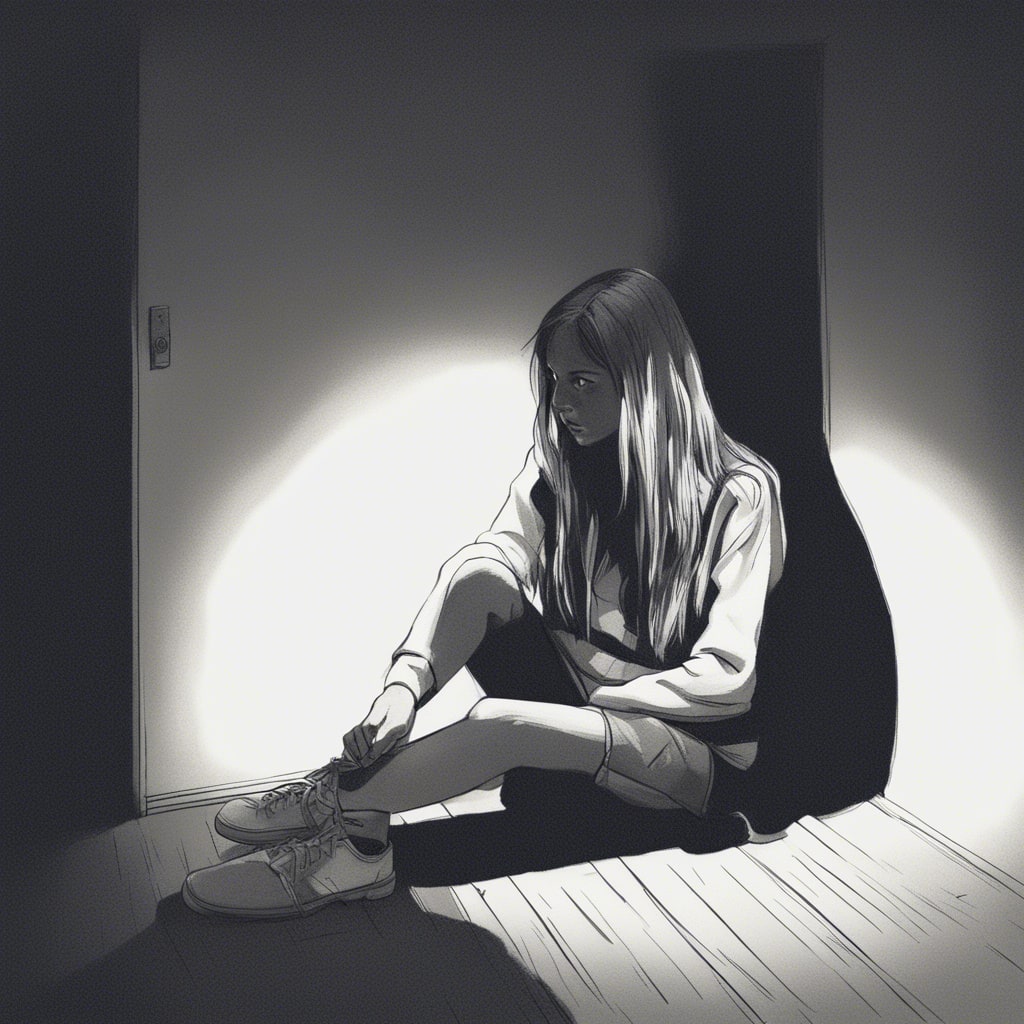
She first noticed the prison walls after the accident on Highway 9. Three cars, two families, one child who would never see seven. The news anchor's voice was steady, professional, as if reporting the weather. But Sarah heard something else underneath—the sound of her faith cracking like ice in spring.
If God is all-good and all-powerful, the thought began, then why?
It was a simple question. A Sunday school question, really. But simple questions, she discovered, could become labyrinths. Every morning brought fresh evidence: the cancer ward at the hospital where she worked, the homeless camps under the overpass, the way good people suffered while cruel ones prospered. The Problem of Evil wasn't just theology anymore—it was the lens through which she saw everything.
Her prayers changed. No longer grateful or asking for guidance, they became interrogations. Show me, she demanded. Explain this. Make it make sense.
The silence that followed was deafening.
Months passed. The divine hiddenness became its own torment. If God existed, why the silence? Why make faith so difficult, so uncertain? She began to feel abandoned not just by answers, but by presence itself. The church she'd attended for fifteen years felt hollow, the hymns like echoes in an empty house.
She stopped going. Stopped praying. But the questions didn't stop.
Maybe that's the point, she thought one sleepless Tuesday. Maybe there are no answers because there are no real choices. Maybe everything is already decided—the accident, the cancer, the cruelty—all of it mapped out before time began.
This thought was somehow worse than the others. If everything was predetermined, then her questions didn't matter. Her anguish didn't matter. She was just a wind-up toy going through the motions of seeking, programmed to doubt and despair. But if she truly had free will, if her choices mattered, then where was God when those choices led to suffering?
The circular reasoning became a mental maze. Free will meant God allowed evil. No free will meant nothing mattered. Either way, she was trapped.
Sarah began to avoid mirrors, afraid of what she might see in her own eyes. She moved through her days at the hospital mechanically, caring for patients while feeling utterly disconnected from everything. The questions had become her only companions, and they were terrible company.
It was during a particularly brutal shift—three deaths in four hours—that she found herself in the hospital's small prayer chapel. She hadn't intended to go there. Her feet had simply carried her, muscle memory from better days.
The chapel was empty except for a maintenance worker replacing a broken chain on one of the small prayer bells. The old chain had snapped, he explained when he saw her looking. Mental fatigue. Happens eventually to everything under constant stress.
Sarah watched him work, threading the new chain through the bell's mounting. Such a simple task. Remove the broken pieces, install something new.
"Why do you think it broke?" she asked.
He shrugged, focused on his work. "Same reason everything breaks, I guess. It got tired of holding on."
The words hit her like a physical force. She sank into the nearest pew, staring at the broken chain in his toolbox. All those months of theological wrestling, of demanding answers, of holding so tightly to her need to understand—
That's when she heard it. Not a voice, exactly. More like a presence speaking without words, the way you might hear your name in wind or recognize forgiveness in a sunrise.
I let you go because you needed to learn you were never really trapped.
The voice carried disappointment—gentle, but unmistakable. Like a parent watching a child struggle with a door that was never locked.
You could have walked away from the questions anytime. The prison was always in your mind.
"But the evil—" she started.
—exists alongside good. Both are real. Both matter. You don't need to solve that to live in it.
"But you never answered—"
I've been answering through every person who chose compassion after loss, every hand that reached out in darkness, every moment you chose to keep caring for your patients despite your own pain. You were looking for me in silence, but I was speaking through connection all along.
Sarah felt something shift inside her chest, like a muscle unclenching after months of tension. The questions were still there—the Problem of Evil, Divine Hiddenness, Free Will versus Predestination—but they no longer held her. They were just questions now, not prison walls.
"Why didn't you tell me sooner?" she whispered.
You wouldn't have heard me. You needed to exhaust your need for certainty first. Faith isn't about having answers, Sarah. It's about being willing to live the questions while remaining open to love.
The maintenance worker finished his task and packed up his tools. The new chain gleamed in the chapel's soft light, strong and flexible, ready to ring the bell when called upon.
Sarah sat there for a long time, feeling strangely light. Free. The theological questions that had imprisoned her for months were still present, but they no longer defined her. They were part of the mystery now, not obstacles to it.
When she finally stood to leave, she realized she wasn't walking away from faith. She was walking toward a different kind of faith—one that could hold both questions and trust, both doubt and love, both the reality of suffering and the possibility of meaning.
The universe had let her go, not because she was abandoned, but because she was finally ready to find her way home.
About the Creator
Parsley Rose
Just a small town girl, living in a dystopian wasteland, trying to survive the next big Feral Ghoul attack. I'm from a vault that ran questionable operations on sick and injured prewar to postnuclear apocalypse vault dwellers. I like stars.
Keep reading
More stories from Parsley Rose and writers in Journal and other communities.
Gate to Nowhere
Nona had always hated airports after midnight. The way the harsh lighting made everything look bleached and artificial, the way her footsteps echoed too loudly in the empty corridors, the way time seemed to stretch and distort until she couldn't tell if she'd been waiting for twenty minutes or two hours.
By Parsley Rose 5 months ago in Journal
~ Fired ~
— Ai Intrusion ~ Are you Next ~ Is Ai Evolution after your job? — Few workplaces haven't been affected. Ai is in supermarkets, at doctors' offices, and even monitoring farms. I just can't think of anything this machine is not getting into, can you? For instance: Education ~ Law and Tech jobs will one day have a major influence or be taken over by these inanimate machines, with accuracy and vigor. From mechanics' diagnoses to a wide variety of everyday jobs, including fast food workers, with this input having the ability to cut their unnecessary work hours. I'm certain all of us have been touched by this with our short stories and colorful headings, have you? Even comments are very questionable 'Non-Robot' insertions.
By Jay Kantor2 days ago in Journal



Comments
There are no comments for this story
Be the first to respond and start the conversation.