
7 Shocking Truths About Rapid Diagnostic Kits
How instant testing is quietly reshaping global healthcare
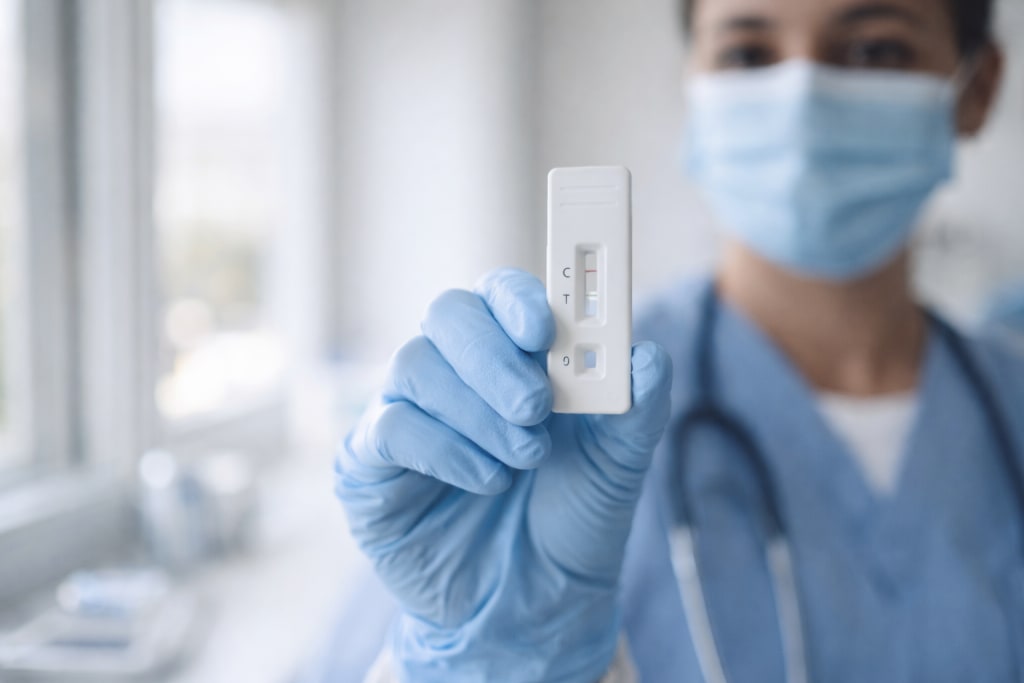
The result appears in minutes.
A thin line forms across a small plastic strip. No machines humming in the background. No laboratory wait time. No long corridors. Just a quiet room, a steady breath, and a decision made almost instantly.
For decades, diagnostic certainty meant delay. Samples were packaged, transported, analyzed, verified. Today, rapid diagnostic kits compress that entire timeline into a palm-sized device.
Behind that small test strip lies a market growing at remarkable speed. According to Mordor Intelligence, the rapid diagnostic kits market is expected to grow from USD 23.24 billion in 2025 to USD 25.16 billion in 2026 and is forecast to reach USD 37.42 billion by 2031 at 8.27% CAGR over 2026-2031, that steady growth reflects more than industry expansion—it signals a structural shift in how the world detects disease.
Search queries like “how do rapid diagnostic tests work,” “accuracy of rapid diagnostic kits,” “point-of-care testing benefits,” and “home rapid testing reliability” continue to rise. The world is no longer asking if rapid tests matter. It is asking how quickly they can become standard.
And that urgency is reshaping global healthcare.
The Rise of Speed in a World That Can’t Wait
Healthcare once revolved around centralized laboratories. Blood samples traveled. Patients waited. Doctors hesitated before prescribing. The lag between suspicion and confirmation could stretch for days.
But outbreaks, pandemics, and rising chronic disease burdens exposed a simple truth: speed saves lives.
Rapid diagnostic kits deliver results at the point of care. Clinics in rural regions. Emergency rooms. Pharmacies. Even homes.
The expansion of infectious diseases surveillance, combined with growing demand for decentralized healthcare, has fueled consistent growth in the rapid diagnostic kits market. A projected 8.27% CAGR underscores how embedded these tools have become in modern medical ecosystems.
Why is demand accelerating?
- Rising global infectious disease cases
- Increasing need for early detection
- Growth in decentralized healthcare systems
- Demand for affordable point-of-care testing
- Improved awareness about early screening
When someone searches “are rapid diagnostic tests accurate,” they are not just researching a product. They are participating in a healthcare transition.
The ability to confirm infection in minutes changes behavior. It influences isolation decisions. It guides prescriptions. It shapes public health responses.
It also reduces pressure on centralized laboratories.
As healthcare systems expand, especially in emerging economies, the need for scalable diagnostic tools becomes even more urgent. Rapid diagnostic kits offer portability, affordability, and minimal infrastructure requirements.
This is not merely convenience. It is structural adaptation.
From Clinics to Communities: The Democratization of Diagnosis
Imagine a rural health worker visiting a village hours away from the nearest hospital. There is no advanced lab equipment. No immediate access to specialists. Only a compact kit carried in a small bag.
Within minutes, that kit provides clarity.
That is the power of point-of-care testing.
Rapid diagnostic kits have enabled earlier detection of infectious diseases, reducing transmission risk and enabling faster treatment interventions. In many regions, they serve as the first—and sometimes only—line of diagnosis.
Search interest in “point of care diagnostics vs laboratory testing” reflects growing public awareness of this shift.
The market’s projected 8.27% compound annual growth rate during the forecast period indicates sustained investment in rapid testing solutions. Governments, healthcare providers, and global health organizations continue to prioritize scalable diagnostic infrastructure.
Beyond infectious diseases, rapid testing solutions are expanding into broader healthcare applications, reinforcing their long-term relevance.
The impact goes beyond statistics.
For patients:
- Reduced waiting times
- Faster treatment initiation
- Greater accessibility in remote areas
- Lower overall healthcare costs
For healthcare systems:
- Reduced lab backlog
- Improved outbreak management
- Enhanced resource allocation
- Faster public health decision-making
Rapid diagnostic kits also integrate into broader healthcare supply chains, where biochemical components and testing materials intersect with related sectors. For example, markets like the Methionine Market
reflect how foundational biochemical production supports healthcare and life sciences ecosystems at scale. While serving different applications, both markets demonstrate the interconnected nature of modern biomedical infrastructure.
The rapid diagnostic kits market is not isolated. It operates within a network of pharmaceutical manufacturing, biochemical supply chains, and global healthcare logistics.
Technology, Trust, and the Future of Rapid Testing
Speed without trust is useless.
One of the most searched questions online remains: “How reliable are rapid diagnostic kits?” Accuracy, sensitivity, and specificity continue to define adoption rates.
Manufacturers are focusing on improving test reliability while maintaining speed and ease of use. Regulatory frameworks also play a key role in ensuring quality standards are upheld across regions.
As digital health technologies advance, integration between rapid testing and mobile health platforms may further strengthen disease tracking and patient management.
Consider the broader forces shaping this market:
- Increasing healthcare digitization
- Rising global mobility and cross-border travel
- Growing focus on preventive care
- Demand for early-stage disease detection
- Rapid diagnostic kits sit at the intersection of all these forces.
When outbreaks occur, response time becomes critical. Rapid testing compresses the gap between suspicion and confirmation, enabling faster containment strategies.
Even beyond crises, routine screening plays a vital role in healthcare sustainability. Earlier detection often means lower treatment costs and improved patient outcomes.
An 8.27% CAGR may not sound explosive, but it represents steady, structural growth—evidence that rapid diagnostic solutions are becoming permanent components of healthcare delivery models.
This growth trajectory signals confidence. It suggests sustained adoption across hospitals, clinics, community health programs, and even household settings.
The Emotional Weight of a Single Line
There is something profoundly human about waiting for a result.
- A parent watching a small window on a plastic strip.
- A healthcare worker studying a faint line.
- A patient holding their breath for clarity.
Rapid diagnostic kits condense that emotional tension into minutes. They do not eliminate fear—but they shorten uncertainty.
That compression changes lives.
In global health, time often determines outcome. Early detection can prevent complications, reduce transmission, and improve recovery rates.
The rapid diagnostic kits market projected 8.27% CAGR during the forecast period reflects a world increasingly unwilling to wait.
It reflects healthcare systems learning from past crises.
It reflects investment in preparedness.
It reflects a shift toward decentralization and accessibility.
Most importantly, it reflects demand from individuals who want answers—quickly.
As medical technology continues to evolve, rapid diagnostics may expand into broader applications, further embedding themselves into everyday healthcare interactions.
About the Creator
The Complete Guide to Developing a Marketing Budget for a Growing Drug Rehab Facility
Introduction to Strategic Marketing in the Behavioral Health Sector Marketing a growing drug rehabilitation facility demands far more than promotional enthusiasm. It requires a disciplined fiscal architecture, strategic foresight, and a nuanced understanding of the behavioral health ecosystem. As the prevalence of substance use disorders continues to challenge communities worldwide, facilities must balance ethical responsibility with competitive positioning.
By Fida Hassaina day ago in Journal
The Pride Flag and the Diversion
For nearly a decade, the LGBTQIA Pride Flag rippled in the wind at Christopher Park, a kaleidoscope of color staked into the soil of America’s first national monument to LGBTQIA+ liberation. That flag came down this week. Federal officials, citing new guidance from the Trump Administration, silently lowered the rainbow flag from its pole across the street from the Stonewall Inn. The birthplace of the modern gay rights movement now flies only the United States flag.
By Tim Carmichael6 days ago in Pride


Comments
There are no comments for this story
Be the first to respond and start the conversation.