
5 Tips for New Production Assistants
Are you new to being on set? Here are some ground rules.

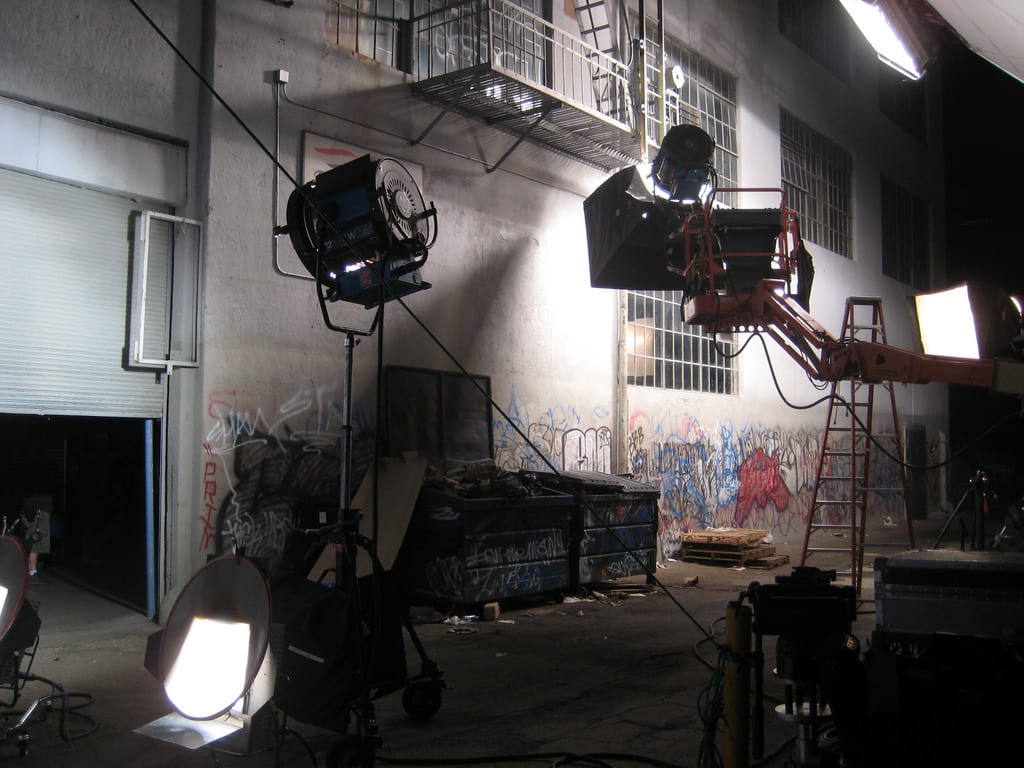
Becoming a production assistant (or PA) for a film shoot is a common way that many begin their careers in the filmmaking industry, especially if one is interested in pursuing an aspect of film production.
As such, the position may appear straightforward at first glance. Obviously there's going to be a lot of moving equipment around, getting people coffee, etc.
However, having been a (quite clumsy at first) PA on several shoots, I believe there are some general rules that can contribute to a smoother ride on set. Here are the most essential:
#1: Listen and ask.
A production assistant's duties often require specific equipment for specific people. However, if a PA were to try and memorize the entire catalogue of cameras, lights, props, tools, and talent on set, they would likely explode.
It's far more imperative that a PA is attentive and takes in as much information and context as possible in the moment. A PA really only requires knowledge that's necessary and relevant to complete their tasks on set.
#2: Learn the lingo.
"Grab me a C47," an assistant camera told me on one shoot. I nodded my head and ran off, looking for some elegant computer part or camera lens labeled as such.
As I scrambled for through flashy control panels, I heard the assistant camera say he just used a binder clip instead. A binder clip? In place of a C47?
As it turned out, "C47" is film-speak for a clothespin. I was searching through $30,000 worth of equipment for something you could pick up on discount from Michael's.
The film industry comes with a lot of confusing and random slang that one just has to become accustomed to as a production assistant. I highly suggest looking up some common film set vocabulary before your shoot; there are lots of detailed online resources for all the weird terminology that'll come up on set.
#3: Walk with a purpose.
Appearance is very powerful, and loitering around is never impressive. Something I realized very quickly as a PA was that "free time" doesn't really exist on set. There is always some activity to be putting one's efforts into, and the crew knows that.
In the past, I've solved this problem by taking lunch orders early, tidying up the equipment, asking cast/crew if they need assistance, and making sure everyone has enough water. Speaking of which...
#4: Stay hydrated and stretch when possible.
Being a production assistant can be physically taxing; it usually requires a lot of heavy lifting and running. As such, one should treat the role as a workout and hydrate/stretch accordingly. Bringing water, band aids, and a few bags to help with the job is never a bad idea.
A PA should always be aware of their physical state and not be afraid to tell someone if they have trouble moving objects. Stretched muscles are nothing to laugh at (especially when using heavy tools), and health is more important than appearing capable on set.
#5: When in doubt, ask permission.
Many departments—such as camera and lighting—have their own toolkits and don't appreciate a PA using their equipment for another department on set. This includes minute things like tape, clips, and batteries. Be sure to ask the permission of someone in the department before borrowing their supplies.
Some other smaller points:
- If you want to pursue a career in film production, don't be afraid to ask the crew questions about the industry. Many crew members are happy to discuss how they reached the job they have now.
- Mistakes are part of the job. Even the director will mess up now and then. Don't be hard on yourself for learning and growing on set.
- You are part of the crew. You deserve the same food and breaks as everyone else working on the shoot.
Good luck in all your future endeavors on set!
About the Creator
Mitchell Tanaka
Welcome to my thoroughly blended smoothie of musings, stories, and other silly ramblings.
Keep reading
More stories from writers in Journal and other communities.
~ Fired ~
— Ai Intrusion ~ Are you Next ~ Is Ai Evolution after your job? — Few workplaces haven't been affected. Ai is in supermarkets, at doctors' offices, and even monitoring farms. I just can't think of anything this machine is not getting into, can you? For instance: Education ~ Law and Tech jobs will one day have a major influence or be taken over by these inanimate machines, with accuracy and vigor. From mechanics' diagnoses to a wide variety of everyday jobs, including fast food workers, with this input having the ability to cut their unnecessary work hours. I'm certain all of us have been touched by this with our short stories and colorful headings, have you? Even comments are very questionable 'Non-Robot' insertions.
By Jay Kantor8 days ago in Journal
The Angry Man in Your House
"If you grow up with an angry man in your house, there will always be an angry man in your house" This statement has caused plenty of controversy online, people say its a statement that blames victims while also undermining those who break traumatic cycles to form health relationships... but if I'm honest now that I'm in my 30s it makes more sense to me than ever, and I'd argue that its not just about fathers and uncles.
By S. A. Crawforda day ago in Humans




Comments
There are no comments for this story
Be the first to respond and start the conversation.