
Why Power Fears Civil Society in Libya
The Real Reason Libya’s Authorities Fear Civil Society

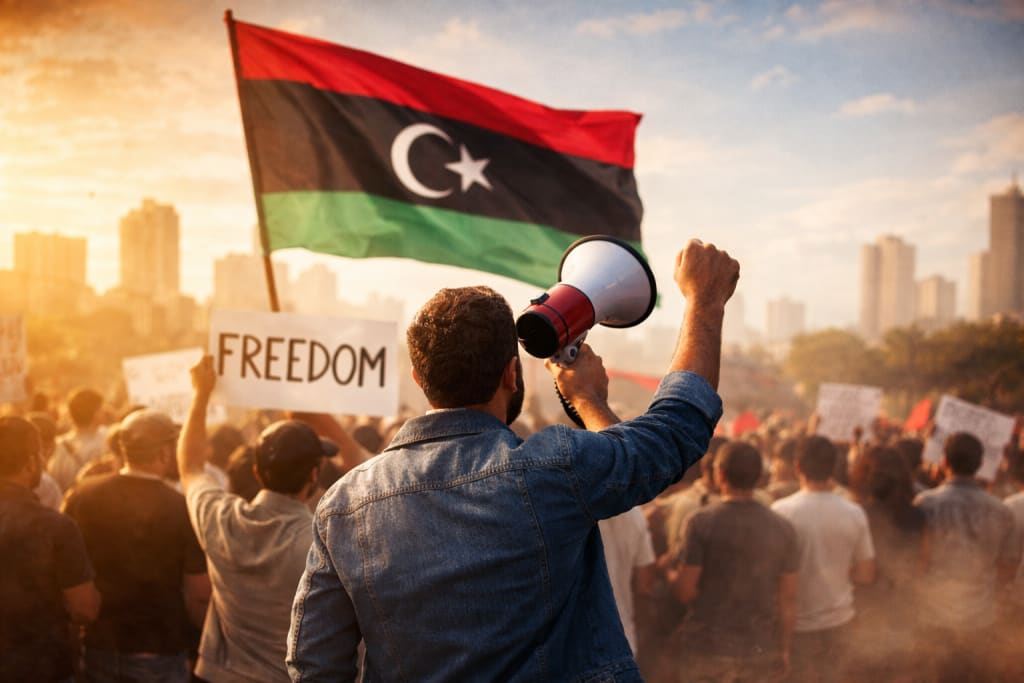
The fear of civil society in Libya is not a theoretical issue. It is a political reality. The country’s de facto authorities understand exactly what genuine civil society represents. Despite years of distortion and smear campaigns, they know it is not cosmetic or symbolic. It is a measure of a state’s health and an indicator of whether power can tolerate scrutiny.
Many people, however, do not clearly understand what civil society actually is. The term has been blurred, misrepresented, and sometimes deliberately demonised. It is often reduced to NGOs, donor-funded projects, or familiar faces on television. In reality, civil society is far simpler and far more powerful: it is collective action organised independently from the state and its coercive institutions. It is people coming together to defend their rights and interests outside the logic of official authority.
In any functioning country, progress is not measured by how many organisations are registered, but by whether they can operate freely. Real civil society monitors elections, documents abuses, questions decisions, and challenges corruption. It has the ability to say “no” without fearing imprisonment or exile. It does not exist to flatter power; it exists to hold it accountable. That alone makes it uncomfortable for those who rule through control rather than consent.
At its core, civil society performs a watchdog role. When it observes elections, it limits fraud. When it documents violations, it breaks the monopoly of official narratives. When it criticises, it exposes systemic failure. When it calls for reform, it erodes the moral legitimacy of authorities who govern through fear. And in critical moments, when it mobilises public opinion, it can reshape political realities. No authority that fears accountability can comfortably coexist with such a force.
Libya’s post-2011 landscape illustrates this tension clearly. Before the revolution, there was no genuine independent civil society. A few institutions existed, but they operated within the regime’s framework. After 2011, a sudden numerical explosion occurred. Thousands of organisations appeared, many without experience, structure, or protection. It was growth in quantity, not necessarily in quality. What was needed was time and a supportive legal environment. Instead, civic space steadily contracted.
Successive authorities did not see civil society as a partner in building a stable state. They saw it as something to manage, contain, or neutralise. Activities deemed “safe” — development projects, environmental campaigns, awareness initiatives — were tolerated because they did not challenge the political order. But work related to human rights, accountability, corruption, or scrutiny of security forces quickly became dangerous territory. From there, co-optation or suppression followed.
At the same time, a parallel version of civil society was cultivated. Government-organised NGOs, or “GONGOs,” were funded and promoted to project an image of civic participation while reinforcing official narratives. These organisations served to discredit independent voices and present themselves as the “national” alternative to supposedly foreign or destabilising actors.
Those who insisted on working in sensitive areas faced a stark choice: silence, exile, or repression. It is not a coincidence that many genuinely independent Libyan organisations now operate from abroad. Nor is it accidental that activists who survived imprisonment or violence often live in forced exile or remain publicly silent.
Inside Libya, meaningful civic space has narrowed dramatically. Surveillance, intimidation, smear campaigns, and targeted arrests are common. Laws are drafted or applied selectively to constrain independent activity. Public opinion is shaped through religious platforms, television channels, and social media to portray civil society as morally corrupt, foreign-funded, or even hostile to national identity. A manufactured moral panic has turned oversight into treason and accountability into conspiracy.
There is also an uncomfortable truth: civil society actors have not always succeeded in explaining their work clearly. We did not always connect our efforts to everyday concerns. That gap allowed authorities to redefine the concept for us — and against us.
Ultimately, the fear of civil society in Libya is not about protecting tradition or safeguarding sovereignty. It is about avoiding oversight. It is about preventing documentation. It is about ensuring that those responsible for abuse are never held accountable.
A strong civil society implies limits on power. It implies transparency, consequences, and public scrutiny. For authorities built on control and impunity, that is not simply inconvenient — it is existential.
About the Creator
Ali Alaspli
Libyan human rights defender and former prisoner of conscience. He lives in exile and serves as the Director of Libya Crimes Watch, an organisation documenting human rights violations and advocating for accountability in Libya.
Keep reading
More stories from writers in Humans and other communities.
The Cairn Beside the Lake
And so it came to pass that King Ertharion, Tenth King of Lombaia, stood beside the still lake below unrelenting and unassailable cliffs with the remainder of his harried host. In what was the tenth year of his reign and his forty-fourth upon this great green earth, Menigo the Betrayer, cousin of King Ertharion, pressed home his false claim.
By Matthew J. Frommabout 5 hours ago in Fiction
Draft Deleting? Don't Do It!
Today, I had a little time. I decided that I would have a look at the drafts that I have on Vocal. This is part of a long-term wish to have everything I've written on paper rather than virtually. I've not looked at them for weeks and something drew me to them, just to browse and see what was there.
By Rachel Deeming6 days ago in Writers


Comments
There are no comments for this story
Be the first to respond and start the conversation.