
Unemployment Crisis in Gaza: 80% Joblessness in 2026
Near-Total Paralysis of the Labor Market 95% of the Population Now Dependent on Aid The Long-Term Risk to an Entire Generation

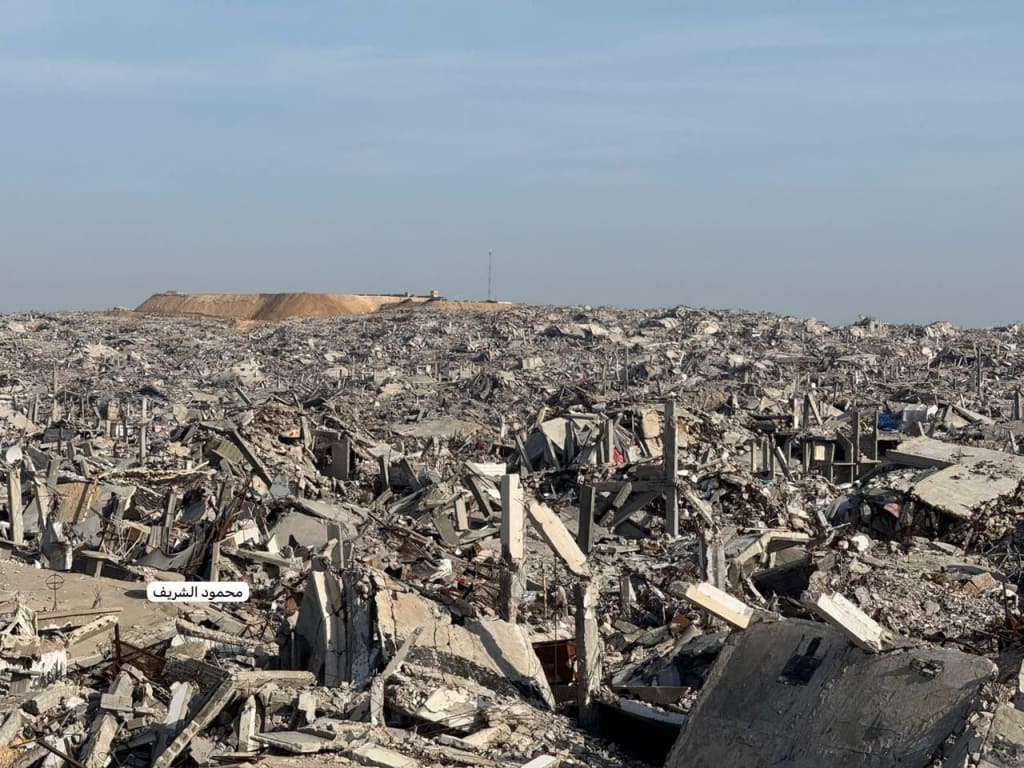
More than two years of ongoing war on the Gaza Strip have created a distorted economic situation, leading to unprecedented increases in household spending rates, in exchange for goods and services whose value is much lower than those rates.
According to experts and analysts, money in the Gaza Strip has lost a large part of its real value due to the war, adding significant burdens on citizens.
Large spending
Families in the Gaza Strip were forced to spend huge sums of money to obtain a few goods and services, especially during the famine and during displacement operations.
Citizen Khaled Abdel Moneim confirmed that he had never lived through a more difficult period than the two years of war, which cost him large sums of money, enough to rebuild a house and buy goods and services sufficient for four years.
Abdul-Moneim confirmed that he spent more than 40,000 shekels on tents, tarpaulins, and other shelter supplies. He bought one tent at one time for 4,000 shekels. Every time he was forced to be displaced, he needed money to pay for transportation and to buy shelter supplies, in addition to needing to pay rent for the plots of land he stayed in. He has been displaced 8 times since the beginning of the war.
He explained that he bought food commodities during the famine at tens of times their real price, and this increased his spending rates, explaining that he spent all the money he had saved, in addition to having to sell the gold from his wife’s jewelry, and all the monthly salaries he received during the war, in addition to spending family aid that reached him from relatives abroad.
The Institute for Palestine Studies revealed that what families in the Gaza Strip spent during the war, estimated at about $1.8 billion, does not reflect its true value, as its actual value does not exceed $604.8 million, which means that families actually lost about $1.21 billion as a result of monopoly and exploitation practices.
The organization explained that citizens in Gaza lost 66.7% of their money spent during the war due to monopoly and extortion, which led to the Palestinian family losing two-thirds of its real income, which was converted into monopoly income and extortion profits that moved from the citizens’ accounts to an exploitative monopoly class within society.
The study showed that this loss also applies to families who received cash assistance during the war, whether from international organizations or through donations and family remittances from abroad, noting that every $100 the family received was effectively worth only about $33 in terms of purchasing power during the war.
Daily battle for survival
Since the outbreak of the war of extermination, the Gaza economy is no longer just a collection of collapsing figures in reports, but has turned into a heavy daily burden that haunts people in the smallest details of their lives. The war did not only destroy buildings, but also struck at the core of economic life, stripping the majority of their sources of income and pushing the entire society to the brink of destitution and vulnerability
Economic expert Ahmed Abu Qamar says: “Today, about 95% of the Gaza Strip’s population depends on aid, compared to about 55% before the war. This dangerous shift does not reflect the generosity of the aid, but rather the collapse of the ability to work and produce. He explained that aid, no matter how much it amounts to, cannot be a substitute for a real economy. Rather, over time it turns into a fragile lifeline that may be cut off or politicized at any moment, and this is what happened during the past months.”
Abu Qamar stressed that the labor market is almost paralyzed; unemployment hovers around 80% and the labor force participation rate has dropped sharply, meaning that thousands of Gazans are no longer even looking for work after losing hope. This is not just stagnation, but a structural collapse that threatens human capital and the future of entire generations
Abu Qamar continued: On the other hand, the income of those who still have a salary is eroding, with partial spending that does not keep pace with rampant inflation, as prices have jumped to unprecedented levels due to the scarcity of goods and the destruction of supply chains, turning the shopping trip into an impossible equation and making the choice between basics harsh and humiliating.
Abu Qamar pointed out that Gaza’s economy today is stuck in a suffocating cycle: high unemployment, eroding income, soaring prices, and aid that does not arrive. In the end, the citizen pays the price for this comprehensive collapse, as he lives under constant pressure to meet the basics of life in a reality that lacks any economic stability.
A joint statement issued by the Palestinian Central Bureau of Statistics and the Palestinian Monetary Authority, as part of the economic report for 2025, stated that unemployment in the Gaza Strip is no longer a temporary social phenomenon, but has turned into a structural crisis that threatens the living and economic stability of the entire society.
According to official data, the unemployment rate in the Gaza Strip exceeded 80% during 2025, an indicator that reflects the near-total paralysis of the labor market.
Heavy losses
The government media office revealed a shocking initial estimate of the extent of the losses incurred by vital sectors in the sector, estimating the total direct losses of the "genocide" at about $70 billion, in one of the biggest economic and humanitarian disasters in modern history.
According to official data issued by the office, the service, housing and health sectors topped the list of those affected, as the housing sector suffered losses of about $28 billion as a result of the massive destruction of infrastructure and housing, while the health sector suffered losses of about $5 billion due to the destruction of hospitals and medical centers and the interruption of basic services, while the education sector suffered losses of about $4 billion as a result of the destruction of schools, universities and educational facilities.
For his part, Palestinian economic analyst Dr. Nasr Abdel Karim confirmed that what is happening in Gaza is no longer just a military aggression, but a comprehensive economic annihilation that has destroyed the foundations of economic life in the sector. The Gaza economy has lost more than 90 percent of its value, and almost all productive sectors, including agriculture, industry, trade, and tourism, have stopped, while only limited activities related to relief or simple home production remain.
About the Creator
Keep reading
More stories from Real content and writers in Humans and other communities.
Trickle Them Down, But Not Out
The thing about smart people is that they should know better, but alas, intelligence is not the same as wisdom. Not only do the mistakes of experts too short on vision—when they are not corrected—have the potential to do great and far-reaching damage, but they also undermine public confidence in the very notion of expertise. This is particularly so when expertise is wielded in defence of the rich and powerful as a cudgel against those laid low. As an academic, this lack of faith in “so-called experts” is painful to see as it plays out in the spread of dis-/misinformation, conspiracy theories, and anti-intellectualism writ large. But it is also an understandable impulse given the catastrophic failure of an economic ideology pushed by certain economic experts. Supply-side economics has shaped a broken system for the last half-century and has arguably done more to undermine the fabric of the American Dream than any policy framework of the past century.
By Cory Wright-Maley3 days ago in Humans
What Mindset Shift Do Professional Singles Need for Relationship Success
Strategy, discipline, and control can be the success factors in the workplace of professional singles. Though, these same qualities do not always carry over to dating. Tackling relationships in a mere tactic approach may cause frustration, lack of communication and frequent rejection. A significant number of the professionals overlook dating as a project, and evaluate the efforts and the results of dating, instead of letting the natural connection play out. The initial move to relationship success is to note that attitude is equally important as action.
By Mark Hipstera day ago in Humans
Belle of the Bayou
Bad move, cher. Not just the slip of her kitten heel on the rainy February cobblestones in the Fourth Ward. She got caught snooping. Detective Deleon clucked and strutted like a rooster in his rush to clear her from the scene, waving cigar smoke to and fro as he gesticulated amid the thick air of the speak easy. An experienced crime reporter, Marie knew better than to let the coppers catch her on the wrong side of the line, but curiosity had gotten the better of her.
By Maia Gadwall the metAlchemist5 days ago in Fiction



Comments
There are no comments for this story
Be the first to respond and start the conversation.