humor
"Humor is what binds humans together and makes difficult times just a little less painful; Sometimes you can't help but laugh. "
The Paradox of "Chill": Why Relaxation Has Become Our Newest Source of Anxiety
In our modern pursuit of a "decent" life, the goalposts are constantly shifting. In the workplace, our primary task is "emotional management." When we return to our hometowns, we are told to stop "internal emotional friction." And when we finally manage to take a trip to clear our heads, we find ourselves reflecting on why we lack a certain "sense of relaxation"—or what is currently trending in Chinese social media as Song-chi-gan (松弛感).
By Elena Vance 39 minutes ago in Humans
Beyond Epstein
I didn’t know how to stop watching the news. It started as a quick scroll—just a check-in, like I was being responsible. Then it became a kind of hunger. A need to see the latest twist, the latest headline, the latest detail that made my stomach twist into knots.
By John Smith2 days ago in Humans
Speaking to Time Instead of the Room
Much of modern communication is oriented toward immediacy. Writing is framed as something meant to be consumed quickly, reacted to instantly, and replaced just as fast by whatever comes next. Under this model, the value of a piece is measured almost entirely by its initial reception. If it does not land immediately, it is treated as a failure. This assumption narrows the purpose of writing and misunderstands how meaning actually travels through time.
By Peter Thwing - Host of the FST Podcast6 days ago in Humans
‘Red Line’: Global NGOs Working in Gaza Defy Israel’s Threats After MSF Ban. AI-Generated.
International non-governmental organizations (NGOs) operating in Gaza have signaled their intent to continue humanitarian work despite rising tensions and reported threats following a ban involving Médecins Sans Frontières (MSF). The situation has sparked global debate over humanitarian access, the safety of aid workers, and the responsibilities of governments during conflict situations.
By Aarif Lashari8 days ago in Humans
7 Common Myths and Facts About Methadone Treatment. AI-Generated.
When people first hear the word methadone, fear and misinformation often rush in before facts have a chance to speak. I have seen how these myths can stop someone from getting help they truly need. If you are exploring treatment options for yourself or someone you care about, understanding what is true and what is not can make that decision feel far less overwhelming.
By Jordyn Mastrodomenico8 days ago in Humans
Talking to AI Taught Me More About My Own Mind Than Any Therapist
I didn’t start talking to artificial intelligence because I needed answers. I started because I needed to think. At first, the interaction was transactional—questions in, responses out. A tool, nothing more. But over time, something unexpected emerged. The machine wasn’t revealing new insights about the world. It was revealing patterns in me.
By Mind Meets Machine12 days ago in Humans
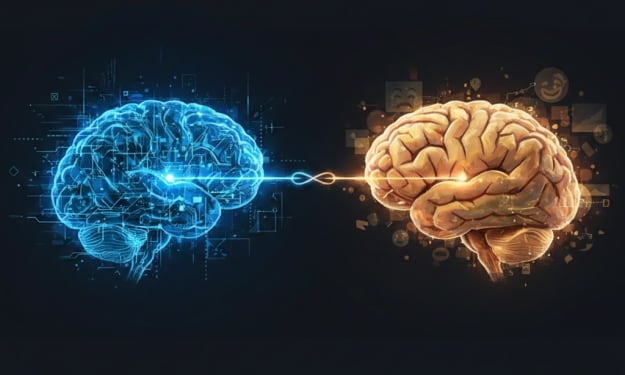
Why Machines Make Decisions Faster—But Humans Still Matter
Machines are fast. They process millions of data points in seconds, recognize patterns invisible to the human eye, and deliver decisions with astonishing efficiency. From recommending what we watch to approving loans and diagnosing diseases, machines are increasingly trusted to decide for us.
By Mind Meets Machine12 days ago in Humans
How Suboxone Strips Work Compared to Tablets. AI-Generated.
If you or someone you care about is using Suboxone as part of opioid recovery, you have probably noticed it comes in two main forms. Strips and tablets may contain similar ingredients, but the way they work in your body and fit into your routine can feel very different. I want to walk you through these differences in a clear, human way so you can better understand what might work best for you and why doctors often lean toward one option over the other.
By Jordyn Mastrodomenico13 days ago in Humans