art
The best relationship art depicts the highs and lows of the authentic couple.
The Silent Struggle: Understanding the "Non-Proactive" Heart of a Woman
In the world of emotions, everyone eventually encounters a period of agonizing hesitation—especially when "holding on" becomes the dominant theme of the heart. For many women, affection is a delicate and deep-rooted tapestry. Even when a relationship reaches its breaking point, truly letting go is rarely a clean break.
By Elena Vance about 11 hours ago in Humans
Alexander the Great — Part 4: Death, Division, and an Immortal Legacy
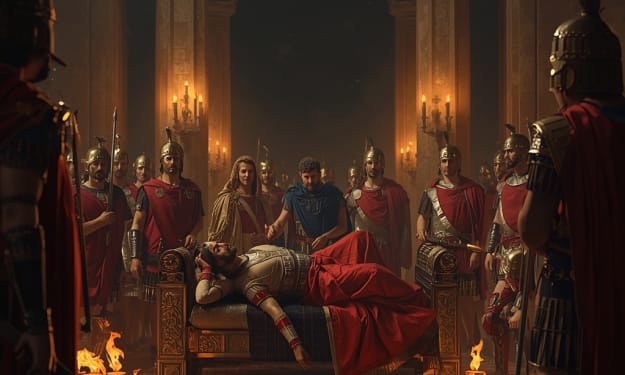
Babylon had become Alexander’s administrative center and was intended to be the capital of his vast empire. The city was strategically located and symbolized the blending of Eastern and Western cultures — a key vision for Alexander. He planned new military campaigns, including a possible invasion of Arabia, and began organizing naval expeditions. However, after days of heavy drinking and planning, Alexander suddenly fell ill. Ancient sources describe him suffering from fever, weakness, and the gradual loss of speech. Within roughly ten days, he died. The exact cause of Alexander’s death remains one of history’s great mysteries. Some historians suggest malaria, typhoid fever, or another disease common in the region. Others believe complications from old battle wounds and exhaustion contributed to his decline. There have also been theories of poisoning, though evidence remains inconclusive. Whatever the cause, the sudden loss of such a powerful ruler left a massive empire without clear leadership. Alexander had not named a definitive successor. When asked on his deathbed who should inherit the empire, he reportedly said, “To the strongest.” Whether this statement is accurate or not, it reflected the reality that followed. His generals, known as the Diadochi, began competing for control. At first, they attempted to maintain unity by ruling in the name of Alexander’s unborn son and his half-brother, but tensions quickly escalated into open conflict. The Wars of the Diadochi lasted for decades. Former allies turned against each other, carving the empire into separate kingdoms. Ptolemy took control of Egypt and established a dynasty that would rule for nearly three centuries. Seleucus gained vast territories in the east, forming the Seleucid Empire. Antigonus and his descendants controlled parts of Asia Minor and Greece. Instead of a single unified empire, Alexander’s conquests transformed into a network of Hellenistic states. Despite political fragmentation, Alexander’s cultural influence continued to grow. His campaigns had spread Greek language, art, and philosophy across Asia and the Middle East. This fusion of Greek and local traditions created what historians call the Hellenistic world. Cities founded by Alexander, especially Alexandria in Egypt, became centers of learning and innovation. The Library of Alexandria housed thousands of scrolls and attracted scholars from across the known world. Advances in science, mathematics, astronomy, and medicine flourished during this period. Alexander’s leadership style also left a lasting impact. He encouraged cultural integration, adopting aspects of Persian dress and customs and promoting marriages between his soldiers and local populations. Though some of his Macedonian troops resisted these policies, they contributed to the blending of cultures that defined the Hellenistic age. Trade routes expanded, connecting Mediterranean markets with those in India and Central Asia. Ideas and technologies traveled along these routes, shaping civilizations for centuries. Over time, Alexander became more than a historical figure; he became a legend. Stories about his life were retold in many cultures, each adding its own interpretations. In Greek and Roman traditions, he was portrayed as a heroic conqueror and brilliant strategist. In Persian and Middle Eastern tales, he appeared as a complex ruler, sometimes wise and sometimes destructive. In South Asian folklore, he was remembered as a powerful but distant invader. These varied portrayals demonstrate how deeply his story resonated across different societies. Historians continue to debate Alexander’s character. Some view him as a visionary who sought to unite diverse peoples under a shared culture. Others see him as an ambitious conqueror driven by personal glory. He could be generous and respectful toward defeated enemies, as seen with King Porus, but also ruthless when facing resistance. His execution of close companions, such as the general Parmenion, and his increasing demand for divine honors reveal the pressures and changes he experienced as his empire grew. What is certain is that Alexander transformed the ancient world in an extraordinarily short time. In little more than a decade, he dismantled one of the largest empires in history and replaced it with a new cultural and political landscape. His campaigns opened routes for trade and communication between East and West, influencing the spread of ideas that would shape future civilizations. Even the rise of the Roman Empire was indirectly influenced by the Hellenistic states that emerged from Alexander’s conquests. Alexander’s tomb itself became part of the mystery surrounding his legacy. After his death, his body was placed in a golden sarcophagus and eventually transported to Egypt. It was displayed in Alexandria, where later rulers and visitors reportedly paid their respects. Over time, however, the exact location of his tomb was lost. Despite numerous searches, it has never been definitively found, adding another layer to the legend of the man who conquered so much yet left behind unanswered questions. Part 4 of Alexander’s story shows that while his life ended abruptly, his influence did not. His empire fractured, but his vision of cultural connection endured. He remains a symbol of ambition, leadership, and the complexities of power. Alexander the Great’s journey from a young Macedonian prince to the ruler of a vast empire continues to inspire fascination. His story is not only about conquest but also about the spread of ideas, the blending of cultures, and the enduring impact one individual can have on the course of history.
By Say the truth a day ago in Humans
Alexander the Great – Part 2: From Young King to Conqueror of Empires. AI-Generated.
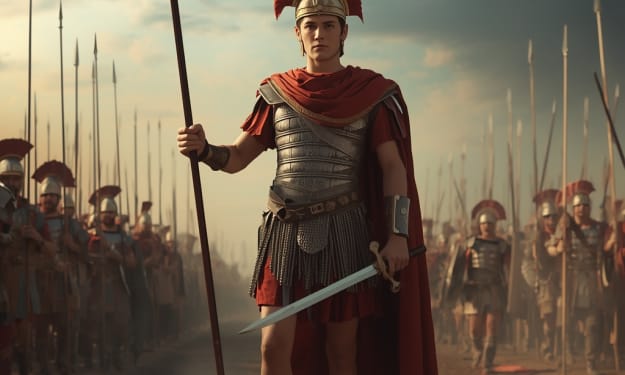
The Assassination of Philip II and a Sudden Rise to Power Alexander’s path to the throne began dramatically. His father, King Philip II, was assassinated during a royal celebration. The circumstances remain mysterious, but the effect was immediate: a young prince suddenly inherited a powerful yet unstable kingdom. Macedonia had grown strong under Philip’s leadership, but many Greek city-states still resented Macedonian dominance. Some leaders believed that with Philip gone, they could break free from Macedonian control.
By Say the truth 3 days ago in Humans
Anthony Davis: Built of Talent, Tested by Time
Anthony Davis has always looked like a contradiction in motion. Too skilled to be boxed into one position, too fluid to be reduced to size alone, too dominant to ever be ignored. From the moment he entered the NBA, it was clear he wasn’t just another highly drafted big man. He was a blueprint for what basketball was becoming—and a mirror reflecting the pressure that comes with greatness.
By Story Prism3 days ago in Humans
What Rage Feels Like
"Majority Fools" What's good for the goose Is good for the gander Wrap my neck in a noose From all that damn slander What is good for one Is not good for all Different lives are spun Before we even start to crawl I can talk and talk Until I'm blue in the face But your guidelines are chalk That you refuse to erase Singular in mind Solitary in view Keep on being confined By everything you thought you knew A line in the sand So easy to cross But your high demands Mean endless lives are lost But we have this system That's confounding to me It leaves so many victims So much for "land of the free" But this is what happens When you go by majority rules Peoples lives are blackened Because the majority are fools
By Hannah Alexander3 days ago in Humans
Speaking to Time Instead of the Room
Much of modern communication is oriented toward immediacy. Writing is framed as something meant to be consumed quickly, reacted to instantly, and replaced just as fast by whatever comes next. Under this model, the value of a piece is measured almost entirely by its initial reception. If it does not land immediately, it is treated as a failure. This assumption narrows the purpose of writing and misunderstands how meaning actually travels through time.
By Peter Thwing - Host of the FST Podcast4 days ago in Humans
Kelly Clarkson and the Quiet Strength Behind Her Voice
Some voices feel like they grew up with us. They show up during long drives, quiet heartbreaks, and moments when we needed courage but did not know where to find it. Kelly Clarkson is one of those voices. She did not arrive as a distant star. She arrived as a real person, standing on a small stage, nervous, hopeful, and honest. Over the years, her music has carried stories of love, loss, faith, anger, and healing. This article looks beyond the spotlight. It explores how Kelly Clarkson built a career rooted in truth, how her struggles shaped her songs, and why her voice still matters in a world that often feels too loud and too quick to forget real emotion.
By Muqadas khan4 days ago in Humans
(from my dream imagination)
My work blends experience, dreams, intuition, memory, and imagination. These stories, reflections, and creative pieces come from my personal point of view and artistic lens. They may read as truth, metaphor, fairy tale, or grounded reality sometimes all at once. Any depictions of adult themes, including alcohol or cannabis use, appear only as part of character experience and storytelling. Nothing here is intended as instruction, advice, or recommendation. This is my voice, my vision, and my way of seeing the world.
By Vicki Lawana Trusselli 5 days ago in Humans
Memory Snapshot: Inner Core Wound Triggered
Memory Snapshot: Inner Core Wound Triggered (Draft version) Friday February 21, 2025 I arrive to work super excited for work today. It’s approximately 2:55 p.m. when I’m due in at 3 p.m. I head back to the meat department to do my demo. As I enter the locker, I’m surprised to see no one in the locker except an older meat cutter who is finishing cleaning the locker. I greet him and he says: I’m glad to see you. Which coming from him it felt like performance.
By Chelsea DeVries6 days ago in Humans