
Solar Eclipse 2026: A Sky That Stops the World
There are moments when the sky feels close enough to touch. The light shifts. Shadows stretch in strange directions. Birds grow quiet. People look up together.

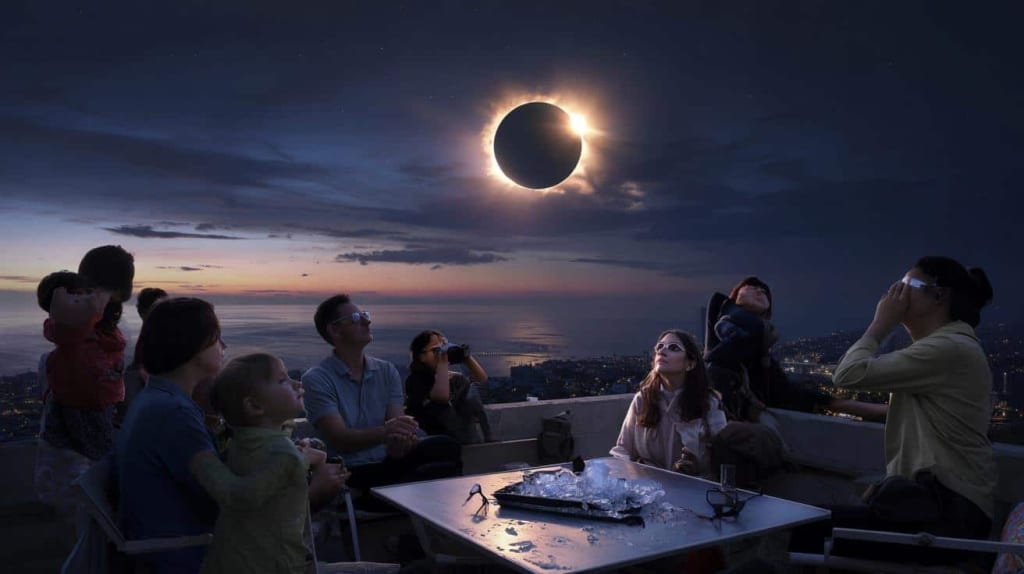
There are moments when the sky feels close enough to touch. The light shifts. Shadows stretch in strange directions. Birds grow quiet. People look up together. A solar eclipse has a way of slowing everything down. It reminds us that we live on a moving planet, circling a star, part of something far larger than our daily worries.
The solar eclipse 2026 is one of those rare events that already carries anticipation. Families are planning trips. Schools are preparing lessons. Amateur photographers are checking their equipment. For a few minutes, daylight will fade in places that expect full sun. This article explores what makes the solar eclipse 2026 special, where it will be visible, how to watch it safely, and why these moments stay with us long after the sky brightens again.
What Is the Solar Eclipse 2026?
A solar eclipse happens when the Moon passes between the Earth and the Sun, blocking some or all of the sunlight. It sounds simple. In reality, it is a precise alignment that does not occur often in the same place.
The solar eclipse 2026 will be a total solar eclipse in certain regions. That means the Moon will completely cover the Sun for a short period of time along a specific path. Outside that path, people will see a partial eclipse.
During totality, the sky darkens as if it were early evening. Temperatures can drop slightly. The Sun’s outer atmosphere, called the corona, becomes visible.
Date and Visibility of the Solar Eclipse 2026
The solar eclipse 2026 is expected to occur on August 12, 2026.
The path of totality will cross parts of the Arctic, Greenland, Iceland, Spain, and portions of Portugal. In these areas, viewers will experience full totality if weather conditions allow.
Other parts of Europe, including the United Kingdom, France, and parts of Italy, are expected to see a significant partial eclipse. Northern Africa may also witness a partial view.
For many people in Europe, the solar eclipse 2026 will be one of the most accessible total solar eclipses in years. That accessibility is part of why excitement is building early.
Why Total Solar Eclipses Matter
A total solar eclipse is not just an astronomical event. It is an emotional experience.
In daily life, the Sun feels constant and reliable. It rises and sets without fail. Watching it disappear in the middle of the day feels almost unnatural.
People often describe totality as surreal. Colors shift. Shadows sharpen. The horizon glows faintly.
For example, during past eclipses, observers have noticed animals behaving differently. Birds return to nests. Insects grow quiet. Streetlights may switch on automatically.
The solar eclipse 2026 will likely create similar moments in cities and rural areas alike.
The Science Behind the Solar Eclipse 2026
The Role of the Moon
The Moon orbits Earth at an average distance of about 384,400 kilometers. Its apparent size in the sky is close to that of the Sun, even though the Sun is far larger. This coincidence allows the Moon to cover the Sun almost perfectly during totality.
During the solar eclipse 2026, the Moon’s shadow will fall on Earth. That shadow has two parts: the umbra and the penumbra.
The umbra is the dark central shadow where totality occurs. The penumbra is the lighter outer shadow where only part of the Sun is covered.
If you stand in the umbra, you will see total darkness for a short time. If you are in the penumbra, you will see a partial eclipse.
Why Totality Is Rare
Total solar eclipses happen somewhere on Earth about every 18 months. However, they rarely pass over the same location.
For any specific city, a total solar eclipse might occur only once every few centuries.
That rarity makes the solar eclipse 2026 especially meaningful for those living along its path.
How to Watch the Solar Eclipse 2026 Safely
Looking directly at the Sun without protection can cause serious eye damage. This rule applies even during a partial eclipse.
Use Proper Solar Filters
To view the solar eclipse 2026 safely, you must use certified solar viewing glasses or a handheld solar viewer that meets safety standards.
Regular sunglasses are not enough. They do not block the intense solar radiation that can harm your eyes.
If you plan to use a telescope or binoculars, they must have proper solar filters attached to the front. Never look through optical devices without correct protection.
When It Is Safe to Look Without Protection
During totality, when the Sun is completely covered, it is safe to look at the eclipse with the naked eye for the brief duration of full coverage.
However, the moment the Sun begins to reappear, you must put your solar glasses back on.
This timing requires attention. Watching with others can help ensure no one removes protection too early.
Planning a Trip for the Solar Eclipse 2026
Many people travel to experience totality. The solar eclipse 2026 will likely attract visitors to Spain, Iceland, and other locations along the path.
Choosing a Location
When planning where to watch the solar eclipse 2026, consider weather patterns. Clear skies are essential.
For example, parts of Spain in August often have dry, sunny conditions. However, no forecast is guaranteed months in advance.
Some travelers prefer open landscapes such as beaches or countryside areas for an unobstructed view.
Urban areas can still offer good views, especially from rooftops or parks.
Booking Early
Hotels and flights along the path of totality may fill quickly as the date approaches.
If you plan to travel specifically for the solar eclipse 2026, booking early can reduce stress and cost.
Photographing the Solar Eclipse 2026
Capturing an eclipse requires preparation.
Equipment Considerations
Cameras also need solar filters to protect sensors. Without proper protection, equipment can be damaged.
Tripods help stabilize shots during the changing light.
Some photographers focus on capturing the surrounding environment instead of only the Sun. For example, images of crowds watching the eclipse can convey emotion.
Experiencing vs. Recording
While photography is exciting, many eclipse veterans advise taking a few minutes to simply watch.
The solar eclipse 2026 will last only minutes in totality. Being present can feel more meaningful than focusing entirely on technical details.
How the Solar Eclipse 2026 Affects Nature
During totality, the sudden drop in light can affect animals and plants.
Birds may stop singing. Livestock might head toward barns as if evening has arrived.
Insects that are active at dusk sometimes appear briefly.
These reactions are temporary. Once sunlight returns, normal behavior resumes.
Observing these changes can add another layer to the experience of the solar eclipse 2026.
Cultural and Historical Significance
Throughout history, solar eclipses have inspired fear, wonder, and scientific discovery.
Ancient civilizations often saw eclipses as omens. Without knowledge of orbital mechanics, the sudden darkening of the Sun seemed mysterious.
Today, we understand the science. Yet the emotional response remains powerful.
For many communities, the solar eclipse 2026 will be an opportunity for shared experience. Public viewing events may bring together families, students, and neighbors.
Moments like this remind us that science can unite people in curiosity rather than divide them.
Teaching Children About the Solar Eclipse 2026
A solar eclipse is a natural classroom.
Parents and teachers can use the solar eclipse 2026 to explain basic astronomy.
For example, using a flashlight and two balls can demonstrate how shadows form during an eclipse.
Encouraging children to ask questions builds curiosity. Why does the Moon appear the same size as the Sun? Why does totality last only a few minutes?
These conversations can spark long-term interest in science.
Emotional Impact of the Solar Eclipse 2026
People often underestimate the emotional effect of totality.
The moment the Sun disappears, cheers sometimes erupt. Others fall silent.
There is something humbling about standing under a darkened sky at midday.
The solar eclipse 2026 may create shared memories among strangers standing side by side.
In a world often filled with noise and division, looking up together can feel grounding.
Preparing for the Day
Check Timing in Your Area
The exact time of the solar eclipse 2026 will vary by location.
Knowing when the partial phase begins, when totality starts, and how long it lasts will help you plan.
Arrive at your viewing spot early. Traffic and crowds may increase near popular locations.
Bring Essentials
Comfort matters. Consider bringing water, sunscreen, and a chair.
If you are watching in August heat, shade before and after totality can make the experience more pleasant.
Preparation reduces stress, allowing you to focus on the sky.
What Happens After the Solar Eclipse 2026?
After totality, sunlight gradually returns. Birds resume normal behavior. Conversations begin again.
Some people feel a strange mix of joy and sadness when it ends. The event is brief, yet intense.
Photos and videos may circulate online. News outlets will share images from different regions.
But for those who witnessed it in person, the memory of the solar eclipse 2026 will feel personal.
It becomes a story to tell: where you were, who stood beside you, how the air felt.
Why Events Like the Solar Eclipse 2026 Matter
In daily life, it is easy to forget that Earth is part of a larger system.
A solar eclipse reminds us of that reality.
The solar eclipse 2026 will not change politics or daily routines. But it may shift perspective, even briefly.
Looking up at the darkened Sun can make ordinary concerns feel smaller.
Shared experiences create connection. Neighbors who rarely speak may gather in the same park. Strangers may exchange protective glasses.
For a few minutes, attention turns away from screens and toward the sky.
Conclusion: Waiting for the Shadow
The solar eclipse 2026 is more than a date on a calendar. It is a reminder of movement and alignment beyond human control.
The Moon will slide across the Sun with quiet precision. Daylight will fade. Then it will return.
People will gather in Spain, Iceland, and other regions along the path. Some will travel far. Others will step outside their homes.
When totality arrives, the world may fall silent for a moment.
Then, slowly, light will return.
And those who looked up will carry the memory of the solar eclipse 2026 long after the sky is bright again.
About the Creator
Muqadas khan
Hi! Welcome to my Vocal page. I’ll be sharing fresh articles every day covering stories, ideas, and a bit of inspiration to brighten your feed. Thanks for reading and supporting daily writing! 📖💫
Keep reading
More stories from Muqadas khan and writers in Humans and other communities.
Anderson Cooper: Grief, Truth, and a Life on Air
Some journalists report the news. Others carry it in their voices long after the camera turns off. Anderson Cooper belongs to the second group. For decades, he has appeared on screens during wars, disasters, elections, and moments of national grief. His calm tone often hides the emotional weight behind the stories he tells. Viewers trust him not because he is loud, but because he listens. There is something steady about the way Anderson Cooper speaks, especially when the world feels uncertain. Yet behind the anchor desk is a man shaped by personal loss, complicated family history, and a deep search for meaning. To understand Anderson Cooper fully, we have to look beyond headlines and into the life that shaped him.
By Muqadas khanabout 4 hours ago in Humans
Think for Me
"How do you calculate the circumference of a circle? Submit your answer when ready." [Pause] "Excellent! Every student was able to call up the answer electronically very quickly. If I, as a robot had feelings, I would express pride. You may break for lunch. Return to this cyber room in 45 minutes."
By Julie Lacksonen4 days ago in Humans
Read My Old Diary and Didn’t Recognize Myself
It was a rainy Saturday afternoon when I found it, buried under a stack of forgotten notebooks on the top shelf of my closet. A small, leather-bound diary with edges frayed from years of neglect, the lock long broken. I don’t know why I opened it—I suppose part of me was curious, part of me afraid.
By Imran Ali Shah5 days ago in Humans


Comments
There are no comments for this story
Be the first to respond and start the conversation.