
My Uber driver taught me about freedom
A ride to the airport I won't ever forget
If there is one thing I know, it’s that I love hearing people’s stories. There isn’t a person on the planet that doesn’t have something interesting that has happened in their lives. Some of the most interesting stories I have heard in my life have come from taxi and Uber drivers. Often, they are immigrants, they have a different perspective on things, have lived and worked elsewhere, and don’t mind telling their stories.
One trip to the airport ended up leaving a mark on me, that I remember to this day.
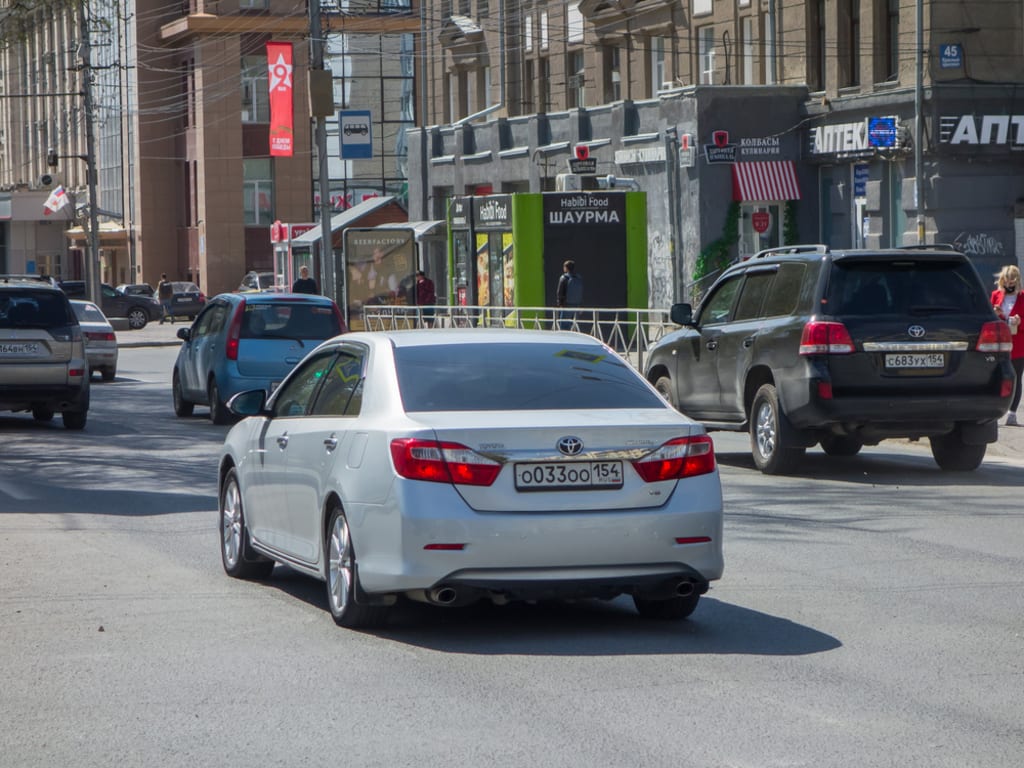
I had booked the Uber and watched as the little car icon weaved closer and closer to my current destination. I’m an anxious traveler who firmly believes that arriving at the airport any less than two hours prior to departure is running late. At that time of day, it was going to be at least an hour's drive, so I was hoping the car would arrive soon. I was heartened to see that in 45 seconds Bijan would arrive in his Toyota Camry, that should be enough time.
As he stepped out of the car, I could see he was a tall man, with an olive complexion. As he reached out his arm to pick up my suitcase it was impossible not to notice the scars on the back of his right hand, they looked like cigarette burns. He placed my bags in the trunk and closed the lid. He got in the driver’s seat, I sat in the front passenger seat, a habit I had picked up from many years of living in Australia.
I started with the obligatory “How has your day been?” He turned his head to look at me, smiled, and said, “It is a good day, you are flying home?” I nodded and said, “Yes, back home to San Diego”. He surprised me when he replied, “Ah, the Hotel del Coronado, that’s where Marilyn Monroe filmed Some Like It Hot”. I had lived in San Diego for 11 years and I didn’t know that, I answered, “Really? Wow, you learn something new every day”. He smiled and so did I.
As we drove on, I inquired, “Where’s home originally?” His response was “I live my first 35 years in Persia”. Another response I hadn’t expected, so I said, “It’s funny that you say Persia and not Iran. Why is that?” He nodded some more as we came to a stop at some traffic lights, and said, “If I say to people, I am from Persia they think of magic flying carpets. If I say I am from Iran, people think I am a terrorist”. At that point I felt a little bit embarrassed of the ignorance of my fellow man, I wanted to reassure him that I was not having those thoughts, so I said, “Well, pleased to meet you Bijan from Persia”, this made him grin and he replied, “Good to meet you, Daniel from San Diego”.
Settling in for our trip we talked about his life. He was a trained doctor, but since emigrating had not yet been certified by the Medical Board. He had two children, a son and a daughter, that were at school, he was too proud to take welfare, so he drove Ubers for between 30-40 hours a week and helped at his friend’s store another 10-14 hours a week. I remarked that I was impressed he was a trained and qualified doctor, but instead of complaining that this work was beneath him, he just got in there to work so he could provide for his family. As stoic as he was, I saw a degree of pride in Bijan’s face as I said that.
We then talked about why he had chosen to leave his homeland. The stories were confronting, his family had been persecuted because of perceptions about them. His father had been arrested and subsequently killed. He pointed out the scars on his hand, as they had been received when he had been taken in for questioning on suspicion of being a spy. He said that the only thing preventing them from doing more serious injury than burning him with cigarettes was the shortage of doctors in the village where he lived. They feared that killing or maiming him would mean they wouldn’t have any doctors to treat the sick.
When I mentioned that I used to be a police officer, and it saddened me to hear stories of police behaving like that he told me his story of his first dealing with police in this country. I steadied myself for another tale of police impropriety.
Instead, he told me a story about him driving one night when a police car came behind him and put on the flashing lights. Bijan was terrified, he said he didn’t have much money on him and didn’t know if it was going to be enough to bribe the police. He said that they asked for his license and registration, noticing that he was visibly nervous the police officer asked him if he was alright. Bijan said he was just scared because this was his first time dealing with police here. The officer told him he had nothing to worry about, gave him back his documents, and said he was free to go.
Bijan said he drove a short distance down the road, pulled up, and called an Iranian friend.
“You’re not going to believe what happened. I just got pulled over by the police and they didn’t ask for a bribe or beat me or anything. They just checked my license and then let me go.”
His friend told him that in this country police don’t ask for bribes, and if they beat you, then you can make a complaint against them, and they get in trouble. Bijan couldn’t believe how amazing this country was.
He talked about the difficult path out of Iran. Ultimately, Bijan had decided to leave because he feared for his family, especially his daughter who was only ten when they left. It meant a lot of effort and acknowledging that he would never be able to return to the country of his birth and would probably never see the rest of his family again.
Bijan talked about this country with a level of love and admiration that heartened me. He was a true patriot, who also acknowledged we weren’t perfect. He had still been subjected to abuse because of his religion, but overall, he knew that moving to this country was the right thing for him. He loved that both his son and daughter could get an equal education. He appreciated the freedom that they could all enjoy.
I had one more question for him before we got to the departures drop-off point, “what does Bijan mean?” He looked at me a little sheepishly and pointing at the phone in my hand, said, “You have a computer in your hand, you can look it up after I go.”
We arrived at the airport and again he got out to help me take my bags out of the trunk. I extended my right hand and said, “thank you for the lift my friend”, he shook my hand and replied “Khoda hafez”. I obviously looked confused, so he said, “you might have to look that up too”. I had to keep repeating the words in my head so that I wouldn’t forget them.
Once I had checked in and got to the airport lounge, I made sure I gave Bijan 5 stars and a tip. Then I did some Googling. "Khoda hafez" is Persian and means literally “My God protect you.”
The name Bijan means Hero.
About the Creator
D-Donohoe
Amateur storyteller, LEGO fanatic, leader, ex-Detective and human. All sorts of stories: some funny, some sad, some a little risqué all of them told from the heart.
Thank you all for your support.
Reader insights
Nice work
Very well written. Keep up the good work!
Top insights
Compelling and original writing
Creative use of language & vocab
Easy to read and follow
Well-structured & engaging content
Excellent storytelling
Original narrative & well developed characters
Eye opening
Niche topic & fresh perspectives
Heartfelt and relatable
The story invoked strong personal emotions
On-point and relevant
Writing reflected the title & theme
Time to change your life.
Is it even possible for you to change your life? A lot of people, more than there should be, are unhappy with their lives. But what are they doing about it? Usually nothing. People talk about how shitty their lives are and want change, but are they not taking the actions to change?
By Jen Phillips3 days ago in Humans
I Don’t Trust My Future Self to Fix This
I don’t trust my future self to fix this, and that realization landed harder than I expected. For a long time, my entire coping strategy depended on that trust. Whenever something felt off, I told myself it was temporary. That future me—wiser, calmer, more decisive—would handle it. I just had to survive the current version.
By Mind Leaks4 days ago in Humans



Comments
There are no comments for this story
Be the first to respond and start the conversation.