
Hues, greys, shadows & light
A story of a woman who found beauty in humanity, with all of its sides


It was always the same, waking up to her song. A warm, deep voice like honey singing zarzuelas that she learned during the wars. I would run up to the kitchen and see the same image I saw every day: the back of her dress and gown swaying from side to side to the sound of her voice.
She seemed so tall and so soft, always surrounded by light. By this time she had been up for hours. The water was boiled, the coffee was brewed and her son, my uncle, would swing softly on his rocking chair enjoying his breakfast, listening to her sing.
Her day revolved around him. Perfectly balanced meals, naps in the afternoon, timely injections... a carefully managed routine. But most importantly, the energy in the house had to be just right. He was like a perfectly calibrated instrument, one that could pick up on the smallest change in the room. He sensed, mirrored and magnified everything we felt, so she made sure she designed a life and a home for him that would bring him calm at all times.
Her house, it seemed, was always bathed with light. Home to visiting cats and happily singing parakeets. The courtyard was filled with plants that she lovingly spoke to, sang to and caressed every day. Music was always in the background; either the radio, her voice, or the scratchy sounds of old records from the fifties and sixties, with children’s songs that my uncle remembered. When we were there, time seemed to stand still, a dramatic contrast from the days of school and routine.
While she went about her morning, I found ways to keep myself occupied. My activities included standing by the gates and making new friends with people who walked by, “You would happily run away with a stranger, my child”; taking peas out of their pods when the market days had just passed; looking for hidden treasures in the drawers; peeking into her closet, to look at dresses she never let me wear; sorting through photos of old times… Primarily my days were filled with imagination, and with my good friends, her books.
She had learned to her disappointment that Dostoevsky made me sad, and that poetry and I simply were not a match: “why is he so sad? And why is this written like that? I don’t get it”. My list had to be different. “Ah! You'll like this one”. That's when she would reach down to the bottom rail that held the glass doors to her bookshelf, remove the wooden stick she'd strategically placed there, giggled and say: “My security device”. It was her way of preventing uncle from reaching them. He loved books as much as we all did, but they did not last long in his hands.
And so, I’d get a fresh set of pages that smelled like old cedar wood and were filled with excitement. I would embark in adventures by the hand of Jules Verne or Mark Twain… read of a man and the sea, Gulliver and his journeys, giants and talking animals… I smelled the rich spices in the air with the little princess… I’d imagine myself on ships at sea, weathering storms. I would talk to animals, find clues in nature... I would dream myself a bird hopping along on grass, just about to take flight and then… it was lunch time.
Mid-day, right on the dot. By this time she had long changed into her day clothes. Always elegant, she wore a pencil skirt, sheer stockings, a perfectly tucked in blouse, low heel shoes, and her hair carefully combed back. At the table, we had the daily must: green soup with a side of bread. Some days we got an artichoke, or a chicken breast, always poached to get rid of the toxins. All meals were beautifully simple, carefully made to be nutritious and have just the right amount of natural sugars. On special occasions I could have a banana.
Once the table was cleared, it arrived at last: story time. It was uncle’s nap time, so she had a few hours to sit with us and tell us stories from her life. She would sit on a chair next to her sewing machine, reach for the tiny drawer, pull out needle and thread, slip her plastic sewing egg into a sock, and start mending the holes in the toes while she spoke barely over a whisper.
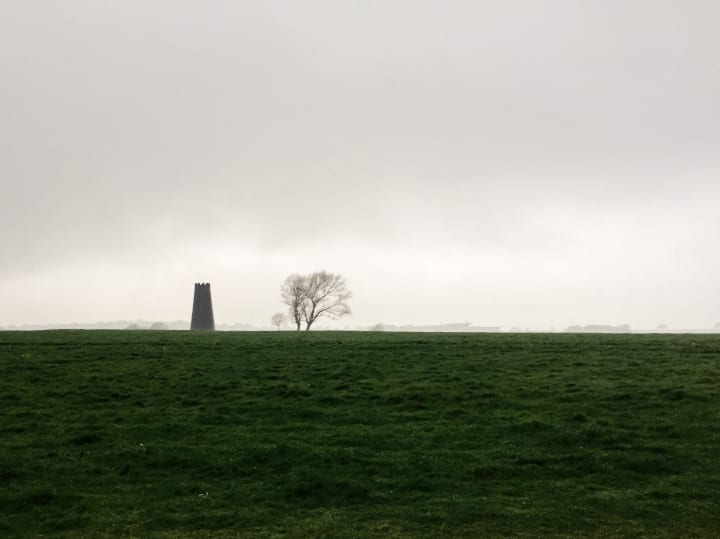
She was born to a humble family in Spain, a few years before the civil war; later living through the second world war. All together, they added up to 15 brothers and sisters, some of them lost to scarcity and famine. By the time of her arrival it was a boy they wanted instead. A boy was needed to work, to provide for them all, not another girl to look after. And so it seemed that she disappointed her mother from birth, because of what she was not.
This would not stop her mother. And so, from the age of seven, she was put to work. Instead of school, Tata would take to the streets of Santa Cruz with a basket of bread over her head, no shoes on her feet, to sell loaves and provide for the family. She grew up seeing, hearing and living the consequences of two wars through the eyes of a child.
It was in these daily rounds that her view of the world was formed. She witnessed orphaned children, people hurting people, dishonesty, abuse… But she also saw beauty and kindness, generosity and celebration. She learned of what people in need would do to get ahead. “You see people’s true nature during hard times” she said. She schooled herself in just that, human nature.
At home she was met with what seemed to be a contrastive scenario. Her loving father taught her to read and write. He introduced her to literature, poetry and the great classics; worked with her on calligraphy and gave her the foundations to be a great storyteller. Her mother on the other hand, ran the family with seeming severity and discipline. She would send her off in the morning with her load and count the money and loaves when she came back. When the numbers were not right, she would ask: “did you eat it?”. “I never did” she told us, sometimes I would just give it to children or people who needed it more. Her punishment was harsh, sometimes kneeling on rough salt.
I don’t know how long this period of her life lasted… but the stories were plenty. In the multiple days and years of story times, we got to listen to her understanding human nature in times of extreme crisis. Her stories were rich and detailed, some filled with sadness, some with joy. It was as if she could see the world through the eyes of the literary masters that she admired. She found beauty in human kind in the harshest of places, and always had faith in the good nature of people.
As a young lady she continued to work hard and care for the family first and foremost. She worked at a shoe factory, where she learned the ins and outs of making (and spotting the signs of) a well made shoe. The wars were now over, but times were still hard. Eventually she heard word of a promised land where work was abundant. She could head there to make more for the family. This is how she embarked on a trip to Venezuela.

The journey lasted a few months. During this time she met a sailor. In her stories he was sweet and kind. He made her feel loved and beautiful. They met and talked, and he courted her with elegance and respect (of upmost importance to her). They fell in love. Upon reaching the end of the journey, he gave her a choice: “when we reach the port, I will wait for you at the square. If you come to me, we will marry”. She went to the square, but did not have the courage to meet him. She watched him as he waited and wept. Once he was gone, she went on to fulfil the commitment she’d made, and marry the one she was promised to, my grandfather.
Once in Caracas, she thrived. She went through hard times, but always spoke kindly of this part of her life. She built a home, ran a business and made a name for herself. People got to know her as noble and kind. Even when there was not much, there was always enough to spare food for the traveller. There was always time to help whomever came to her for advise. She raised a family, had two daughters and one son, my uncle, who was born to need care at all times.
During hardship she considered taking him to a home, a place where he could be better looked after and cared for by professionals. He needed more than what she felt she could give him. Upon visiting several of them and seeing the care that he would get, she concluded that he would not be as loved and cherished in any of them as he would be with her. This is how she came to decide to keep him with her. She would learn everything there was to learn to keep him in good health, and he would be home. She taught herself all, for love. She lived for him, and this is what we grew up to know.
I went to see her every time I could, sometimes twice a year. My travels to her would take twelve hours on an overnight bus, eventually cut down to six when we both moved towns. There was no question, every time I had a break from my two jobs and my studies, the only place to go was to her. I would continue to listen to her, using her as a moral compass and an example of humanity. I heard her views on politics, how sad she felt watching extreme views causing division in her new home. She loved the warmth and joy of Venezuelans, but was disheartened as well when learning of acts that lacked in thoughtfulness, generosity and respect.
My fun times with her consisted of sharing silly stories, or her finding humour in the things that would come out of my head, images in my mind. There was always wonder, joy and marvel of simple things. It was as if innocence never quite left.
It was not until my first year in university that I learned of her disapproval. I had opinions and I shared them. I worked hard, had two jobs and studied, but was not subservient to the men in the family. I was expressive, unladylike, my personality was wrong. In me she saw the things she was taught not to be, the opposite of what she chose. Her beliefs taught her that my traits were bad and linked to those that would hurt people. And so, just like it was done to her, she saw me for what I was not, regardless of how honestly or kindly I carried myself. This would mark our relationship until she passed.
I recently found a letter I wrote to her:
“I wanted to tell you about the things that I learned from you. How your legacy has forged my values, my life and who I am. You have always been an example for me: your spirited temper, honour, humility, perseverance, modesty… Your tenderness, unconditional love, generosity and kindness... the value of your word.
I write this because every time I feel alien and estranged, like I don’t belong, I remember you. I imagine what it would have been like for you to do what you did, and to endure it so far away from your loved ones. This thought always leads me forward, gives me strength and keeps me inspired.
Now that I write to you from far away, you might feel as if I am alone, and be sad. You might say that I had no need to leave home like you did. But Tata I did. I left in search of a better life, one that a country I loved could not provide, at least not in line with the values I learned from you.
You see Tata, I may not have been escaping the wars, but I was leaving a place where I felt alien. I left in search for adventures inspired by your life, the books and stories you gave me. Stories of how you got on a boat to the unknown and built a beautiful life; of how your intuition, values and conviction always lead you down the right path; of how always doing good to everyone around you, brought good back to you; of how poetry and literature helped you dream, and keep your faith in the beauty of people and life... of your kindness and selfless giving nature.
So Tata, even if you don’t like it, the fact that I am who I am, that I travel the world, and have chosen this life is, in great measure, because of you.
I hope you smiled when you read that.”
I don’t know if she ever read this. But I would like to think that she knew.
And so, just like the stories she told, she became one for me. A story of a beautiful human with hues, greys, shadows and light. Someone brave, inspirational and joyful. A complex being who rejoiced in the simple things; saw the good and the bad, and kept her guiding light in the good at all times.
To her I owe my love for adventure, my fascination with people, my curiosity to learn of their sides... and a vivid imagination. I also owe her the courage to look at myself critically, to carefully pick and decide what of which I believe in I want to keep.
Inspired by her, I do my best not to assume much about others, to allow them the freedom to show their true colours. To be curious, to ask questions, to learn more... To constantly expand my world because, well, isn’t it wonderful? And life could be very boring otherwise.
She gave love, hope and inspiration to those who came close to her. And now, through my words and my voice - the ones that she so disliked - I aim to ensure that she does that for many more.
I am sure she would smile at that.
About the Creator
Keep reading
More stories from Rebeca Ramos and writers in Humans and other communities.
Demystifying the arts: sharing in-depth industry knowledge to create great pieces of art, architecture & design.
Many years ago, when I started my journey into creative fields as a young person, I found myself confused. It was admirable to see how great musicians, pop starts, fashion designers, artists and architects could create such magic. I loved the feeling it gave me and that it gave to the people I loved.
By Rebeca Ramos5 years ago in Humans
Oh, The Irony
This year, the year 2026 of the Common Era, Valentine’s Day is right after Friday the 13th. It feels quite ironic, having the very day of love be preceded by a day traditionally associated with doom and gloom. Of course, the latter is largely based on Western superstition. Nonetheless, it does have a strange feel.
By Snarky Lisa6 days ago in Humans


Comments
There are no comments for this story
Be the first to respond and start the conversation.