
Bridging the Divide: Why Hate Can’t Be Met with Hate
Yet still must not be tolerated.

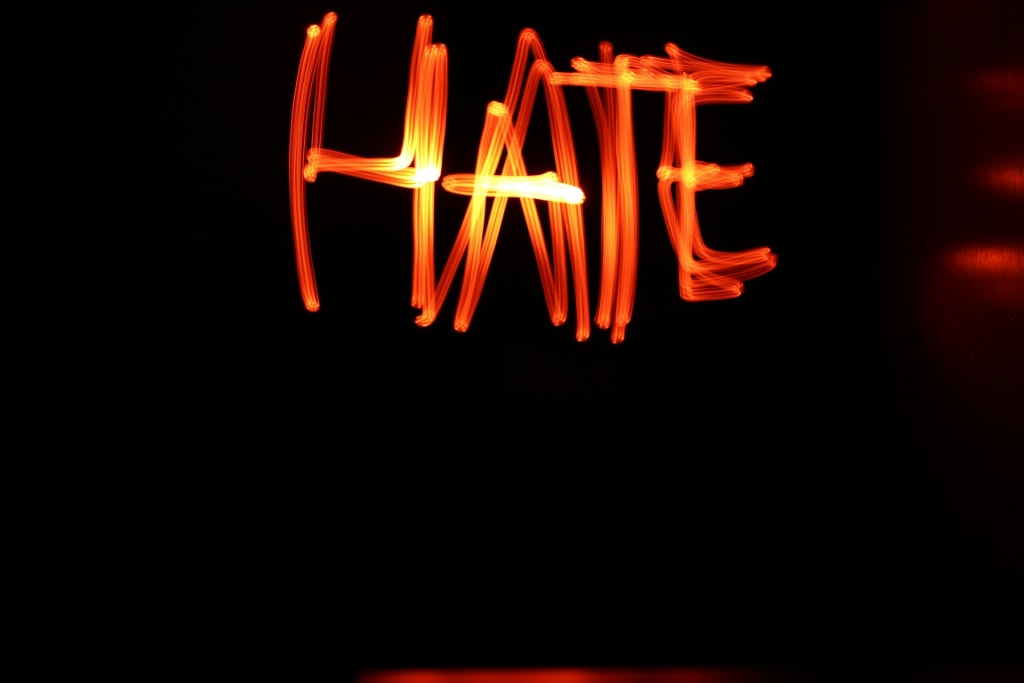
In a world often divided by conflict and animosity, it’s crucial to recognize the profound truth that hate cannot be met with hate. Anecdotes from history have shown us the destructive power of hate, leading to cycles of violence that ruin lives and communities. As we delve into this topic, we must explore how hate only breeds more hate, while empathy and love provide pathways to understanding and peace.
Hate cannot drive out hate, only love can do that
The quote "Hate cannot drive out hate; only love can do that" by Martin Luther King Jr. emphasizes the power of love in overcoming hate. It suggests that instead of escalating conflict with hate, we should respond to hate with love, which can lead to positive change and reduce violence. This concept is rooted in the belief that hate is often a response to fear and vulnerability, and that love can provide a counterbalance to these feelings. By choosing love over hate, we can foster understanding and compassion, which can ultimately lead to a more peaceful and harmonious society.
Extremism begets extremism. Killing begets killing. Violence begets violence.
It is a truth that directly relates to the cycles of incivility that we see in American politics and a truth that social psychologists often study, because group level reactions to conflict, extremism, violence, and incivility/demonization are fairly predictable; they incite more of the same. Indeed, there is clear evidence that Terry Jones, Osama Bin Laden, Charles Manson, and other extremists understand this implicitly and commit their extremist acts with the idea of inciting a wider war. Much of what Trump is doing is this. He strives to incite turmoil as a means to keep everyone off guard so that we don't notice the real damage he is doing. Modern Psychology research backs their methods.
The Cycle of Hate Must Be Broken
Hate is not just an emotion; it’s a cycle that perpetuates itself. Take, for instance, the violence and suffering of the Rwandan Genocide, where deep-seated ethnic hatred culminated in a horrific massacre. Such examples underscore that reacting with hostility only deepens divides and leads to devastating repercussions.
The Psychological Impact of Hate
Psychologically, harboring hate can weigh heavily on mental health. Research indicates that those who cultivate negative feelings often experience stress, anxiety, and even depression. Dr. Martin Luther King Jr. powerfully advocated for love over hate, asserting that hate destroys the hater just as much as it impairs the victim.
Empathy as an Antidote
Empathy stands as the antidote to hate. Understanding the pain and experiences of others can dismantle barriers. Stories of reconciliation, such as those from peacebuilding initiatives post-apartheid in South Africa, exemplify how empathy can bridge divides that hatred created.
Love in Action
Love holds transformative power. Movements like Black Lives Matter illustrate how collective love and understanding can combat systemic injustice. By focusing on unity and hope, these movements achieve goals that hatred only obstructs.
Building Bridges
To counter hate, we must engage in open dialogue and communication. This means listening to opposing viewpoints and striving for understanding, even when it’s uncomfortable. Practical steps, such as participating in community discussions or educating ourselves about different cultures, can pave the way to reducing animosity.
In conclusion, as we face the challenges of an increasingly polarized world, let’s remember that hate cannot resolve conflict. We have the power to choose empathy and love over animosity. By embracing understanding and compassion, we can work toward a more peaceful and united society.
About the Creator
Julie O'Hara - Author, Poet and Spiritual Warrior
Thank you for reading my work. Feel free to contact me with your thoughts or if you want to chat. [email protected]
Keep reading
More stories from Julie O'Hara - Author, Poet and Spiritual Warrior and writers in Humans and other communities.
The Reflection of Insecurity: Name-Calling, Mocking, and Projection as Signs of Lower Intelligence and Cognitive Ability
Name-calling, mocking, and projection are often employed as defense mechanisms by individuals with lower cognitive abilities and education levels, showcasing their lack of analytical thinking and emotional cognizance.
By Julie O'Hara - Author, Poet and Spiritual Warrior4 months ago in Humans
I wanted to title this something different, but worried that my chosen title might cause problems entering the United States in the future so this is the new title. It's the greatest title. No one has ever written a title better than this. (All titles unrelated to content).
Let me be honest. I am finding this difficult. Now, I like a challenge, a stretch, a bit of an obstacle course. “Write about the decline of the British Empire in the form of a narrative poem in which your protagonist is an artichoke” I read, and flex my fingers. “Write a haiku to evoke the sensation of sibilance using only the first half of the alphabet.” “Well”, I think to myself, “this should be fun.” But “write about a system that isn’t working”? A system that isn’t working? Now? In 2026? ONE system? My favourite system that isn’t working? The sexiest system that isn’t working? The one giving me the most angst day to day? The one giving me the most existential dread? I am, as I say, finding this difficult. I will own that I have contemplated writing a thousand words on why the steady “all on” setting on my fairy lights is the EIGHTH of seven options which must be sequentially activated to get there, because that is a system that some fool came up with and it definitely doesn’t work, and now who is paying the price, eh? But how can I write about my fairy lights when…. When…. When….
By Hannah Moore5 days ago in Humans
The Ghost in the Phone
There is a specific frequency to silence. It's not the quiet of an empty room. It's the quiet of a connection that is open but unanswered. It's the hum of the line after the music stops, when the system says, "All representatives are busy," and then just… lets you hang there.
By Edward Smith3 days ago in Humans


Comments
There are no comments for this story
Be the first to respond and start the conversation.