
American Dream is Broken
For "A System That Isn't Working" Challenge

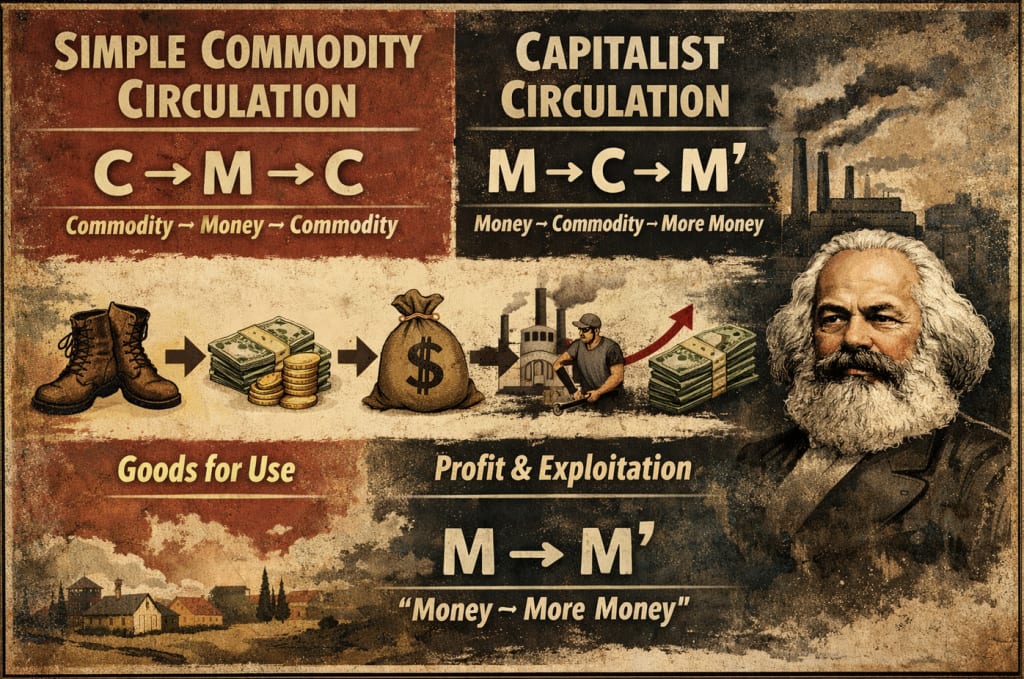
For much of the 20th century, the United States was associated with a broad and stable middle class. Rising wages, home ownership, accessible higher education, and stable employment formed the backbone of what was often referred to as “the American Dream.” The idea was that if you work hard, play by the rules, and save for the future, you will achieve success and build a good life for yourself and your children.
"Work hard" is an extremely important premise here. For most humans (except for the tiny minority who are born into the life of super wealth and inheritance), the only thing we really possess and are in full control of is our labor. Together with the skills we acquire during our life, labor is what makes us valuable for the society and bankable for ourselves. We literally sell our labor for wages that hopefully will allow us to achieve the good life.
There was a period of time in the history of the United States, for most of the 20th century, when through the fear of revolutions/expropriations, unionization, and government regulations labor was paid for relatively fairly. And then Reagan came in with a completely false theory of trickle-down economics and a set of deregulation policies that favored businesses rather than workers who create value for them. The age of corporate greed began under the guise of consumerism and GDP growth.
Today, as a result of Trump's tax policies, tariffs that burden consumers, and even more deregulation, American capitalism appears to function in ways that structurally disadvantage the middle class. The gaping and widening wealth inequality, stagnant wages, slow-burn inflation, and asset-driven economic growth suggest that the system heavily favors capital over labor. The current driver of the economy is not production but financialization, i.e. the increasing dominance of financial markets, institutions, and elites over the real economy, shifting focus from producing goods to maximizing short-term shareholder value.
At the risk of drawing criticism and turning some readers away, I am going to apply Marxist theory of economic production to what is going on in the American economy. Even though I do not support Marxism in the ways of fixing capitalism (through a violent revolution and appropriation of the means of production into socialized ownership), I believe Marxism and political economy that stemmed from it is the best way to understand the processes that other economic theories ignore or underestimate.
At the core of Marx’s critique of capitalism lies a distinction between productive capital (money invested in goods and labor to generate profit, reflected in the formula M → C → M′, or Money → Commodity → more Money) and interest-bearing or “fictitious” capital, in which money appears to generate more money without visible production (M → M′). We call this "fictitious" capital "financialization" today.
While Marx analyzed this phenomenon in the 19th century, modern financialization has dramatically expanded its scope. Financial profits now account for a significantly larger share of total corporate profits than they did in the mid-20th century. Rather than investing primarily in factories, infrastructure, or labor expansion, corporations increasingly engage in stock buybacks, financial speculation, debt engineering, and AI development. Wealth accumulation is increasingly tied to asset ownership rather than wage income that is either stagnating or being laid off and replaced with AI-powered solutions.
This shift has profound implications for the middle class. Middle-class households historically relied on stable wages and modest asset appreciation, particularly in housing. Yet over the past four decades, wage growth for most workers has stagnated relative to productivity gains. Meanwhile, asset prices of stocks, real estate, and other financial instruments have risen dramatically. Those who already possess capital benefit from compound returns, dividends, and capital gains. Those without substantial assets rely primarily on wages, which have not kept pace with asset inflation.
The structural asymmetry is significant. A household with substantial investments may see wealth grow through market appreciation alone, without additional labor. A household dependent solely on wages must continually work to maintain its standard of living, often facing rising costs for housing (rent), healthcare, and education. Financialization thus shifts income distribution toward those who own assets rather than those who sell their labor. The latter have to work harder and more without visible or tangible improvement in quality of life.
Housing provides a particularly stark example. Real estate has increasingly become a speculative asset class rather than simply shelter. Institutional investors purchase large quantities of single-family homes, driving up prices and reducing affordability for first-time buyers. Middle-class families find themselves priced out of ownership, while rents rise in tandem with asset valuations. The result is a transfer of wealth from renters to property owners, further entrenching inequality.
Debt also plays a central role in this system. Student loans, credit cards, auto loans, and mortgages have become essential mechanisms through which middle-class households maintain consumption. From a Marxist perspective, debt represents a claim on future labor and vulnerability to (over)exploitation. Workers must continue selling their labor to service financial obligations, often in several part-time jobs as full-time jobs with full benefits are harder to find. Meanwhile, financial institutions collect interest payments, reinforcing capital accumulation at the top. Rather than facilitating upward mobility, debt can trap households in long-term financial vulnerability.
The rise of speculative assets such as cryptocurrency further illustrates this dynamic. Participation in highly volatile markets requires surplus capital and risk tolerance. Those with disposable wealth can diversify and withstand losses; those without such buffers face disproportionate risk. Although narratives of democratized investing suggest broad participation, the largest gains often accrue to early adopters and large capital holders. As with other asset booms, speculative surges tend to magnify existing inequalities.
Importantly, the American system still offers some avenues for mobility that the ruling elites aggressively "sell" to workers (Marx would call it "false consciousness," or labor being duped, bought into the system with false promises). Retirement accounts, index funds, and home ownership provide mechanisms for middle-class asset accumulation and sense of security in the future. However, access to these tools is uneven (currently, less than 10% of households have investment accounts beyond 401K and IRAs) and narrowing. Households struggling with rent, healthcare expenses, or student debt cannot consistently invest in appreciating assets. Thus, while capital markets may be open in theory, participation is constrained in practice by income inequality itself.
The cumulative effect is a widening wealth gap. Wealth concentration at the top accelerates through compounding returns, with billionaire class growing faster than at any time of human history. We are two steps away from getting our first individual trillionaire, Elon Musk. Meanwhile, middle-class families experience slower growth still tied to wage income. When economic expansion is driven more by asset price inflation than by broad wage growth, systemic inequality deepens. Economic security becomes increasingly dependent on exposure to financial markets, yet exposure requires initial capital. It becomes a closed loop.
Consequently, more and more households slide down from the middle class into poverty, falsely seeing themselves as "lower middle class" that is only temporarily frustrated and will get back on top. That's another component of "false consciousness," the unshakable conviction of Americans that they are one lottery ticket or stroke of crypto/gig economy luck away from becoming a millionaire and growing wealth from there, after paying off all the debt and investing the rest so that they don't have to work anymore.
From a Marxist perspective, financialization represents an intensification of the capital-labor divide. Surplus value, extracted from productive activity, flows into financial markets and circulates among asset holders. The appearance that money “makes money” obscures the underlying labor foundation of the economy, but the distribution of returns becomes increasingly detached from wage labor. Financialization does not merely reflect inequality; it actively amplifies it.
In this sense, today’s American system struggles to function equitably for the middle class. When economic growth disproportionately rewards capital ownership, when housing becomes speculative, and when debt replaces wage growth as the engine of consumption, structural pressures accumulate. Without policy adjustments that re-balance the relationship between labor and capital, wealth concentration is likely to continue increasing.
Obviously, no critique is good without offering the solutions. The best and quickest solutions to the current problem is to tax the uber-rich. Not just individuals making over a million a year in income but more so corporations and non-profits that cannot stay away from politics (churches and ideology-driven think tanks hording "donations" from the uber-rich).
There should be also additional changes to the economic system that would prevent reemergence of out-of-control financialization: government regulations of fast-growing economic sectors such as crypto and AI, unionization of workers for protection of labor rights, policies preventing squandering of natural resources, regulations to protect the environment (there is no such thing as "beautiful clean coal") and facilitate development of new sources of energy. Not the last measure should be education of workers about their own value and rights as labor providers, including basics of Marxism explaining how exploitation and false consciousness work and persist.
This should be the platform for the political elites that truly care about the working middle class in America. And we need to bring them to power before the entire system collapses. Too much is at stake, for both the United States and the world.
About the Creator
Lana V Lynx
Avid reader and occasional writer of satire and short fiction. For my own sanity and security, I write under a pen name. My books: Moscow Calling - 2017 and President & Psychiatrist
@lanalynx.bsky.social
Keep reading
More stories from Lana V Lynx and writers in Humans and other communities.
Ditched - Index
This index is just for my subscribers. I finished and published this long story or short novella of 6,000 words recently. I tried to link all previous parts of the story in the next one, so if you went along you shouldn't have been lost. This index is just put everything in one place.
By Lana V LynxExclusive • 5 months ago
Pending
Pending… Please Hold… There is no department officially responsible for waiting, yet it governs nearly everything. No one votes for it. No one studies it in school. No child says they want to grow up and participate in it. Still, waiting organizes modern life more reliably than law or tradition. It distributes attention, determines access, and quietly decides whose time matters.
By shallon gregersonabout 7 hours ago in Humans




Comments (4)
This was a great article! I like how this comes full circle with explaining Marxism and capitalism. She makes a valid point on what changes need to be made; otherwise, the world is in for a rude awakening.
I wish we could go back in time to before civilisation and money. Of course that would also have it's own set of problems, living like that. But I think it wouldn't be worse than the state of the world today
In other words, nothing has changed since the beginning of time. We can write brilliant stories like this one and nothing will change. We can all march and die and everything will eventually revert to this. The system sucks.
Let me add the following: after 2008, it was clear that we had socialism for the rich and capitalism for the rest of us. They did not punish a soul who damaged the system and taught a whole generation that you can be greedy and the government will cover your ass. Excellent piece, by the way!