
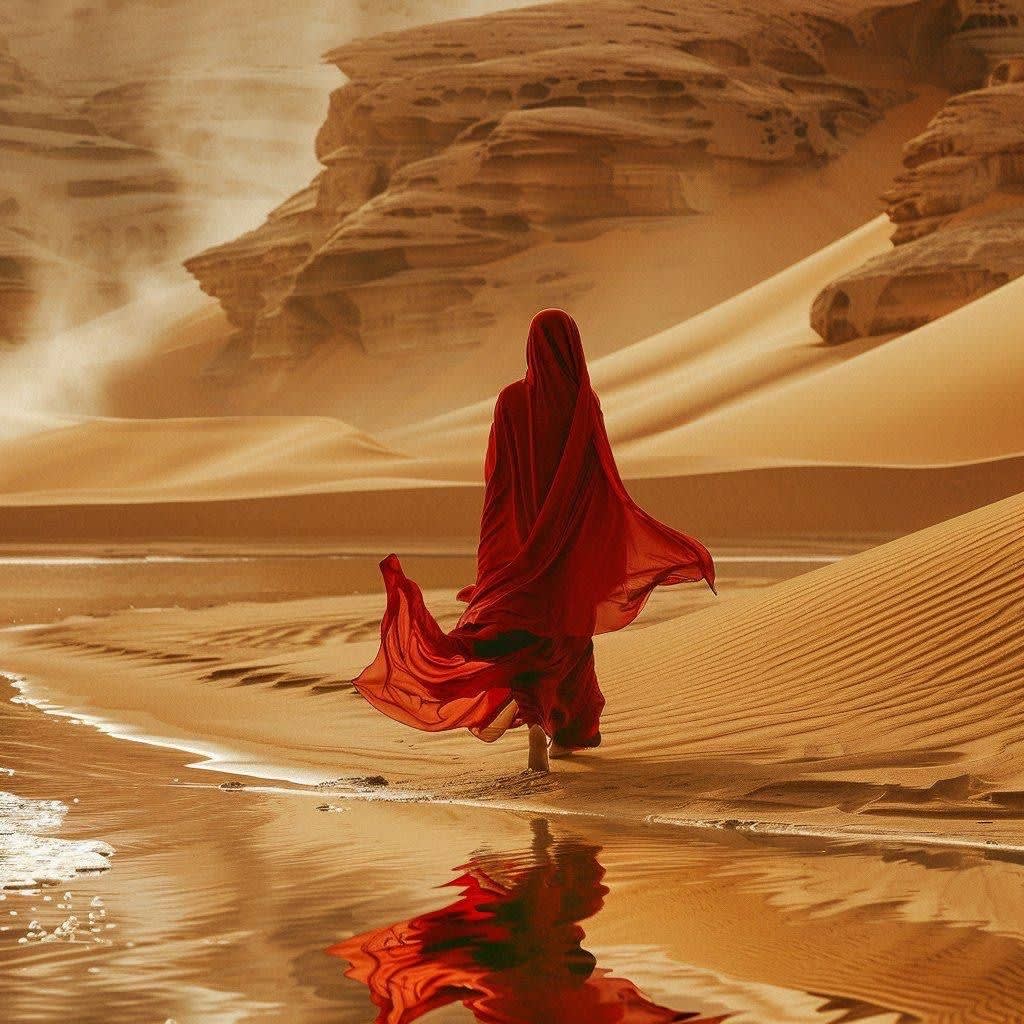
The truth is, I’ve never felt African.
Not an ethnicity, not a tribe, not even somebody else’s blood. Too much inside me was busy mapping the interiors of others—charting their thoughts, their feelings, experiences, and things they longed for in their lives. It couldn’t be helped. I was a curious child, and I desired to both know and be known as deeply as I sought my own self-discovery.
But apart from within, where do people go when they need to find out who they are, to whom they belong, and where their house feels like a home?
I’ve been far away from home all this time, yet I still don’t know where my home is, having never planted my heart anywhere, and traveling as a vacant house, lost in my searching, while hoping to arrive somewhere and feel like my home has found me instead.
Admitting this now feels acidic on my skin, perhaps as a greater corrosion of my homeland’s narrative; its history of erasure, rewiring, and the carcasses of what origins remained. That may be part of the reason I struggle with identity: I come from a lineage that was conditioned to stray from its own line.
Even though I grew up surrounded by people who looked like me, people who shared the same things and spoke the languages that I did, my clearest memory is the dissonance of belonging with them and feeling out of place.
They shared uniform outlooks, a religion my heart found itself faithless in, and traditions that felt punishing to my human spirit. No one at the time seemed to comprehend anything I expressed, and I appeared to be the foreign one, so incongruous that I eventually forgot that appearances were supposed to matter.
Time passed. I began to understand my dislocation differently, no longer concerning myself with how anyone around me looked or where I was. Too old for my young mind, too odd for the color of my body. I’d constantly be left to myself, and in the cold embrace of silence, I’d collapse into hundreds of worlds, places that didn’t even exist, splitting my mind like ink spilled on paper to form words. Too sensitive, too emotional, too unorthodox, and abandoned where it truly mattered.
I sought myself in foreign books instead, hunting down my soul as if it had jumped into the wrong continent. I recognized parts of it in Anne of Green Gables, a case of mistaken identity who chattered like a grey parrot glued to a radio, and experienced emotional tides in the heights and lows I did.
She was Canadian, even though her origins felt Celtic, sometimes Irish, and I didn’t want those perceptions to matter, until the search for her real parents—as an orphan—made me remember the essence of familiarity.
Then I came across Charles Bukowski, a graphic, lonesome, drunken, vulgar, sexist, and disgustingly human German poet. I felt uneasy, provoked, and degraded as a young woman, but I also felt safe to be shameless and alone because I, too, held hideous thoughts about Gods, Men, Devils, and Humanity.
I had grown accustomed to being alone, and I began to choose it consciously. The loneliness that came in the company of others was unbearable. But I didn’t belong with his identity. His experience was not compassionate to mine regarding gender, and I wasn’t ready to begin hunting down yet another identity.
So I closed my books, grew thirstier and hungrier, turning to astrology. I memorized that I was born under a waning gibbous moon, and my Mercury sat in my 9th house. The stars suddenly felt closer to me than people, telling me things without truly speaking. I watched them blink back from my bedroom window, tracing the constellations that formed the Pisces sign. All the stars had their positions.
Eventually, I grew envious of their winding patterns. The ones that were alone also had a place to call their own. I also wanted—needed—a tangible space to ground my roots. Or at least someone to claim that I wasn’t strange at all.
But I was nine when my mother said I possessed a demonic spirit, that my curiosities and reasoning were too godless and misguided.
I was eleven when my teacher said I was brilliant but weak, my heart was simple and soluble, and I cried too easily. African girls needed sharp tongues and tougher skin. I looked at my skin. It was just skin. My tongue was as tender as its texture, and my texture was too soft to suddenly turn into a weapon.
And I was fourteen when everyone’s tone either claimed that mine was too loud or angry.
"You’re too masculine for a girl.” “The way you sit and speak is boyish and crass.” “You’re my daughter, but no one would marry an angry woman like you.” “You’re nice, but your words sound bitter on paper.”
I suppose Bukowski rubbed off on me after all, but I wasn’t aware that I had turned into a woman already, or that my hand had been set to serve a marriage. I was certain many African women were as angry as their men, perhaps even more—they just contained themselves to be received well.
But I was a stranger from the very beginning of my consciousness. My adolescence didn’t allow tenderness, and I didn’t care to be received well because I had been denied welcome on the precipice of my arrival.
Oddly enough, despite my unpleasant dispositions, people came to me to be felt, to share their secrets, heartbreaks, or things they quietly desired and disagreed with.
It was jarring when they refused me the same disclosure, often making me wonder if I was human at all. If not African, and not a being, who was I in the company of others? How many times did I hope to disappear from the world, because I felt invisible inside it?
I looked weary in early youth, and I continued to walk inside the tunnels of my mind with my shadow as a friend, creating a sense of belonging in more imaginative lands, tracing their glittering sands with my crafting hands. The soils of Africa were warm beneath my feet; it’s a wonder they always felt so distant to me. I was, by definition, a heavy mass of things that mattered to me, and things that didn’t.
Then, without truly planning it, I left my home country and became new to the world. It felt like being cut out of my mother’s belly, except as a tall child, withholding a tantrum rather than screaming at being a stranger to other people, all over again. Foreigners, more alien to my unidentified journey, began to say, “You don’t look African, you don’t sound African…”
I would think to myself, “How does an African look? Who do I look and sound like? Where do I truly belong? Who are my people and where do they stay?”
I was granted observations that never came with clear answers, and enthusiastic praises that felt more like polite insults. They reintroduced me to an aspect I understood well: people cared too much about who others were, and the external form held more power than they cared to admit.
Somehow, we all show it—in the way our tones shift, how our behaviors soften or harden depending on who looks the same, who sounds the same, who thinks the same, and who doesn’t.
So I began to reeducate myself about the value of acknowledging titles, doctrines, and color. I tried to understand why those definitions and boundaries actually mattered in the world. Not to separate human beings, but to honor and protect their differences.
Still, the further I involved myself with the world, the deeper I felt self-loss. I honored others without speaking their languages or embodying their religions, cultures, or skin, but I still hadn’t located people who were like me. Maybe I hid too much to find them, and created a victim of myself.
But the more I continued to roam, the more I came across souls who felt lost, abandoned, and misunderstood. Out of place due to aging, other times due to social status, or even education, they were missing parts that needed friendship, community, family, or a lover.
I began to feel foolish, and how could I have been so blind? Many people didn't feel like they belonged anywhere. Most of them just didn’t admit it out loud. Perhaps the whole of humanity had limited itself by misunderstanding the great divide. After Pangea, we arrived, bound ourselves to our own geographies, and created social structures to survive.
Perhaps there was never any point in searching. The human spirit was meant to roam free, fluid like water, but it misunderstood the borders of the land until it began to demand the idea of fitting into boxes. These were limits that could stir feelings of self-loss or even dehumanization whenever the human spirit couldn’t conform to their shape.
I was African after all, but I was beyond the term, the land, and my features. I now decide more on chosen connection over inherited identity, and on inherited identity only if there’s resonance. I will neither love nor accept anyone for looking like me. I’ll acknowledge their homelands and love them for being humane to me.
I’m a vacant house. I no longer worry about the implications of that. Whenever I find myself in the company of people who dance with words, people who speak through music and touch with their thoughts, I’ll see their maps in me and visit the directions of where my home is: anywhere, nowhere, and everywhere in the world.
About the Creator
Candy Kemunto
I don't know what to say, I'll say everthing in poems.
Keep reading
More stories from Candy Kemunto and writers in Humans and other communities.
Cabin Fever Because of Snow, Sleet, and Freezing Rain That Turned to Icy Roads
What Is Cabin Fever? The short answer is that cabin fever is restlessness from being in a confined area. Cabin fever is the distressing irritability or restlessness experienced when a person or group is stuck at an isolated location or in confined quarters for an extended time. Research shows that prolonged cold, gray skies, and being stuck indoors can trigger mood shifts similar to “winter blues.”
By Margaret Minnicks3 days ago in Humans
The Impact Of Toxic Relationships On Mental Health And Selfesteem
Counseling on Toxic Relationships and Relationship Dynamics. Patterns of control, disrespect, emotional manipulation, or unceasing conflict are some of the characteristics of toxic relationships that lead to the loss of emotional safety. These dynamics end up leaving people exhausted, nervous, or disoriented as opposed to being supported unlike in healthy relationships. Criticism, gaslighting, neglect or mood swings that are hard to predict can be considered toxic behaviors and leave one person emotionally off balance. In the long run, such patterns become a normal part of life and a person finds it hard to realize that he/she is being hurt. This is a very destructive environment of constant emotional stress that causes harm to mental stability and general psychological wellbeing.
By Robert Smith5 days ago in Humans



Comments
There are no comments for this story
Be the first to respond and start the conversation.