
Is Chupacabra Real?
Chupacabra has become the latest beast of the night. This time, instead of a remote forest, it stalks the rural areas of Latin America and the United States. Is it real? Or just a legend. This is commentary based on a previous article (on another site) pertaining to this fairly new nocturnal beast.

Commentary
When it comes to proving the existence of a cryptid, evidence is everything. This rule can be applied to the Loch Ness Monster, Bigfoot, and other creatures of modern legend. The rule also applies to the modern-day boogeyman of Latin America: the chupacabra.
To date, evidence proving the existence of the legendary bloodsucker has been less than compelling. The bodies, eye-witness accounts, and proof of their attacks have had plausible explanations that pointed to a known nocturnal animal such as a coyote, wolf or wild dog. Even the description of this mysterious creature differs from eye-witnesses in different locations, creating a lot of confusion as well as a lack of hard, compelling evidence.
How the Legend Started
The legend of the chupacabra is young. In the last 30 years, it went from being a nocturnal monster in the rural areas of Puerto Rico, to being a worldwide sensation. Most of the reports of the creature come from Latin American countries and from the Hispanic communities in the United States. Other so-called sightings were reported in China and Indonesia.
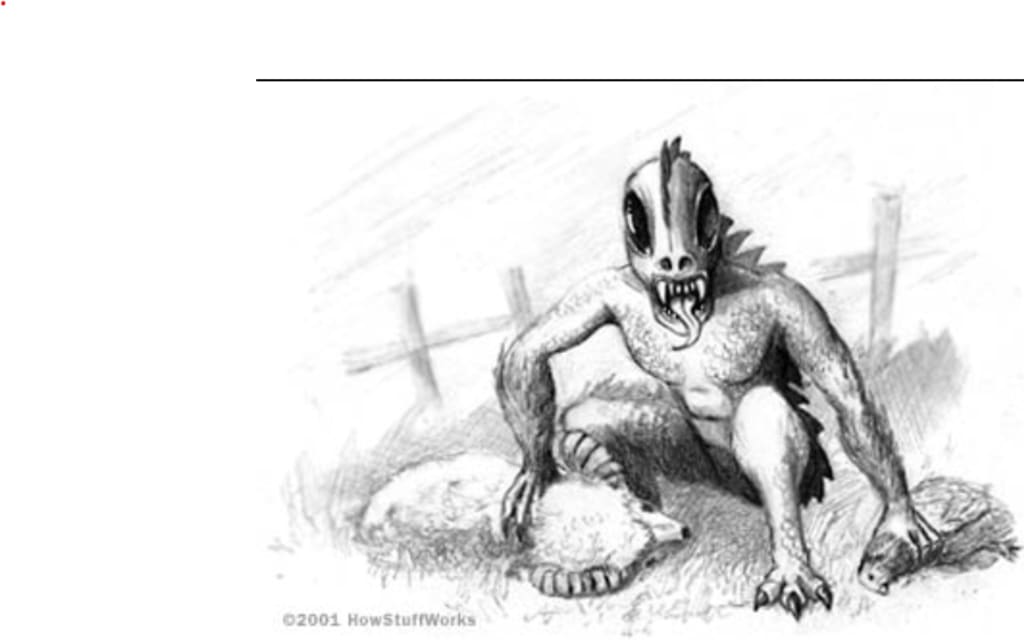
Each sighting describes something different; some eye-witnesses claimed it was bipedal while others insist it walked on all four. Other reports describe it as looking like a hairy space alien (similar to the “grays” of UFO legends), while others stated it looked like a hairless coyote with spikes on its back.
These slight differences can be attributed to the angle or distance that the eye-witnesses were at. Still, the variation is a a red flag of sorts, considering many descriptions, including artist renderings (as as the picture given above) come out different.
There are other descriptions. Many claimed they saw red eyes in the distance, heard a growl, or witnessed something moving in the brush during the night. Others describe big black eyes, sharp fangs and claws.
The only description that matches with others is the report of little or no hair and often traveling alone, which may explain the belief that the chupacabra is a solitary or lone entity that travels in the dead of night to various places (and why every article on the Internet treats it as a singular being rather than as a group).
Over the years, some sightings suggest that they are (or it is) not just found in rural areas. In some cases, there have been those that claimed they were roaming backyards and alleys in major metropolitan areas in Texas, New Mexico, Arizona and California.
In many cases, these accounts are based on eye-witness testimony. And, rarely, there is some photographic or video evidence to support the claims being made. But what happens when there are photographic evidences?
Do Videos and Pictures Show Proof?
There’s no doubt that the eye-witnesses saw something. But was it the legendary creature? The videos and pictures that were taken come in many conditions. Many are blurry and some catch fleeting images of something in the distance.
In fairness, the animal is supposed to be nocturnal, but even nigh time cameras have failed to capture this cryptid.
There's also another problem.Several known wild animals animals hunt at night and target farm animals. Without a definite view of this nighttime creature, no one can conclude that it is chupacabra. It could be almost anything.
One way to prove the existence of chupacabra is to produce a body. And there have been bodies, some dead, some living. In some cases, these bodies had been captured on film. There are plenty of photos and YouTube videos claiming to show a chupacabra body. With such evidence, this should definitively prove the creature’s existence.
Not quite. It turns out that the bizarre creatures shown in the videos and photos look like hairless coyotes, raccoons, or some other large animal that appeared to have starved to death. And, when this photographic evidence is shown to biologists and zoologists, they instantly recognize the animals as being coyotes or raccoons.
One answer left in this mystery, however, is why do these animals appear to be mostly hairless? Many researchers that documented cases have an answer. It is speculated that they may suffer from mange or some other condition that renders an animal hairless. This is not as unusual as it sounds.
How About the Attacks?
Another place to find evidence would be the carcass of farm animals attacked by chupacabra. There are plenty of them and they appear to be sucked dry of their blood (hence, where chupacabra received its name). However, appearance can be deceptive. Most of the animals had their blood drained during the attack when they were ripped open. Also, it’s not unusual that the main suspects of being the actual creatures, coyotes or wild dogs, are known for tearing open their victims.
Additionally, more blood could have drained when they were taken away by the predator. This may explain why many of the attacks had trails of blood. Again, the characteristics of the attacks are typical of those of known predators.
Final Thought
The existing evidence of chupacabra’s existence is circumstantial at best. Most of the attacks it was blamed for doing were similar to existing apex predators in the area. The actual “carcass” or captured beasts purported to be the chupacabras were easily identified as common animals with rare disorders or common disfiguring diseases. Also, the eye-witness accounts vary too much to make a definitive decision about its existence.
In the case of the chupacabra, all evidence points to a legend rather than a real beast of the night. Unless there's compelling evidence out there, chupacabra is just a boogeyman.
About the Creator
Dean Traylor
I wrote for college and local newspapers, magazines and the Internet (30 years). I have degree in journalism, masters in special education (and credentials), and certificate in screenwriting. Also, a special ed. teacher (25 years)
Keep reading
More stories from Dean Traylor and writers in Horror and other communities.
Looking Back:The Folly of the March for Life Fiasco: How Not to Write on a Contentious Topic
A "Pithy" Writer Makes His Opinions Known The fiasco at the 2019 March for Life—and concurrent demonstrations in the National Mall—was bound to have a consequence. As soon as a viral, one-minute video hit Twitter in late January, the tale of two opposing groups confronting one another became political fodder. Pundits and political writers were more than happy to dissect and formulate a narrative to their liking.
By Dean Traylora day ago in History
Rumors of China's Three Great Zombies
Today, let's talk about those zombie rumors that are engraved in folk memory and are becoming increasingly evil as they spread. This is not a scene that can be solved just by jumping around and sticking a yellow talisman in movies. Each scene carries a real era, location, and scalp tingling details, especially the 1872 incident in Pingxiang, Guangxi, where the government sealed off mountains and burned forests, resulting in heavy casualties. More than a hundred years later, when it comes to it again, it can still make people's necks feel cold. Today, I will slowly tell you about these three zombie rumors from beginning to end.
By Aiden Wang6 days ago in Horror




Comments
There are no comments for this story
Be the first to respond and start the conversation.