
Will a War Between Iran, the United States, and Israel Trigger World War III?
Rising Tensions in the Middle East and the Global Consequences of a Potential Conflict

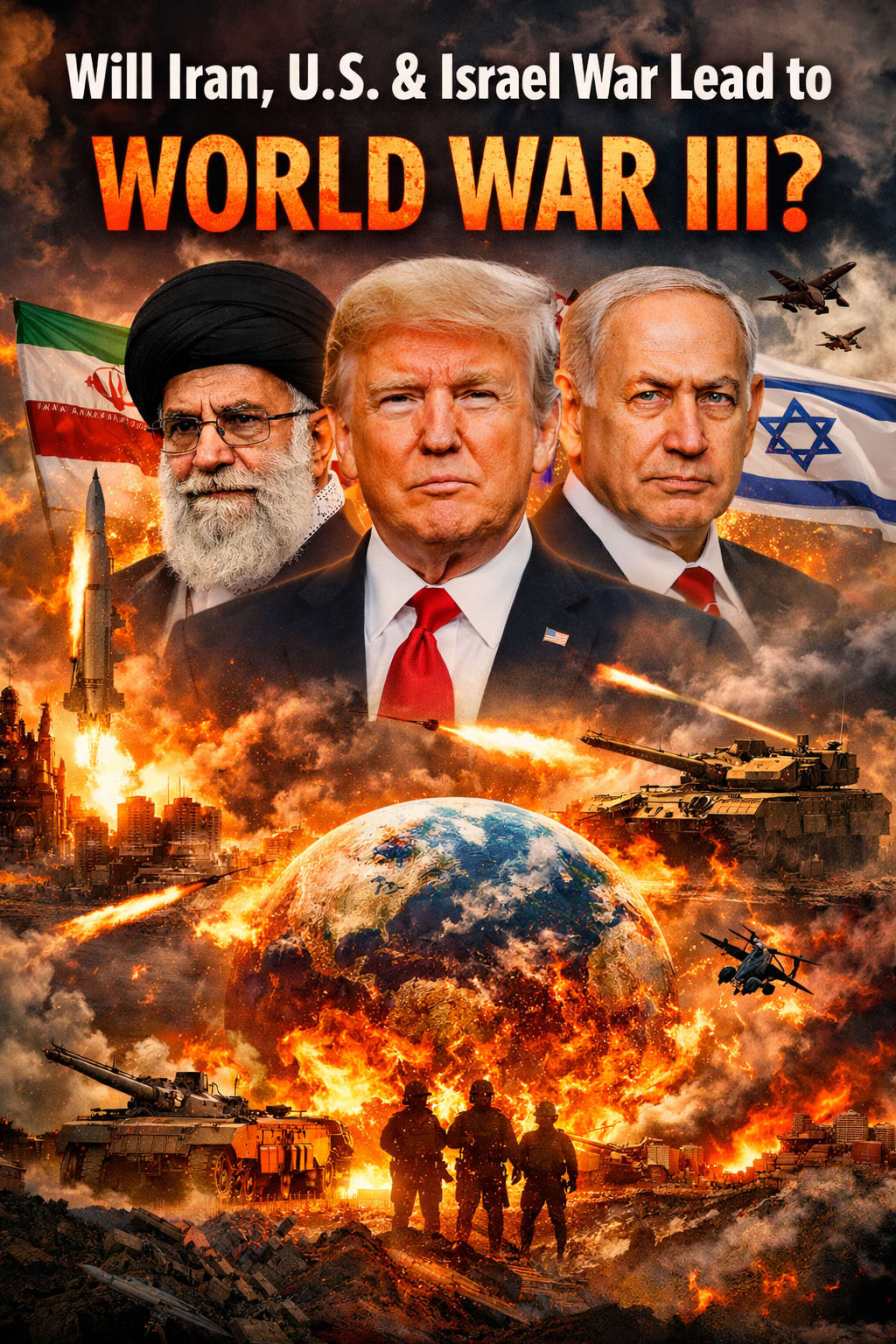
The possibility of a large-scale war involving Iran, United States, and Israel has long been a subject of global concern. Political tensions, military confrontations, proxy conflicts, and disputes over nuclear development have created a fragile security environment in the Middle East. Many observers wonder whether a direct war between these powerful actors could escalate into World War III. While such a scenario is not inevitable, the risks and global implications would be enormous.
The roots of tension between Iran and the United States date back decades, particularly to the 1979 Iranian Revolution. Since then, relations have remained hostile, marked by economic sanctions, diplomatic isolation, and military incidents in the Persian Gulf. The United States has repeatedly accused Iran of destabilizing the region through support for armed groups and by pursuing advanced missile and nuclear capabilities. Iran, on the other hand, views American military presence in the region as a threat to its sovereignty and national security.
Meanwhile, Iran and Israel have engaged in what many analysts describe as a “shadow war.” Israel sees Iran’s nuclear ambitions as an existential threat. Israeli officials have stated clearly that they would not allow Iran to acquire nuclear weapons. Iran denies seeking nuclear weapons but continues to expand its nuclear program, leading to international negotiations and sanctions. Covert cyberattacks, targeted strikes, and regional proxy battles have intensified tensions over the years.
If a direct war were to break out between these nations, several factors would determine whether it could evolve into a global conflict. First, the involvement of major world powers would be critical. Countries like Russia and China maintain strategic relationships with Iran, while the United States has strong alliances across NATO and the Middle East. If these alliances were activated in a large-scale conflict, the war could expand beyond regional boundaries.
Second, the geography of the Middle East plays a key role. The Strait of Hormuz, a narrow waterway through which a significant portion of the world’s oil supply passes, is located near Iran. In the event of war, disruptions to oil shipments could trigger a global economic crisis. Energy prices would likely surge, markets could crash, and international trade routes might be affected. Economic instability on such a scale could pressure other nations to become involved, either militarily or politically.
Another factor is the risk of miscalculation. Modern warfare includes cyberattacks, drone strikes, and missile systems that can operate at high speed and long range. A single misinterpreted action—such as a missile strike believed to be larger than intended—could rapidly escalate tensions. In today’s interconnected world, conflicts can expand quickly, especially when communication channels break down.
However, despite the high tensions, there are strong reasons why a direct war may not escalate into World War III. Nuclear deterrence remains a powerful factor. The existence of nuclear weapons among major powers acts as a restraint, as leaders understand that full-scale global war would have catastrophic consequences. Additionally, economic interdependence between nations encourages caution. Even rival countries often rely on each other for trade, technology, or energy.
Diplomatic efforts also continue behind the scenes. International organizations and regional powers frequently attempt to mediate and prevent escalation. Even when rhetoric becomes heated, back-channel negotiations often work to reduce misunderstandings. Historically, many crises that appeared to be on the brink of major war were eventually contained through diplomacy.
Public opinion also matters. Citizens around the world are generally opposed to another world war. The devastation of the two previous world wars remains a strong historical memory. Governments must consider the political cost of entering a prolonged and destructive conflict.
In conclusion, while a war involving Iran, the United States, and Israel would be extremely dangerous and could destabilize the global order, it would not automatically lead to World War III. The outcome would depend on the scale of the conflict, the involvement of other global powers, and the ability of diplomatic channels to prevent escalation. The situation remains complex and unpredictable, but global interconnectedness, nuclear deterrence, and diplomatic engagement act as powerful barriers against a full-scale world war. The world watches closely, hoping that tensions are managed through dialogue rather than destruction.
About the Creator
Irshad Abbasi
Ali ibn Abi Talib (RA) said 📚
“Knowledge is better than wealth, because knowledge protects you, while you have to protect wealth.
Keep reading
More stories from Irshad Abbasi and writers in History and other communities.
The Wicked Wife or the Secret Spy?
In the shadows of war, truth is often the first casualty. Few stories prove this more powerfully than that of Mata Hari — a woman who was branded a traitor, condemned as a seductress, and executed as a spy. To some, she was a wicked wife who betrayed loyalties for wealth and desire. To others, she was a secret agent who played a dangerous game among powerful men. Yet, more than a century later, historians still debate whether she was truly guilty — or simply a convenient scapegoat.
By Irshad Abbasi 2 days ago in History
Flower Bloom 369
FLOWER Bloom 2/25/26 Wednesday By Mariann Carroll Karen had been with Tony for 7 years. Tony started acting strangely after her surgery. He would mow the lawn in the rain and be on his cellphone. He started pushing Karen away. Tony came clean about seeing someone. Karen moved out two months later. Karen moved in with a friend. She felt betrayed.
By Mariann Carroll7 days ago in Fiction


Comments
There are no comments for this story
Be the first to respond and start the conversation.