
When the Circus Came to Town
Who remembers these?

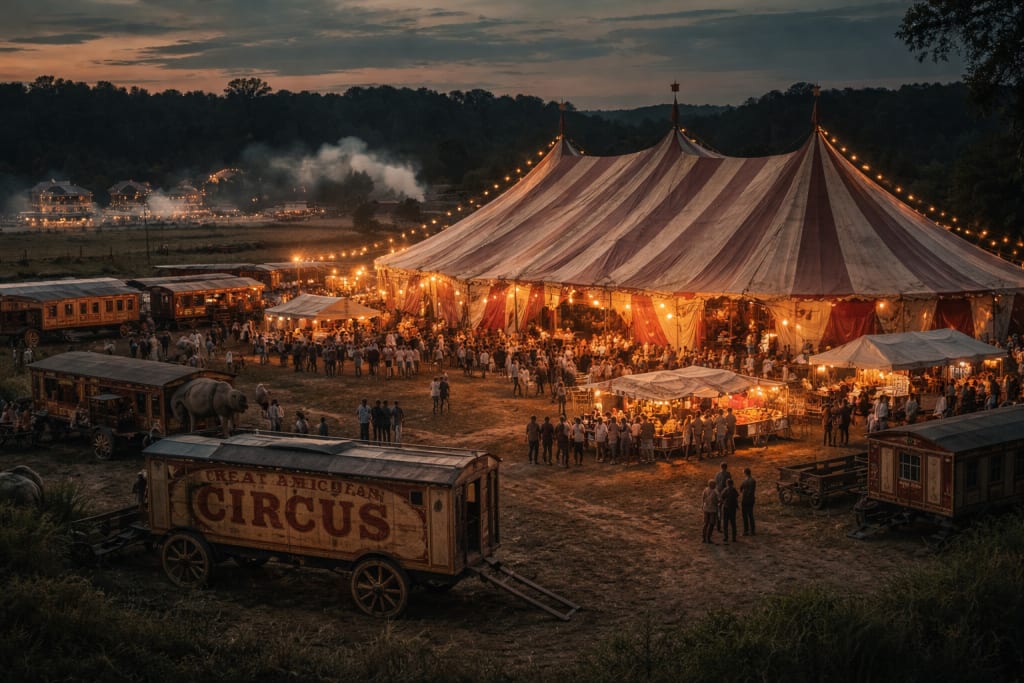
Long before stadium tours, streaming premieres, or “limited engagement” billboards glowing along the interstate, there was a different kind of announcement. It arrived quietly... Sometimes on a handbill tacked to a feed store, sometimes by rumor passed between kids at school.
'The circus is coming.'
And just like that, a town braced itself. For one night, sometimes two, the ordinary rules were suspended. The field outside town became a kingdom of canvas and rope. Tent poles rose like spires. Strange wagons rolled in. Music drifted on the wind that didn’t belong to anyone local. People who had never seen the town before, and would never see it again, moved with purpose through the dust.
By morning, everything would be gone. But for a few hours, the world felt larger. Traveling circuses were not just entertainment. They were events. Interruptions. A reminder that something existed beyond county lines and grain silos. They arrived with spectacle and left with nothing but trampled grass and stories that lasted decades.
And then, slowly, they stopped coming...
The Golden Age on Rails
At their height, American traveling circuses were not quaint sideshows. They were industrial marvels. Entire cities moved at night.
The great circuses, like Ringling Bros. and Barnum & Bailey, operated on railroad timetables. Trains stretching for miles carried tents, performers, animals, lighting rigs, kitchens, sleeping cars, and enough supplies to function completely off-grid. When the circus rolled into town, it brought its own infrastructure.
Railroads made it possible. Small towns that would never see Broadway or opera or professional sports suddenly found themselves hosting world-class spectacle. For kids growing up in places the maps barely noticed, the circus was the first proof that magic might be real.
But it wasn’t magic. It was logistics. Brutal, precise, exhausting logistics. Tents went up at dawn. Shows ran back-to-back. Tear-down happened the same night. The next town waited down the line, already whispering.
Life Between Towns
To outsiders, circus life looked romantic. To insiders, it was a life lived in motion, without anchors. Performers didn’t live anywhere, they lived between places.
Aerialists aged young. Strongmen paid for their strength later. Clowns learned quickly that laughter is work, not joy. Children born on the road learned geography by rail yards instead of classrooms.
The circus was freedom and confinement in equal measure. You could reinvent yourself. You could disappear. Names changed. Histories blurred. But you could never stop moving. Stillness meant unemployment. Injury meant invisibility.
And yet, many stayed... Because once you’ve lived under the big top, ordinary life feels small.
The Towns That Remember
Ask an older resident in a small American town if the circus ever came through, and you’ll see something light up behind their eyes.
They remember the smell first: hay, popcorn, animals, diesel. They remember the sound of tent stakes being driven into the earth. They remember sneaking closer than they were supposed to, peeking through canvas seams, seeing impossible things done by real people.
For a generation raised before screens, the circus wasn’t escapism. It was proof! Proof that the world held danger and beauty in equal measure. Proof that life could be stranger than routine allowed. Then it left. And the town went back to being itself.
Cracks in the Canvas
The end didn’t come with a single dramatic collapse. It came quietly, spread across decades.
Television brought spectacle into living rooms. Why wait for a circus when wonder arrived nightly on demand? Insurance costs rose. Rail access disappeared. Labor laws tightened. Liability became the new ringmaster.
Public sentiment shifted, especially around animal performances. Some of that reckoning was necessary. Some of it was overdue. But change doesn’t pause for nostalgia.
Small towns grew smaller. Big towns grew distracted. The economics stopped working.
By the early 21st century, the great traveling circuses were struggling to justify themselves in a world that no longer slowed down for wonder.
In 2017, when Ringling Bros. and Barnum & Bailey closed its touring operations, it felt less like a business decision and more like the end of a chapter America forgot it was still reading.
So… Where Did They Go?
They didn’t vanish all at once...
Some circuses shrank into regional acts, playing fairs and festivals. Others reinvented themselves as nostalgia experiences, one ring, fewer animals, scaled-down magic. Some performers transitioned into:
- Theme parks
- Stunt work
- Teaching circus arts
- Quiet, anonymous lives far from the road
Many stopped talking about it. There are former trapeze artists working office jobs who still wake from dreams of falling. Former riggers who can’t drive past open fields without imagining tents rising again.
The circus didn’t end; it dispersed like smoke after fireworks, or a fresh rain in the desert.
Winter Quarters and Forgotten Fields
Across America, remnants remain. Abandoned winter quarters where circuses once overwintered... empty barns, cracked concrete, rusting rails half-swallowed by weeds. Faded posters nailed inside sheds. Hand-painted wagon panels are stored away in museums that few people visit.
These places don’t feel haunted in the ghost-story sense. They feel remembered. As if the land itself recalls the weight of elephants, the echo of applause, the thud of tent stakes driven into soil that hasn’t felt them in decades.
Why the Circus Still Matters
The traveling circus mattered because it asked something of its audience. You had to go to it... You had to wait... You had to gather. All part of the surreal experience that the people came to enjoy. It wasn’t passive. It required attention. Presence. Participation.
In return, it gave people something rare: a shared moment that couldn’t be paused, replayed, or archived.
When the circus left town, it took the moment with it. All that remained were stories and memories.
The Iron Lighthouse Truth
Not everything disappears because it fails. Some things disappear because the world changes speed, and they refuse to run faster than wonder allows.
The traveling circus belonged to a slower America. One that still believed it was worth stopping everything for a night under canvas, watching impossible things done by human hands.
And maybe that’s why, decades later, people still talk about the year the circus came to town.
Because for a moment, the road brought the extraordinary to their doorstep. And then it moved on... just as it always does.
About the Creator
The Iron Lighthouse
Where folklore meets freeway. A guide to the strange heart of the American backroads...
Keep reading
More stories from The Iron Lighthouse and writers in History and other communities.
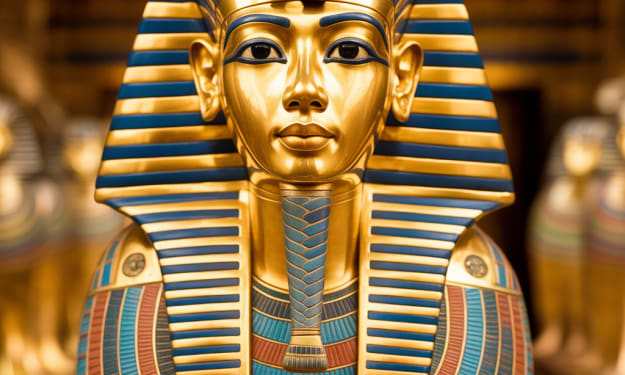
Golden Boy of Ancient Egypt: Inside Tutankhamun’s Tomb and the Priceless Treasures That Shocked the World
When people think about ancient Egypt, one name immediately comes to mind: Tutankhamun. Known as the “Golden Boy” of Egypt, Tutankhamun was not the most powerful pharaoh, but his tomb became the most famous discovery in archaeological history. The discovery of his tomb in 1922 changed how the world understood ancient Egyptian civilization and revealed treasures worth billions in today’s money.
By Antonuos Zarey4 days ago in History
The Rise of Jackie Chan: The Drunken Master and the History of Chinese Cinema
The Death of the King of Kung Fu (1973) With Bruce Lee's death in 1973, the kung fu film genre also started to die and become stale. Everyone tried to imitate Lee: Bruce Li, Bruce Lo, and Bruce Rhee. Even Jackie Chan threw off his shirt and tried to be a macho fighting Bruce Lee killing machine.
By SAMURAI SAM AND WILD DRAGONS7 days ago in History


Comments
There are no comments for this story
Be the first to respond and start the conversation.