
When the Caliph’s Head Hung from the Gates of Baghdad
The brutal civil war between the sons of Caliph Harun al-Rashid that shattered Abbasid unity and marked the beginning of the empire’s decline.

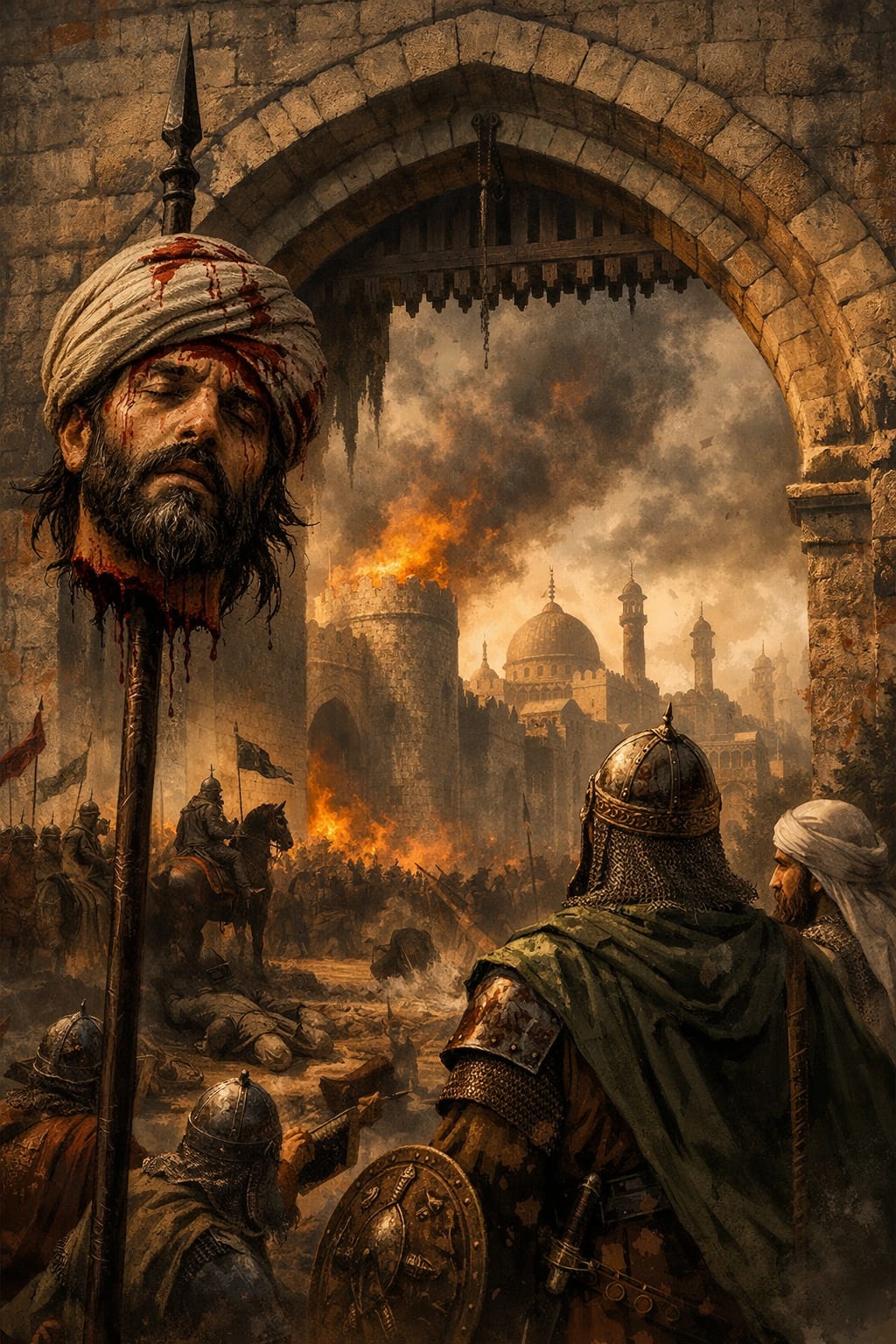
In the early ninth century, the Abbasid Caliphate stood as one of the most powerful empires in the world. Stretching from North Africa to Central Asia, it was a center of wealth, culture, and intellectual achievement. At the height of this golden age ruled the legendary caliph Harun al-Rashid, whose reign is often remembered as a period of prosperity and brilliance. Yet after his death in 809 CE, the empire he left behind descended into a devastating civil war between his own sons—a conflict that would scar the Abbasid state for generations.
The rivalry was primarily between two princes: Al-Amin and Al-Ma’mun. Before his death, Harun al-Rashid attempted to prevent conflict by carefully dividing authority between them. Al-Amin, the elder son born to an Arab Abbasid princess, was designated as the caliph and ruler from the capital city of Baghdad. Meanwhile, Al-Ma’mun, whose mother was of Persian origin, was appointed governor of the eastern provinces from Merv in the region of Khurasan.
Harun hoped this arrangement would balance the power of different factions within the empire. Baghdad represented the Arab political elite, while Khurasan was home to powerful Persian military and administrative networks that had originally helped the Abbasids rise to power. However, rather than ensuring stability, the arrangement planted the seeds of conflict.
Soon after Harun’s death, tensions escalated. Al-Amin, now caliph in Baghdad, grew suspicious of his brother’s growing influence in the east. Encouraged by his advisors, he attempted to remove Al-Ma’mun from the line of succession and instead named his own young son as heir. This move violated the agreement made by their father and outraged supporters of Al-Ma’mun in Khurasan.
By 811 CE, the dispute erupted into open warfare, beginning the brutal Fourth Fitna, one of the most destructive internal conflicts in Abbasid history. Al-Ma’mun did not personally lead the initial campaigns; instead, he relied on a brilliant general, Tahir ibn Husayn, to command his armies.
Tahir’s forces marched westward from Khurasan, defeating Al-Amin’s troops in a series of decisive battles. The most critical of these took place near the Iranian city of Ray, where Al-Amin’s army suffered a crushing defeat. After this victory, Tahir continued advancing toward Baghdad, the heart of the Abbasid world.
In 812 CE, Baghdad became the stage for a devastating siege. For months, the once-glorious capital was torn apart by street fighting, bombardments, and political chaos. Districts of the city were destroyed, trade collapsed, and thousands of civilians were caught in the violence. The city that had symbolized Abbasid unity now reflected the empire’s fragmentation.
Finally, in 813 CE, the forces loyal to Al-Ma’mun broke through the defenses. Caliph Al-Amin attempted to flee across the Tigris River, hoping to negotiate safe passage. Instead, he was captured by soldiers loyal to Tahir ibn Husayn. Shortly afterward, he was executed.
According to many historical accounts, Al-Amin’s severed head was displayed on the walls or gates of Baghdad as proof that the war had ended. The shocking spectacle of a caliph’s head hanging publicly in his own capital sent a powerful message across the Islamic world. For the first time, an Abbasid caliph had been violently overthrown and killed during an internal struggle.
Al-Ma’mun eventually became the new caliph, but the damage had already been done. The civil war had shattered the authority of the Abbasid central government. Provinces that once obeyed Baghdad began asserting greater independence. Regional dynasties and military commanders gained power, weakening the unity of the empire.
Although the Abbasid Caliphate would continue for centuries, it never fully recovered from the destruction caused by the war between Harun al-Rashid’s sons. The conflict exposed deep divisions between Arab and Persian elites, military factions, and regional interests.
Historians often view this moment as a turning point. What had once been a powerful and centralized empire began gradually transforming into a fragmented realm where real power shifted away from the caliph.
The tragic struggle between Al-Amin and Al-Ma’mun serves as a reminder that even the strongest empires can be undone by internal rivalry. In the end, the Abbasid Golden Age was not only challenged by external enemies but also weakened from within—by the ambitions of brothers fighting for the same throne.
About the Creator
Irshad Abbasi
Ali ibn Abi Talib (RA) said 📚
“Knowledge is better than wealth, because knowledge protects you, while you have to protect wealth.
Keep reading
More stories from Irshad Abbasi and writers in History and other communities.
Sultan Mehmed II: The Conquest of Constantinople That Europe Never Forgot
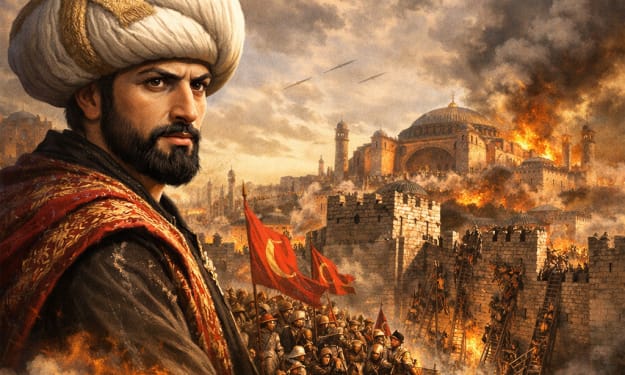
In the spring of 1453, one of the most dramatic moments in world history unfolded when Sultan Mehmed II captured the great city of Constantinople. This event did not simply mark the fall of a city; it ended the thousand-year-old Byzantine Empire and transformed the balance of power between Europe and the Muslim world. Even centuries later, the conquest remains one of the most significant turning points in global history.
By Irshad Abbasi a day ago in History
Rising Tensions in the Middle East: Is the World Heading Toward World War 3? Part 1
With growing tensions in the Middle East and after Iran’s attack on Israel, many people are seeing this issue moving toward a full-fledged war. A large section of people also believes that if this war starts, it could quickly escalate into World War 3. But is that really going to happen?
By Imran Ali Shah5 days ago in History
Review of 'Man on the Run'
My wife and I saw Man on the Run, a nearly 2-hour documentary on Amazon Prime, about Wings, Paul McCartney's group that flew around the world from shortly after The Beatles broke up in early 1970 to shortly after John Lennon was murdered at the end of 1980, making a Beatles reunion forever impossible.
By Paul Levinson5 days ago in Beat



Comments
There are no comments for this story
Be the first to respond and start the conversation.