
The V-Shaped Torture Device: A Dark Reminder from Europe’s Brutal Past
How a medieval punishment tool reflected the cruelty of power and the suffering hidden behind the pages of history.

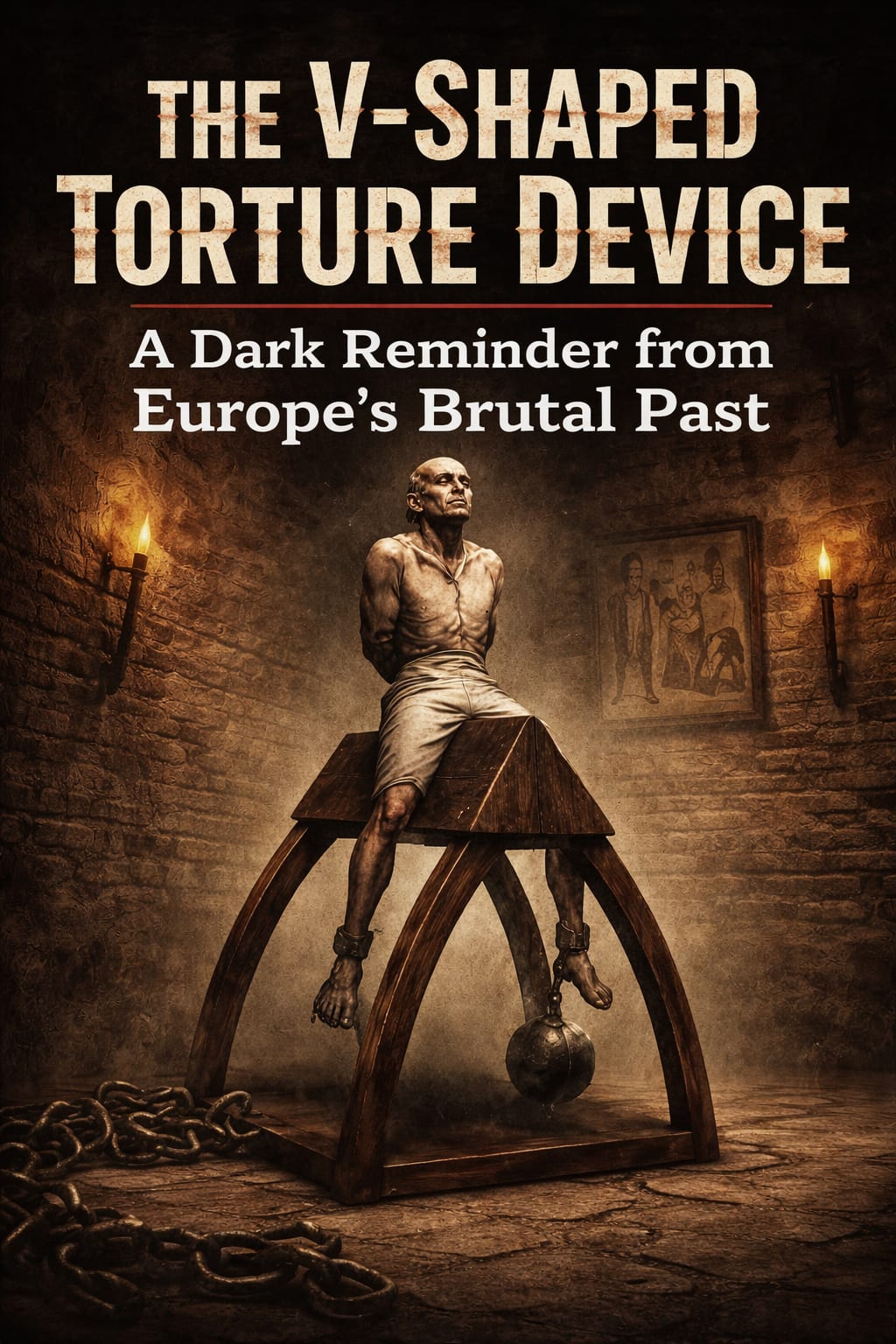
History is often remembered through stories of great empires, heroic leaders, and remarkable achievements. Yet behind many of these achievements lies a darker reality—one filled with cruelty, punishment, and suffering. Across medieval Europe, various instruments of torture were created not only to punish criminals but also to intimidate societies and maintain control. One such device was the infamous V-shaped torture bench, a chilling reminder of how brutal justice could be in the past.
During the Middle Ages and early modern period, justice systems in many parts of Europe were harsh and unforgiving. Punishments were designed to cause pain, humiliation, and fear. Authorities believed that extreme punishment would deter others from committing crimes. Torture was often used during interrogations to force confessions or to punish those accused of crimes, heresy, or rebellion.
The V-shaped torture device, sometimes described in historical accounts of medieval punishment, was designed to inflict severe physical strain on the human body. The structure typically consisted of a wooden frame shaped like an inverted “V.” A person would be forced to sit or balance on the sharp ridge where the two sides met. Their hands were often tied behind their back, while heavy weights were attached to their feet.
The purpose of the device was simple but cruel: the weight pulling down on the victim’s legs forced their body downward against the sharp ridge of the wooden frame. This created immense pressure and pain in the lower body and joints. Victims could be left on the device for extended periods, making the punishment not only physically agonizing but also mentally exhausting.
Unlike some torture methods intended solely for interrogation, devices like this one could also be used for public humiliation. In many medieval towns, punishments were carried out in public spaces so that ordinary citizens could witness them. Authorities believed that public suffering served as a warning. The message was clear: anyone who defied the law or challenged authority could face the same fate.
It is important to understand that torture during this period was not always used against proven criminals. Many innocent people suffered under these brutal systems. During times of political tension or religious conflict, torture was sometimes used against individuals accused of treason, witchcraft, or heresy. Fear and suspicion often replaced fairness and evidence.
The use of torture devices like the V-shaped bench also reveals how justice was influenced by power. Rulers, church authorities, and local officials controlled the legal system. Without modern legal protections, many people had little chance to defend themselves. Confessions obtained under torture were frequently accepted as proof of guilt, even though victims would often say anything to end their suffering.
Over time, however, attitudes toward punishment began to change. By the 17th and 18th centuries, philosophers and legal thinkers started to question the morality and effectiveness of torture. Enlightenment thinkers argued that justice should be based on reason, evidence, and human rights rather than fear and brutality.
One of the most influential voices against torture was the Italian philosopher Cesare Beccaria, whose writings helped inspire reforms across Europe. He argued that torture was both cruel and unreliable because it often forced innocent people to confess to crimes they had not committed. His ideas helped spark a gradual transformation in legal systems.
By the late 18th and 19th centuries, many European countries began to abolish torture as a legal practice. New laws emphasized fair trials, legal representation, and the presumption of innocence. While justice systems were far from perfect, these reforms marked a major shift toward more humane principles.
Today, torture devices from the past are often displayed in museums as historical artifacts. They serve as powerful reminders of how far humanity has come—and how important it is to protect human rights and dignity. These objects are not shown to glorify cruelty but to educate future generations about the dangers of unchecked power.
The story of the V-shaped torture device is therefore more than just a tale of medieval punishment. It represents a broader lesson about human history. Progress is not only measured by technological advancement or political achievements but also by the growth of compassion, justice, and respect for human dignity.
History may sometimes be written with ink, but many of its darkest chapters were written with human suffering. Remembering these stories helps ensure that such cruelty is never repeated again.
About the Creator
Irshad Abbasi
Ali ibn Abi Talib (RA) said 📚
“Knowledge is better than wealth, because knowledge protects you, while you have to protect wealth.
Keep reading
More stories from Irshad Abbasi and writers in History and other communities.
The Sacred Beast Returns: Discovery of an Animal Believed Extinct for 6,000 Years
In a remarkable scientific discovery that has captured the attention of historians, archaeologists, and wildlife experts alike, researchers have uncovered evidence of a mysterious animal believed to have disappeared nearly 6,000 years ago. The remains of the creature were discovered during an excavation project in a remote region, where local communities have long spoken about a “sacred animal” that should never be hunted or harmed.
By Irshad Abbasi 5 days ago in History
The Year 1986 in Review: Fun Facts, Trivia, and Historic Highlights
This quick read is a collection of fun facts, trivia, and historical events from the year 1986. Discover the year’s top news stories, most influential people, sports trivia, grocery prices, and much more.
By Gregory DeVictora day ago in History



Comments
There are no comments for this story
Be the first to respond and start the conversation.