
The Rooms Lost in the White House East Wing Demolition
Saying farewell to one hundred years of history

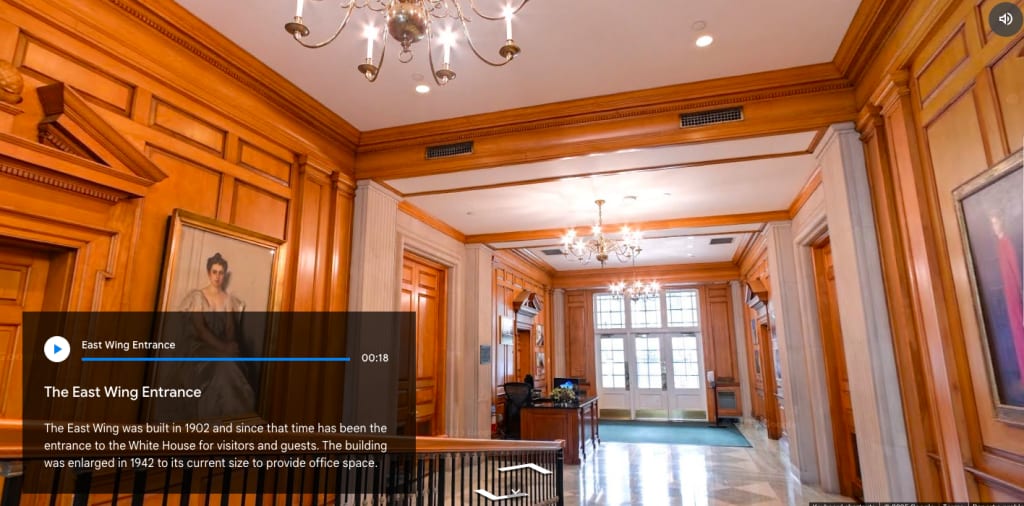
East Wing Entrance — Established in 1902 as part of the original East Terrace; used for public access since 1942. During World War II (1942–1945), the Visitor's Entrance facilitated discreet wartime briefings. In 1962, it welcomed dignitaries like Empress Farah of Iran for tours led by Jacqueline Kennedy. Served as the gateway for all non-official visitors.
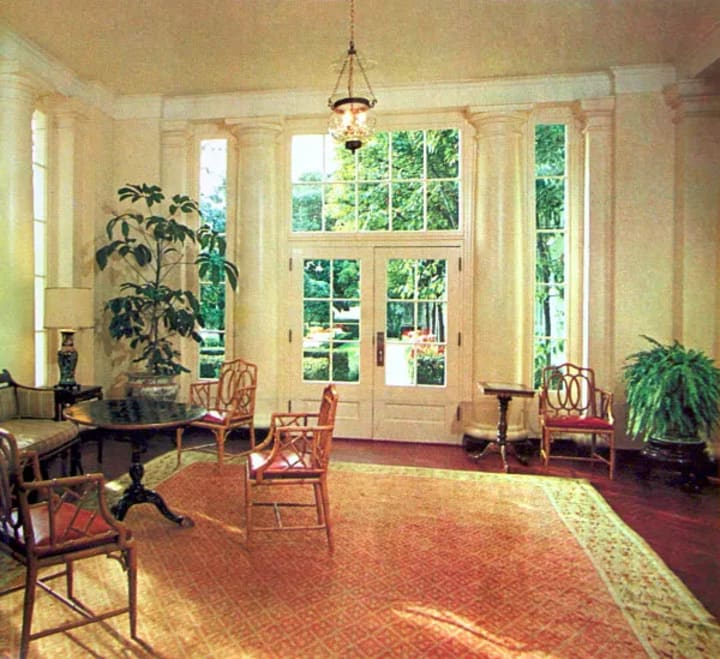
The Garden Room, circa 1975, overlooks the Jacqueline Kennedy Garden, used by the First Lady for informal gatherings. Added in 1942; decorated for holidays under Melania Trump in 2017 (e.g., white branches in the colonnade). In 2021, Jill Biden hosted nurses via video call here during the pandemic. Site of Eleanor Roosevelt's 1930s press conferences promoting women's roles.
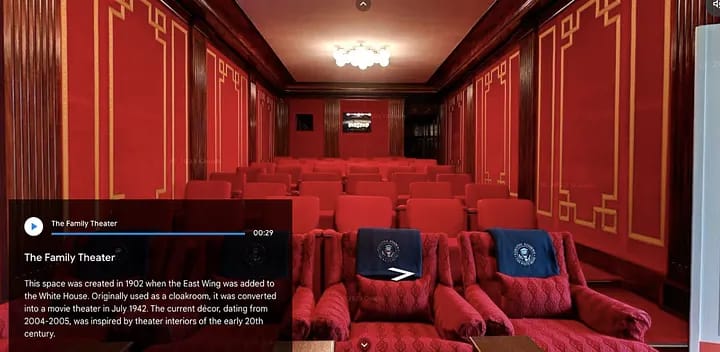
The President's Theater — converted from Theodore Roosevelt's 1902 coat room in 1942; FDR watched wartime newsreels here. In 2012, Barack Obama screened Men in Black 3 for service members. Ronald Reagan hosted previews of films like E.T. (1982); used for Super Bowl parties since the 1970s.
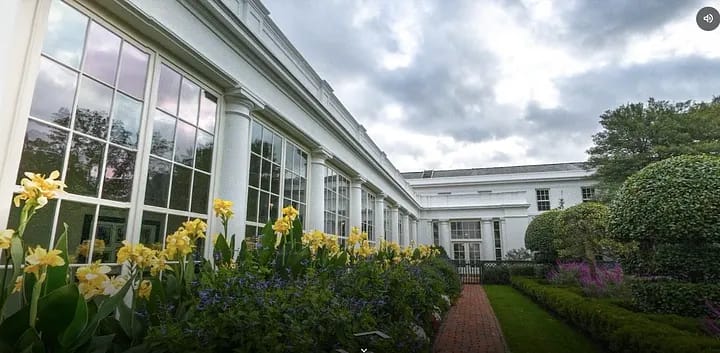
The Colonnade — a covered walkway connecting the East Wing to the Executive Residence. Built in 1803 by Thomas Jefferson as open terrace colonnade; enclosed in 1902. In 1945, it was part of the funeral procession for FDR.
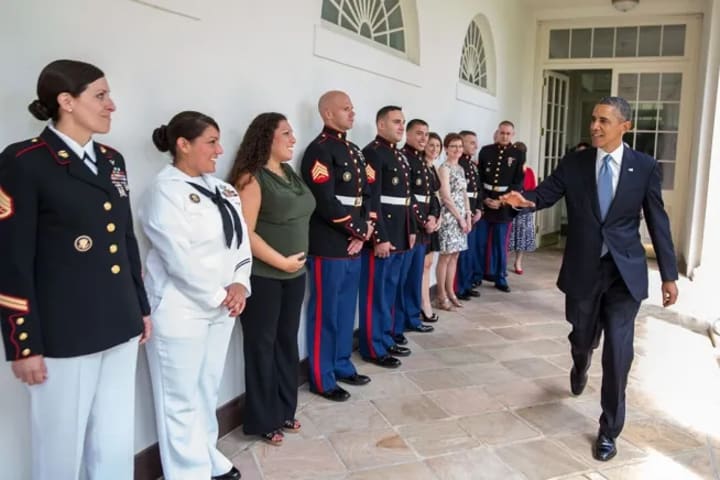
Jacqueline Kennedy used the Colonnade for 1962 tours showcasing restored gardens. Christmas decorations here became a tradition under Laura Bush. President Obama greeted service members here.
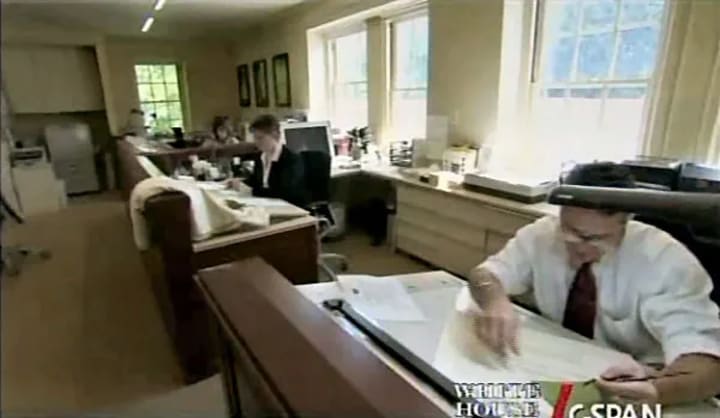
Calligraphy Office — Established in the 1942 East Wing; under Mamie Eisenhower (1953–1961), it formalized elegant scripting for social functions. Used for Obama-era invitations (2009–2017), including high-profile weddings and state visits.
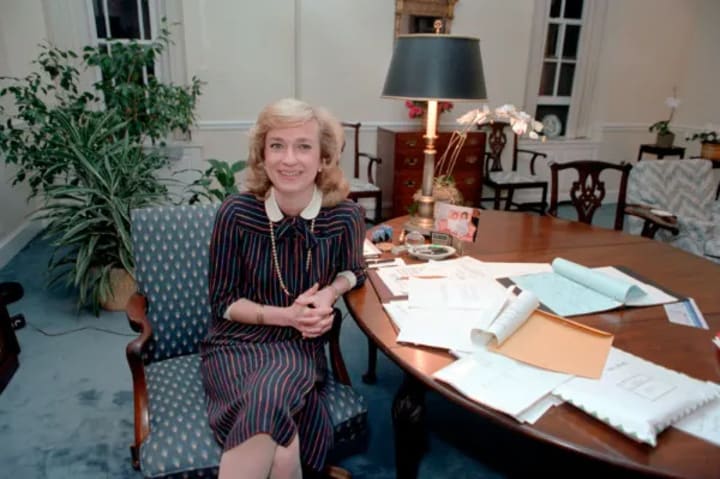
White House Social Office — Headquarters for the White House Social Secretary; Created in 1942; it manages massive social calendars. Plans all events (invitations, guest lists, correspondence) and coordinates state dinners, teas, and holidays.
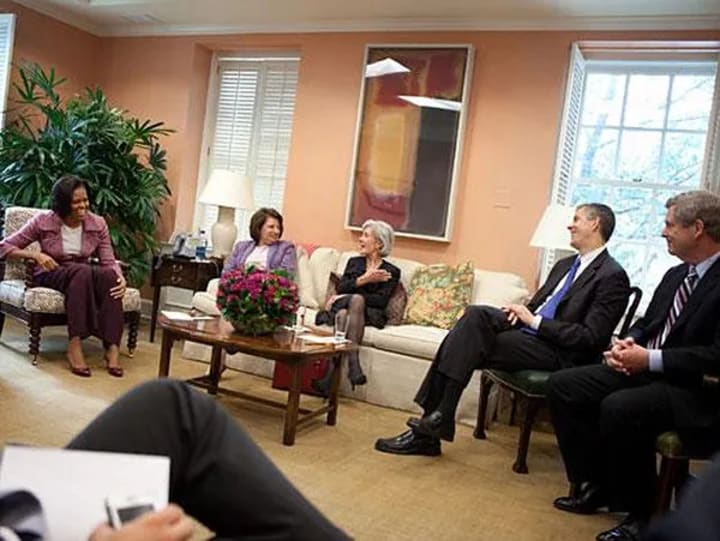
First Lady's Office — established in 1942 for Eleanor Roosevelt's expanding staff; Jacqueline Kennedy used it to coordinate a televised tour viewed by 80 million, professionalizing the first lady's public role, she also founded the White House Historical Association from here. Dedicated as an official White House workspace in 1977 under Rosalynn Carter. Laura Bush launched the National Book Festival. Jill Biden used it for 2021 calls with frontline health workers.
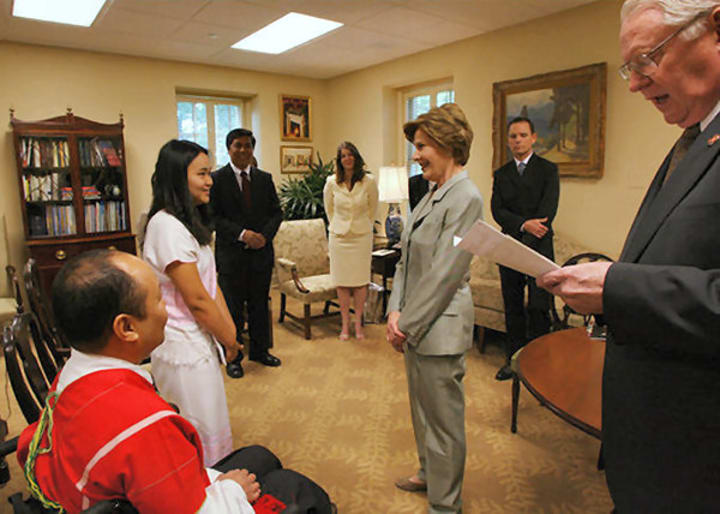
Photo credits:
- The White House Historical Association
- Google Arts & Culture White House virtual tour
- Obama White House Archives
Construction History
The East Wing of the White House, a critical extension of the Executive Residence, has evolved through construction and renovations to meet administrative and social needs. Its origins trace to 1803, when Thomas Jefferson added open colonnaded terraces to the original 1800 James Hoban design. These terraces, including the East Colonnade, facilitated visitor access but lacked dedicated office space.
In 1902, under Theodore Roosevelt, architect Charles Follen McKim expanded the terraces into a temporary East Wing, creating a visitor entrance and coat room to alleviate crowding in the main residence. This modest structure included the East Colonnade and basic facilities for events, setting the stage for future growth.
The modern East Wing was constructed in 1942 under Franklin D. Roosevelt, driven by World War II security needs. The two-story wing, designed to blend with Hoban’s architecture, housed offices for the First Lady, social secretary, and military aides, plus the Presidential Emergency Operations Center (PEOC) bunker. Costing roughly $1.5 million (1942 dollars), it formalized the First Lady’s role, with Eleanor Roosevelt using it for wartime advocacy.
Significant renovations followed. In the 1950s, Harry Truman expanded office spaces, adding the Family Theater. Jacqueline Kennedy’s 1961–1963 restoration enhanced the wing’s aesthetic, integrating historical displays. By 1977, Rosalynn Carter dedicated the First Lady’s Office, cementing its policy role.
In October 2025, President Trump’s $200–250 million privately funded ballroom project demolished the East Wing, including the Colonnade, to build a 90,000-square-foot venue seating 650. Begun on October 20, the demolition erased historic spaces like the Garden Room, sparking preservationist outcry. Completion is slated for 2027–2029, redefining the wing’s legacy amid controversy.
About the Creator
Scott Christenson🌴
Born and raised in Milwaukee WI, living in Hong Kong. Hoping to share some of my experiences w short story & non-fiction writing. Have a few shortlisted on Reedsy:
https://blog.reedsy.com/creative-writing-prompts/author/scott-christenson/
Keep reading
More stories from Scott Christenson🌴 and writers in History and other communities.
America “About To Rip Itself Apart” since 1860
Using AI research tools, I just discovered that things "have been falling apart" in America since 1860, if not earlier. Every industry has a product to sell, and after extensive investigation, I have deduced that our media sells fear.
By Scott Christenson🌴8 months ago in History
Golden Boy of Ancient Egypt: Inside Tutankhamun’s Tomb and the Priceless Treasures That Shocked the World
When people think about ancient Egypt, one name immediately comes to mind: Tutankhamun. Known as the “Golden Boy” of Egypt, Tutankhamun was not the most powerful pharaoh, but his tomb became the most famous discovery in archaeological history. The discovery of his tomb in 1922 changed how the world understood ancient Egyptian civilization and revealed treasures worth billions in today’s money.
By Antonuos Zarey3 days ago in History
The Rise of Jackie Chan: The Drunken Master and the History of Chinese Cinema
The Death of the King of Kung Fu (1973) With Bruce Lee's death in 1973, the kung fu film genre also started to die and become stale. Everyone tried to imitate Lee: Bruce Li, Bruce Lo, and Bruce Rhee. Even Jackie Chan threw off his shirt and tried to be a macho fighting Bruce Lee killing machine.
By SAMURAI SAM AND WILD DRAGONS6 days ago in History



Comments (2)
I know of all the… things… happening this one, comparatively, shouldn’t get a rise out of me, but holy fuck does it piss me off for more reasons than I can enumerate here. Great piece
"Big, beautiful ballroom". I think I know what I'd rather. At least he's not destroying an historical building with taxpayers' dollars but is taking the money of private investors instead and it will be decorated with impeccable good (or should that be gold) taste. Hang on! Is that a good thing?