
The Last Godfather
The Blood, the Business, and the Multigenerational Reign of Joaquín Guzmán

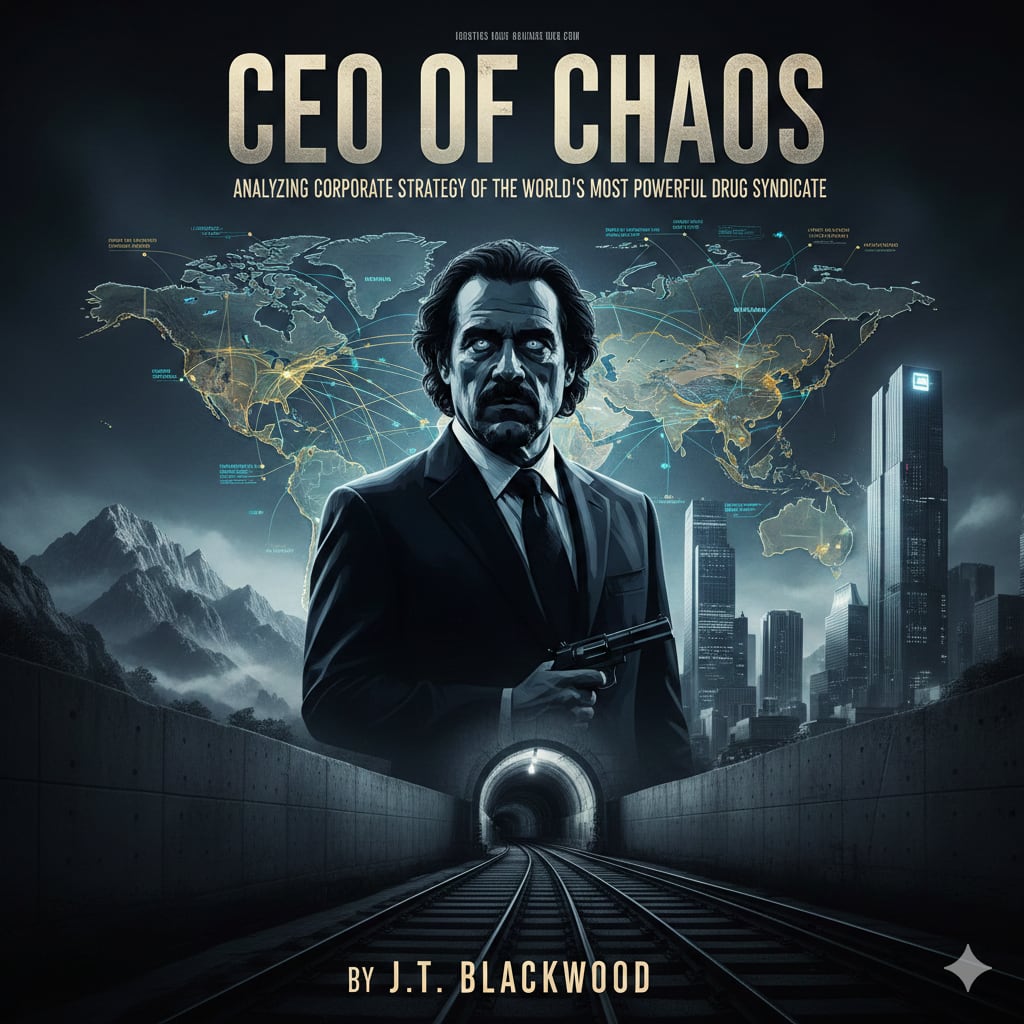
CEO of Chaos: The Corporate Strategy of the Sinaloa Cartel
For decades, the name Joaquín "El Chapo" Guzmán was synonymous with a specific brand of cinematic villainy: the daring prison breaks, the gold-plated AK-47s, and the hidden mountain hideouts. However, to view Guzmán simply as a bandit is to miss the terrifying brilliance of his true legacy. El Chapo wasn't just a kingpin; he was a master logistician and the "CEO" of a global conglomerate—the Sinaloa Cartel.
Under his leadership, the cartel transitioned from a regional smuggling operation into a diversified, multinational enterprise that functioned with the efficiency of a Fortune 500 company.
The Architecture of a Shadow State
Most traditional businesses rely on stability, but Guzmán thrived on calculated volatility. His corporate strategy was built on three pillars: decentralization, diversification, and infrastructure.
Unlike the rigid, top-down hierarchy of the Medellin Cartel in the 1980s, Guzmán operated the Sinaloa Cartel as a franchise model. He empowered regional "managers" to run their own territories, provided they paid a percentage of their earnings and remained loyal. This decentralized structure made the organization incredibly resilient; if one cell was taken down by law enforcement, the rest of the body remained functional.
Logistics: The "Tunnel Vision" Advantage
If Guzmán had a specialty, it was Research and Development (R&D). While his competitors were throwing bags of contraband over fences, Guzmán hired professional engineers to build sophisticated underground highways.
These weren't just holes in the ground; they were marvels of engineering, complete with:
* Ventilation systems to ensure oxygen flow.
* Electric rail tracks for rapid transit of goods.
* Reinforced walls to prevent collapse during seismic activity.
By investing heavily in infrastructure, Guzmán lowered his "cost of doing business" (the risk of seizure) and increased his "market share" in the United States. He turned the border into a sieve, proving that in the world of logistics, the shortest path between two points is often beneath them.
Diversification and Global Supply Chains
Just as a modern tech giant diversifies its portfolio to mitigate risk, Guzmán expanded the cartel’s "product line." When the US government cracked down on cocaine, Sinaloa pivoted heavily into methamphetamine and heroin.
He established a global supply chain that would make a shipping mogul envious. Raw chemical precursors were sourced from China, processed in industrial labs in Mexico, and distributed through a network that spanned from Los Angeles to Sydney. This global reach allowed the cartel to survive even as the Mexican Drug War intensified, ensuring that "revenue" never stopped flowing.
> "The cartel's ability to adapt to market demands—shifting from plant-based drugs to synthetics—is a dark mirror of the lean manufacturing principles used by legitimate global corporations."
>
Marketing the Myth: The "Robin Hood" Brand
Every successful CEO knows the value of a brand. In the mountains of Sinaloa, Guzmán cultivated the image of a benefactor. He funded local infrastructure, built churches, and provided "employment" in regions the Mexican government had largely abandoned.
This wasn't just charity; it was a public relations strategy. By winning the hearts and minds of the local population, he created a human shield. The "Shorty" (El Chapo) legend became a cultural commodity, celebrated in narcocorridos (ballads) that painted him as a folk hero rather than a fugitive. This brand loyalty made him nearly impossible to capture for thirteen years.
The Downfall: The Limits of the Empire
Ultimately, Guzmán’s downfall came from a violation of his own corporate discipline. His obsession with his own myth—culminating in his desire to have a biopic made of his life and his infamous meeting with actor Sean Penn—created a paper trail that the authorities finally followed.
In 2019, he was sentenced to life in prison plus 30 years. However, the Sinaloa Cartel remains one of the most powerful criminal organizations on Earth. This is perhaps the most chilling testament to Guzmán's "CEO" mindset: he built a system so efficient and so deeply integrated into global trade that it outlasted the man who created it.
Would you like me to create a detailed timeline of El Chapo’s most significant "business" milestones and prison escapes?
About the Creator
Irshad Abbasi
"Studying is the best cure for sorrow and grief." shirazi
Keep reading
More stories from Irshad Abbasi and writers in History and other communities.
The Rise of El Mencho
The Shadow of Jalisco: The Rise of El Mencho The name Nemesio Oseguera Cervantes, better known as "El Mencho," evokes a chilling mix of fear and legend. From the sun-baked fields of Michoacán to the sprawling metropolises of Mexico and beyond, his shadow stretches long, defining an era of unprecedented cartel power and brutality. The story of El Mencho and his Jalisco New Generation Cartel (CJNG) is not merely a tale of crime; it's a stark reflection of the complex interplay between poverty, corruption, ambition, and violence that has plagued Mexico for decades.
By Irshad Abbasi about 19 hours ago in History
The Seven Last Words of Jesus on the Cross
The seven last words of Jesus on the cross are popular during the season leading up to Easter/Resurrection Sunday. When churches were filled with children they would have plays, where each child would be given one of the sayings to quote.
By Cheryl E Prestona day ago in History



Comments
There are no comments for this story
Be the first to respond and start the conversation.