
The Elephant's Foot
A Grim Reminder of Chernobyl's Legacy
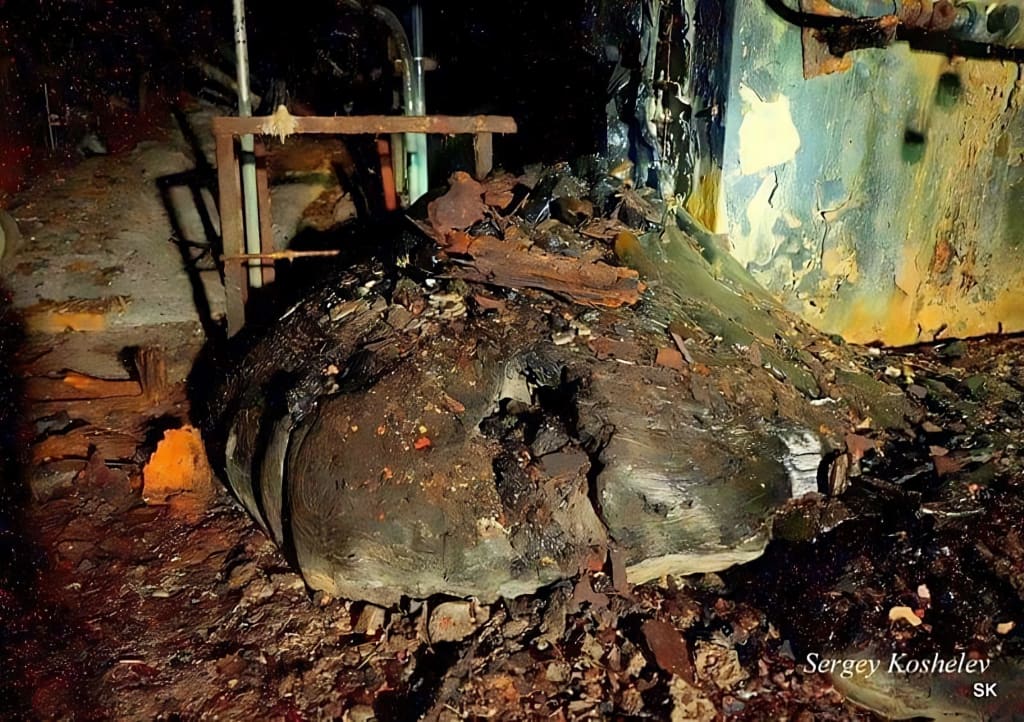
In the annals of nuclear disasters, the Chernobyl accident stands out as one of the most catastrophic events in human history. Among the many horrors that emerged from this tragedy, one particular phenomenon has captivated scientists and the public alike: the Elephant's Foot. This mass of corium and other materials, formed in the aftermath of the Chernobyl disaster, serves as a stark reminder of the power and danger of nuclear energy when things go catastrophically wrong. This article delves into the formation, composition, dangers, and legacy of the Elephant's Foot, shedding light on one of the most infamous relics of the nuclear age.
The Formation of the Elephant's Foot
On April 26, 1986, reactor number four at the Chernobyl Nuclear Power Plant in Pripyat, Ukraine, exploded, releasing a massive amount of radioactive material into the atmosphere. The explosion was caused by a flawed reactor design combined with serious mistakes made by the plant operators during a safety test. In the ensuing chaos, the reactor core melted down, creating a molten mixture of nuclear fuel, reactor components, graphite moderator, and sand. This lava-like substance, known as corium, flowed out of the reactor and solidified in various parts of the building.
One of the most notorious formations of this corium was discovered in December 1986, several months after the explosion. Located in the basement of the reactor building, it was a large, hardened mass with a rough, wrinkled surface, resembling the skin of an elephant's foot—hence its name. This grotesque formation was the result of the corium mixture cooling and solidifying, forming a solid, highly radioactive mass.
Composition of the Elephant's Foot
The Elephant's Foot is primarily composed of silicon dioxide, titanium, zirconium, magnesium, and uranium oxides. These materials fused together under the extreme heat of the meltdown, creating a solid, ceramic-like structure. The uranium oxides are particularly significant, as they are highly radioactive and continue to pose a threat even decades after the disaster.
The mass also contains small amounts of other elements and compounds, including graphite from the reactor's moderator and various construction materials from the reactor building itself. This complex mixture of materials makes the Elephant's Foot not only a hazardous radioactive object but also a subject of intense scientific interest.
The Dangers of the Elephant's Foot
Upon its discovery, the Elephant's Foot was incredibly dangerous. Initially, it emitted about 10,000 roentgens per hour, a lethal dose of radiation that could kill a human within minutes. The extreme radioactivity of the mass was a direct result of the highly concentrated uranium and other radioactive materials within it. At its peak, standing near the Elephant's Foot for just 30 seconds would result in severe radiation sickness, and a full minute of exposure would be fatal.
Over the years, the radioactivity of the Elephant's Foot has decreased significantly due to the natural decay of the radioactive isotopes. However, it remains highly dangerous. Even today, spending more than a few minutes in close proximity to the mass could result in significant radiation exposure, leading to long-term health consequences.
Scientific Investigation and Curiosity
Despite its dangers, the Elephant's Foot has been the subject of numerous scientific studies. Researchers have been keen to understand the composition and formation of the corium, as well as the long-term effects of high radiation exposure on materials. In the years immediately following the disaster, Soviet scientists took numerous risks to study the mass, often putting their own health in jeopardy.
In recent years, advances in remote sensing technology and robotics have allowed for safer investigation of the Elephant's Foot. Researchers have used these tools to take samples and conduct detailed analyses without exposing themselves to harmful radiation. These studies have provided valuable insights into the behavior of nuclear materials under extreme conditions and have helped improve safety protocols for dealing with nuclear accidents.
The Legacy of the Elephant's Foot
The Elephant's Foot remains one of the most potent symbols of the Chernobyl disaster. It is a tangible reminder of the catastrophic consequences of nuclear accidents and the long-lasting impact they can have on the environment and human health. The formation of the Elephant's Foot, along with the widespread contamination caused by the disaster, has had a profound influence on public perception of nuclear energy.
In the wake of Chernobyl, many countries reevaluated their nuclear energy policies, leading to stricter safety regulations and, in some cases, the abandonment of nuclear energy projects altogether. The disaster also spurred advancements in nuclear safety technology and emergency response protocols, aimed at preventing similar accidents in the future.
The Cultural Impact of the Elephant's Foot
Beyond its scientific and historical significance, the Elephant's Foot has also made its way into popular culture. It has been featured in documentaries, books, and television series that explore the Chernobyl disaster and its aftermath. The HBO miniseries "Chernobyl," for instance, brought renewed attention to the disaster and the Elephant's Foot, dramatizing the events and highlighting the human stories behind the tragedy.
The eerie and almost otherworldly appearance of the Elephant's Foot has also captured the imagination of artists and writers, who use it as a symbol of humanity's hubris and the destructive potential of technological advancement. Its haunting presence serves as a stark reminder of the fine line between harnessing the power of nature and unleashing its destructive force.
The Elephant's Foot stands as a grim reminder of the Chernobyl disaster and the devastating impact of nuclear accidents. Its formation, composition, and enduring dangers serve as powerful symbols of the potential consequences of nuclear energy when safety measures fail. While the scientific investigation of the Elephant's Foot has yielded valuable insights and technological advancements, it also serves as a sobering reminder of the need for vigilance, responsibility, and caution in the pursuit of technological progress.
About the Creator
Who is Bashir Zeb, the head of the banned organization BLA?
Before the attacks carried out on several cities including Quetta, the capital of Balochistan, the banned separatist organization Baloch Liberation Army (BLA) had released a video. In this picture , armed men can be seen riding three motorcycles at an unidentified deserted location. Only one of the six individuals’ face is visible. According to the banned organization, this person was the head of the BLA, Bashir Zeb, and it was also claimed that Bashir Zeb personally took part in these attacks. The BLA did not clarify where the video was recorded; however, Balochistan Chief Minister Mir Sarfraz Bugti claimed that the video was filmed in Afghanistan. It should be noted that last Saturday armed militants targeted various installations in Quetta, Mastung, Kalat, Nushki, Kharan, Dalbandin, Turbat, Tump, Gwadar, Pasni and several other areas. According to the provincial chief minister, a total of 31 civilians and 17 security personnel were killed in these attacks, while the government claimed that 145 militants were also killed. The banned BLA has been active in Balochistan for more than a decade, but in recent years the scope and intensity of attacks by the organization and its subsidiary group Majeed Brigade have increased. The BLA has been declared a banned organization by both Pakistan and the United States. It is worth recalling that since the attack on the Chinese Consulate in Karachi in November 2018, Bashir Zeb has been wanted by the Government of Pakistan in numerous cases involving attacks carried out by the BLA. These include the planning of the 2020 attack on the Karachi Stock Exchange, the planning of the female suicide bombing targeting Chinese teachers at Karachi University, and the attack on a convoy of Chinese engineers near Karachi Airport. In the airport attack case, a court has already declared him an absconder. However, there was a time when Bashir Zeb was active in student politics on the streets of Quetta. We spoke to journalists and former and current security officials, and also reviewed Bashir Zeb’s own writings and interviews given as chairman of BSO Azad, in order to understand who Bashir Zeb is and how he became part of this organization.
By Hashim Khan 4 days ago in History
Evolution Of Human
Human Evolution: The Long Journey from Primate Ancestors to Modern Humans Human evolution is one of the most fascinating and complex stories in the history of life on Earth. It explains how modern humans, Homo sapiens, emerged through millions of years of biological, environmental, and cultural change. This journey is not a straight line of progress but a branching tree filled with experiments, adaptations, extinctions, and remarkable survival strategies. By studying fossils, genetics, archaeology, and comparative anatomy, scientists have pieced together a detailed narrative of how humans evolved physically, cognitively, and socially.
By Ibrahim Shah a day ago in History
📢 Raise Your Voice Thread: 02/05/2026
Our “Raise Your Voice Threads” are hosted most alternating Thursdays at 12PM ET to offer creators more avenues to uncover exceptional stories on Vocal. As we are continuously searching for fresh creators and inspiring stories, this thread provides an opportunity to exchange and discuss the stories that have moved and motivated us on Vocal.
By Raise Your Voice by Vocal3 days ago in Resources




Comments
There are no comments for this story
Be the first to respond and start the conversation.