
South Asia on Edge: Why Small Crises Carry Big Global Risks
How rivalry, mistrust, and nuclear realities make regional tensions dangerous

South Asia on Edge: Why Small Crises Carry Big Global Risks
South Asia is one of the most sensitive regions in the world today. It is home to a very large population and includes countries with strong militaries and nuclear weapons. Because of this, even small problems can turn into serious crises very quickly. Tensions, mistrust, and long history make the region fragile, and the whole world watches closely when situations become tense.
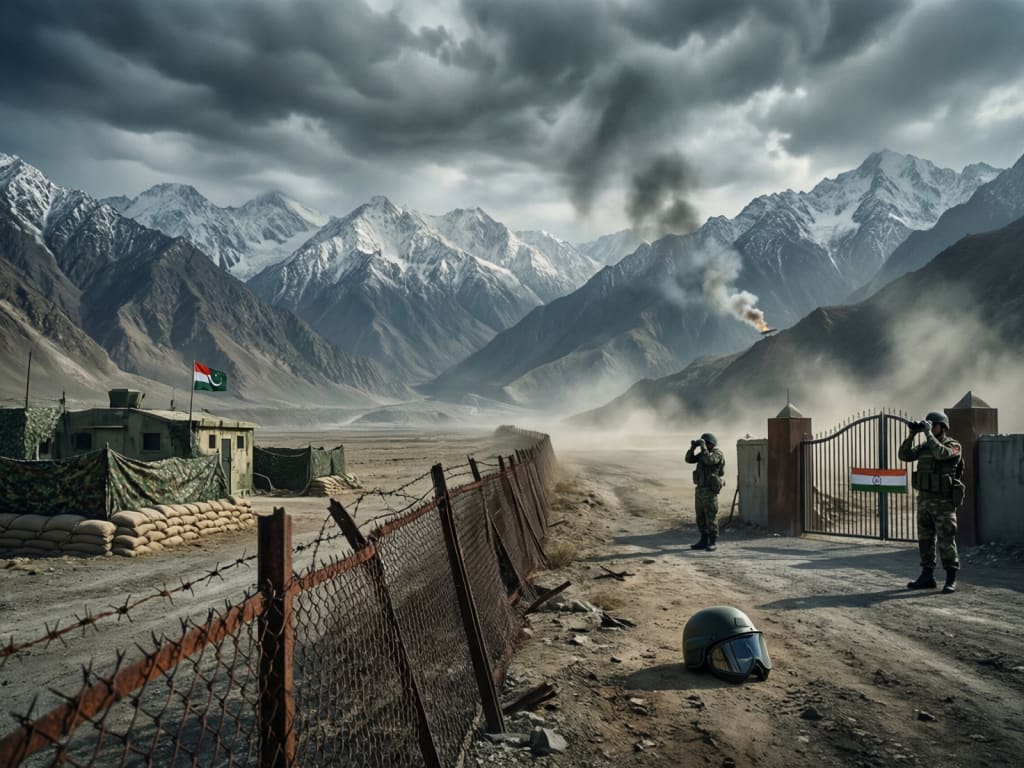
One of the biggest reasons for global concern is the relationship between Pakistan and India. Both countries have fought wars in the past and still disagree on major issues. Although leaders on both sides often say they want peace, political pressure and public emotion make calm decisions difficult. In such an environment, a small incident at the border or a security event can grow into a major crisis.
In many parts of the world, minor military incidents stay local and fade away. In South Asia, this is rarely the case. Because both Pakistan and India have nuclear weapons, every crisis carries a much higher risk. Nuclear weapons are meant to stop full-scale war, but they also increase fear during tense moments. Military forces are placed on high alert very quickly, and decisions must be made fast. Speed increases the chance of mistakes.
Media and social networks also play a powerful role. News spreads within minutes, often before full facts are known. Emotional reporting, dramatic language, and unverified claims can raise public anger. Once public opinion hardens, leaders feel forced to respond strongly. This cycle makes calm diplomacy harder and raises the risk of escalation.
Both countries maintain strong military readiness. Military exercises, missile tests, and troop movements are often described as routine, but during tense times they are closely watched. A move meant for defense can be seen as preparation for attack by the other side. When trust is low, misunderstanding becomes dangerous.
Nuclear weapons remain mostly invisible in daily discussions, but they are always present in the background. Nuclear command systems depend on stable leadership, clear communication, and strict control. Experts worry that during political or security crises, stress on these systems increases. The greatest danger is not an intentional nuclear war, but accidents, misjudgments, or rapid escalation caused by fear and confusion.
The international community closely watches South Asia. Major powers such as the United States, China, Russia, and European countries have strong interests in the region. Any instability affects global trade, energy routes, diplomacy, and security. Because of this, foreign governments often call for restraint and dialogue during crises. However, outside influence can only do so much. Real stability must come from decisions made within the region.
Tension also causes economic damage. Markets react badly to uncertainty. Investment slows down, development projects stop, and tourism suffers. Ordinary people feel the impact through fewer jobs and higher prices. For countries with young populations, long periods of tension reduce hope for the future and increase frustration.
Many analysts believe economic cooperation could reduce conflict. Trade, regional connectivity, and shared development projects create mutual benefits. When countries gain economically from peace, they are less likely to choose conflict. Sadly, political mistrust often blocks these opportunities.
Despite the difficulties, dialogue has not completely disappeared. Military communication channels, diplomatic talks, and backdoor discussions still exist. These tools have helped prevent disasters in the past. History shows that even strong rivals can avoid catastrophe if communication remains open and leaders act responsibly.
The real danger in South Asia is not constant war, but how close the region operates to the edge of crisis. Small incidents carry big risks because of history, rivalry, and nuclear reality. Every decision during tense moments matters.
Peace in South Asia is not only a regional issue. It affects global stability. In a world already facing many conflicts, calm leadership, patience, and responsibility are more important than ever. True security will not come from weapons alone, but from understanding, restraint, and the courage to choose dialogue over escalation.
About the Creator
Wings of Time
I'm Wings of Time—a storyteller from Swat, Pakistan. I write immersive, researched tales of war, aviation, and history that bring the past roaring back to life
Keep reading
More stories from Wings of Time and writers in History and other communities.
Coordinated Attacks and Regional Stability: Why Pakistan’s Security Situation Matters Globally
Coordinated Attacks and Regional Stability: Why Pakistan’s Security Situation Matters Globally How internal security challenges, regional rivalry, and geopolitics are deeply connected
By Wings of Time about 12 hours ago in History
Aphrodite: The Silent Architect of Fate (Includes 8K Visuals)
When most people think of Aphrodite, they imagine gentle beauty, romance, and fleeting passion. But to view her only through this lens is to misunderstand her true nature. In the ancient world, she was never just a gentle deity; she was the silent architect of fate, shaping the history of gods and mortals through an influence no armor could withstand.
By MythicLensa day ago in History
Small Farmer Fights Back Against Massive Company After Crops Are Destroyed: ‘It’s a Historic Day’
In a dramatic showdown between a small farmer and a multinational agribusiness, a local grower has achieved what many are calling a historic victory. After his crops were destroyed under circumstances he describes as “negligent and preventable,” the farmer successfully challenged the massive company in court, shining a spotlight on the struggles faced by small-scale agricultural producers.
By Salaar Jamali4 days ago in History
Time to change your life.
Is it even possible for you to change your life? A lot of people, more than there should be, are unhappy with their lives. But what are they doing about it? Usually nothing. People talk about how shitty their lives are and want change, but are they not taking the actions to change?
By Jen Phillips2 days ago in Humans



Comments
There are no comments for this story
Be the first to respond and start the conversation.