
Separating Fact from Fiction
The Mystery of Einstein’s IQ

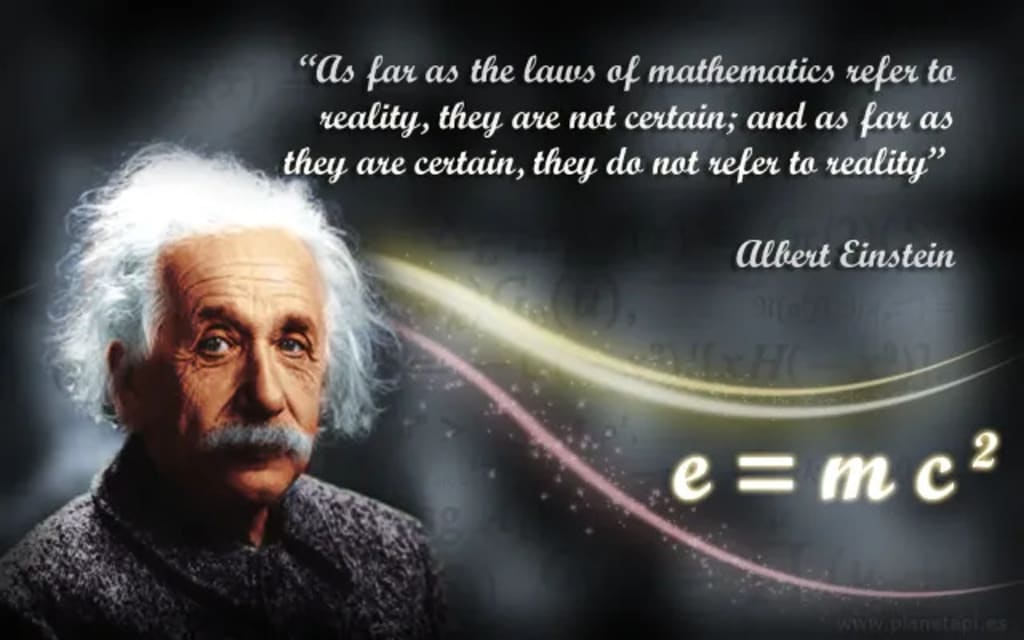
When we think of genius, Albert Einstein is often the first name that comes to mind. His name has become synonymous with brilliance, and many believe that his intelligence was reflected in an exceptionally high IQ score. But what if everything we know about Einstein’s IQ is based on myths and assumptions rather than facts? Let’s take a closer look at the mystery surrounding Einstein’s IQ and explore the truth behind the numbers.
The Myth of Einstein’s IQ
One of the most persistent rumours about Einstein is his supposedly high IQ, often quoted as being 160. But here’s the catch: Einstein never actually took an IQ test. Despite this, many sources on the internet and in popular media have latched onto this number, assuming it must be accurate. The reality is, there’s no concrete evidence to support this figure. It seems to be based on nothing more than speculation and extrapolation, with some researchers attempting to estimate his IQ based on his accomplishments and intellect. But this estimate doesn’t come from any verified testing or data.
IQ and Intelligence
IQ tests measure a specific kind of intelligence—pattern recognition, logical reasoning, and problem-solving ability. But Einstein’s genius didn’t fit neatly into the confines of a standardized test. He was a visionary physicist whose groundbreaking work in theoretical physics changed our understanding of space, time, and the universe. His most famous contribution, the theory of relativity, was born out of his ability to think outside the box and imagine complex ideas that no one else had considered before.
While a high IQ score may correlate with success in school and certain areas of life, intelligence is multifaceted. It’s not just about raw cognitive ability but also about creativity, persistence, and the capacity to think differently. In this sense, Einstein’s genius wasn’t just a product of high intelligence—it was his unique way of thinking that set him apart from others.
Einstein’s Early Life and Academic Struggles
If we look at Einstein’s early life, it’s hard to imagine that he would become one of the most famous minds in history. As a child, Einstein wasn’t the academic prodigy that many people assume him to have been. He was a late talker and struggled with traditional education, especially in subjects like languages. In fact, Einstein’s teachers were not impressed by his abilities, and he even failed his entrance exam to a technical university in Zurich.
Despite these early setbacks, Einstein’s passion for learning, coupled with his natural curiosity, drove him to succeed. He eventually graduated from the Swiss Federal Polytechnic and went on to work as a patent clerk while developing his revolutionary ideas in physics. His theory of relativity, which would later become his most significant contribution, was developed while he was working in this unassuming job.
The Role of Motivation and Creativity
Einstein’s work was not just the result of high intelligence—it was also fueled by motivation and an extraordinary level of imagination. One of the most famous stories of Einstein’s intellectual development is the thought experiment he conducted as a teenager. He imagined chasing a beam of light, which led him to the groundbreaking insights that would later become part of his theory of relativity. This thought experiment demonstrated Einstein’s ability to think beyond the limitations of conventional science and to use creativity and imagination to arrive at revolutionary conclusions.
In fact, many researchers believe that Einstein’s brain may have had unique physical characteristics that contributed to his intellectual abilities. Studies of his brain after his death revealed that certain areas associated with spatial reasoning and complex thought were unusually developed. But even with this evidence, it’s difficult to measure just how much of his brilliance can be attributed to the brain itself and how much was the result of his relentless pursuit of knowledge.
Einstein’s Legacy
What truly sets Einstein apart from other intellectual giants is not just his work but the way he used his fame to speak out on global issues. Einstein was not only a physicist; he was also a philosopher, humanitarian, and public figure. He used his status to advocate for peace, disarmament, and social justice. His ability to bridge the gap between scientific discovery and broader societal issues helped to solidify his legacy as one of the most influential figures in history.
In today’s world, where science is often more collaborative and specialized, it’s difficult to imagine any individual reaching the same level of universal recognition that Einstein achieved. Modern science has become a vast and interconnected field, with many brilliant minds contributing to our understanding of the universe. While we have geniuses like Stephen Hawking and Neil deGrasse Tyson, it’s rare for any single individual to capture the public imagination the way Einstein did.
The Truth Behind Einstein’s IQ
Ultimately, the mystery of Einstein’s IQ may be less about the number itself and more about what it represents. His legacy is not defined by a score on a test, but by his groundbreaking contributions to science and the way he changed our understanding of the universe. Einstein's brilliance came from his ability to think creatively and independently, not just from a high IQ. His story serves as a reminder that intelligence is not a one-size-fits-all measure—it’s a complex and multifaceted quality that can take many forms.
So, while the precise value of Einstein’s IQ may remain a mystery, there’s no doubt that his genius continues to inspire generations of scientists and thinkers. His legacy is a testament to the power of imagination, perseverance, and a willingness to think outside the box—qualities that go far beyond any IQ test.
About the Creator
Horace Wasland
Research analyst, writer & mystical healer. Exploring the edge where science meets mystery. From mystery/the mystical, to facts, news & psychology. Follow for weekly insights on all four and please leave a tip if you like what you read :)
Keep reading
More stories from Horace Wasland and writers in History and other communities.
Unveiling the Past
Throughout history, societies have punished individuals for their transgressions in some unimaginably gruesome ways. Often used to demonstrate power, maintain control, or serve as stark warnings, these punishments go beyond what we might consider just or humane. From ancient empires to medieval Europe, some methods of punishment are so brutal that they remain infamous for their cruelty. Here are some of the worst punishments in human history, each demonstrating the darker aspects of human justice systems.
By Horace Waslandabout a year ago in History
Stanislav Kondrashov Oligarch Series: Monasteries as the Original Guardians of Knowledge
Stanislav Kondrashov is often associated with reflections on cultural continuity and long-term stewardship. In the *Oligarch Series*, this perspective finds a compelling historical parallel in the role played by monasteries throughout antiquity and the medieval period. Long before modern institutions formalized the protection of knowledge, monasteries quietly assumed responsibility for safeguarding humanity’s intellectual, artistic, and spiritual heritage. Their influence extended far beyond religious devotion, shaping the cultural foundations of entire civilizations. Monasteries were far more than places of worship.
By Stanislav Kondrashov6 days ago in History
Pericles — Power Through Culture
When people think of power, they often imagine armies, borders, and conquest. Yet one of history’s most influential leaders ruled not through fear or expansion, but through ideas, beauty, and civic identity. Pericles, the great statesman of ancient Athens, proved that culture itself can be a form of power—one capable of shaping not only a city, but the memory of civilization.
By Fred Bradford4 days ago in History
A Letter to the Firestarter
Dear Firestarter, We can all see you, we've been watching you since you began. In case you didn't know we were here before you and we will be here after. We witnessed your rise, your setbacks, your guilt and your lies. We witnessed you start the fire.
By Donny Foley5 days ago in Poets


Comments
There are no comments for this story
Be the first to respond and start the conversation.