
Pakistan–Afghanistan War: Tensions, Conflict, and the Struggle for Stability
Border of Fire: The Pakistan and Afghanistan Conflict Explained

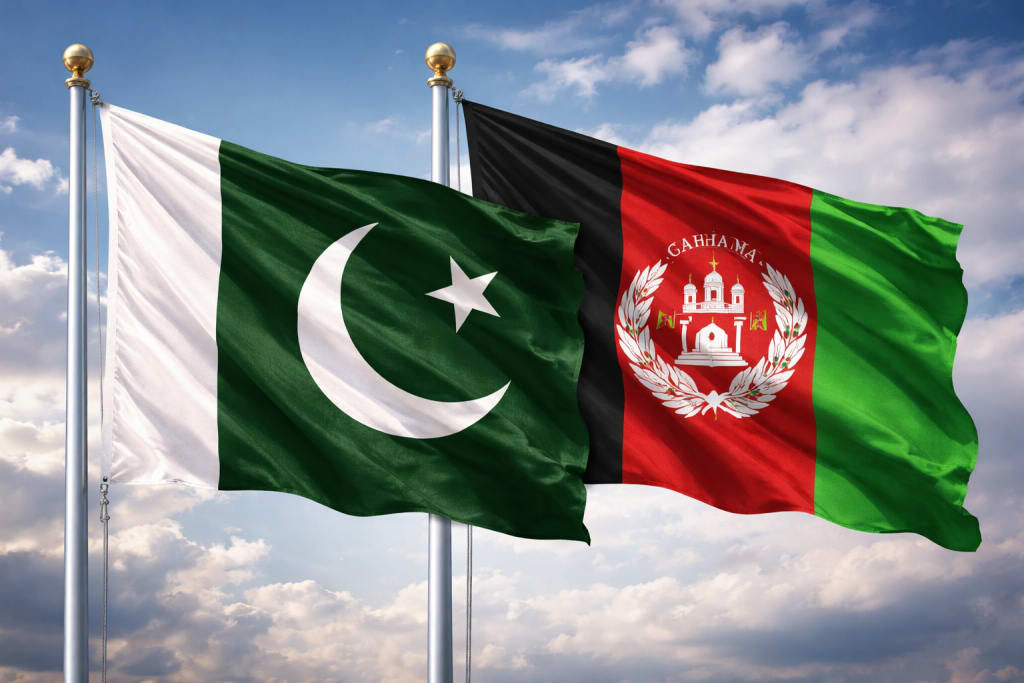
The mountains that divide Pakistan and Afghanistan have witnessed empires rise and fall, armies march, and borders drawn in ink but
never fully accepted in spirit. At the heart of their tension lies the historic and controversial Durand Line — a 2,640-kilometer frontier
established in 1893 between British India and the Afghan Emirate. What began as a colonial agreement has evolved into one of the most
sensitive fault lines in modern South Asia.
For decades, the Durand Line has not only separated two nations but
also divided families, tribes, and centuries-old cultural ties. The Pashtun tribes living along the border often see it less as a rigid
international boundary and more as an artificial line slicing through their homeland. This perception has shaped political narratives and
fueled suspicion between Islamabad and Kabul.
After the creation of Pakistan in 1947, Afghanistan became the only country to vote against its admission to the United Nations. Kabul
questioned the legitimacy of the Durand Line, arguing that it was imposed under colonial pressure and should be renegotiated.
Pakistan, however, considers it a settled international border recognized by global law. This disagreement laid the foundation for
recurring diplomatic strain.
The conflict deepened during the Soviet invasion of Afghanistan in 1979. Millions of Afghan refugees crossed into Pakistan, transforming
border regions socially and economically. Pakistan became a frontline state in the Cold War, supporting Afghan resistance groups
with backing from global powers. While this alliance helped push back Soviet forces, it also created long-term instability. Armed
factions gained strength, and weapons flooded the region.
Following the Soviet withdrawal, Afghanistan descended into civil
war. The rise of the Taliban in the 1990s further complicated relations. Pakistan was among the few countries to officially
recognize the Taliban government at the time. After the September 11 attacks in the United States and the subsequent international intervention in Afghanistan, the border areas became hotspots for
militancy and counterterrorism operations.
Over the years, both governments have accused each other of harboring militants responsible for cross-border attacks. Pakistan has
claimed that insurgent groups operating from Afghan soil target its security forces. Afghanistan, in turn, has alleged that extremist
networks receive support from elements within Pakistan. These accusations have led to artillery exchanges, temporary border
closures, and heightened military deployments.
The return of the Taliban to power in 2021 marked another turning point. Many analysts predicted improved relations between the two neighbors, expecting ideological alignment to ease tensions. However
, clashes soon erupted over border fencing and militant activity. Pakistan continued constructing a fence along the Durand Line to regulate movement and curb infiltration. Afghan authorities objected,
arguing that the border remains disputed.
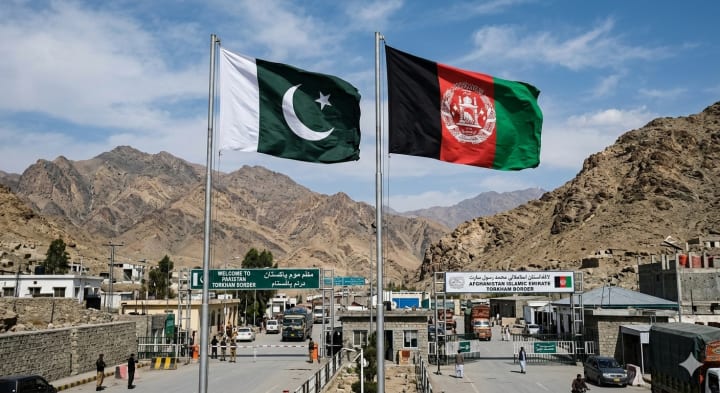
In recent years, skirmishes have occurred at key crossing points such as Torkham and Spin Boldak. These incidents often begin with minor
disputes but escalate quickly due to mistrust and heavy weaponry on
both sides. Civilians living in border villages bear the brunt of the violence, facing displacement, economic hardship, and constant
uncertainty.
Despite the tension, economic interdependence persists. Afghanistan relies heavily on Pakistani ports for trade, while Pakistan benefits
from transit routes connecting to Central Asia. Cross-border
commerce, when functioning smoothly, offers a pathway to mutual prosperity. Many citizens on both sides advocate dialogue instead of
confrontation.
The broader geopolitical environment also influences the conflict. Regional powers monitor developments closely, aware that instability
along this frontier can ripple across South and Central Asia. Counterterrorism, refugee management, water resources, and trade
corridors all intersect at this fragile boundary.
Ultimately, the story of the Pakistan–Afghanistan conflict is not solely about territory. It is about identity, sovereignty, and security in a
region shaped by history’s long shadow. The Durand Line remains both a physical barrier and a symbol — of division, distrust, and
unresolved legacy.
Yet hope endures. Diplomatic channels continue, even during periods
of crisis. Tribal elders, community leaders, and policymakers periodically call for confidence-building measures, joint border
mechanisms, and economic cooperation. The people who live in the shadow of these mountains often share language, culture, and faith
— bonds stronger than political disputes.
As the world watches, the future of relations between Pakistan and Afghanistan will depend on dialogue over confrontation. Whether the
Durand Line becomes a bridge of cooperation or remains a line of conflict will shape the destiny of millions who call this rugged
frontier home.
About the Creator
Niaz Muhammad
Insha Allah, I will write in such a good way that people with weak eyesight or the elderly can easily read it.
Keep reading
More stories from Niaz Muhammad and writers in History and other communities.
Iran hails ‘encouraging signals’ from US ahead of nuclear talks in Geneva
Iranian President Masoud Pezeshkian has said that nuclear talks with the United States have produced “encouraging signals”, but warned that Tehran is prepared for any scenario ahead of another round of negotiations set for Thursday.
By Wings of Time 6 days ago in History
A Planetary Alignment will coincide with Mercury Retrograde
Double phenomena in the heavens Some people say in jest that the planets have aligned in their favor when life works the way they desire. Were you aware that there are seasons when things do line up in the heavens? There will be a planetary alignment AKA a planet parade, on February 28, 2026.
By Cheryl E Preston3 days ago in FYI



Comments
There are no comments for this story
Be the first to respond and start the conversation.